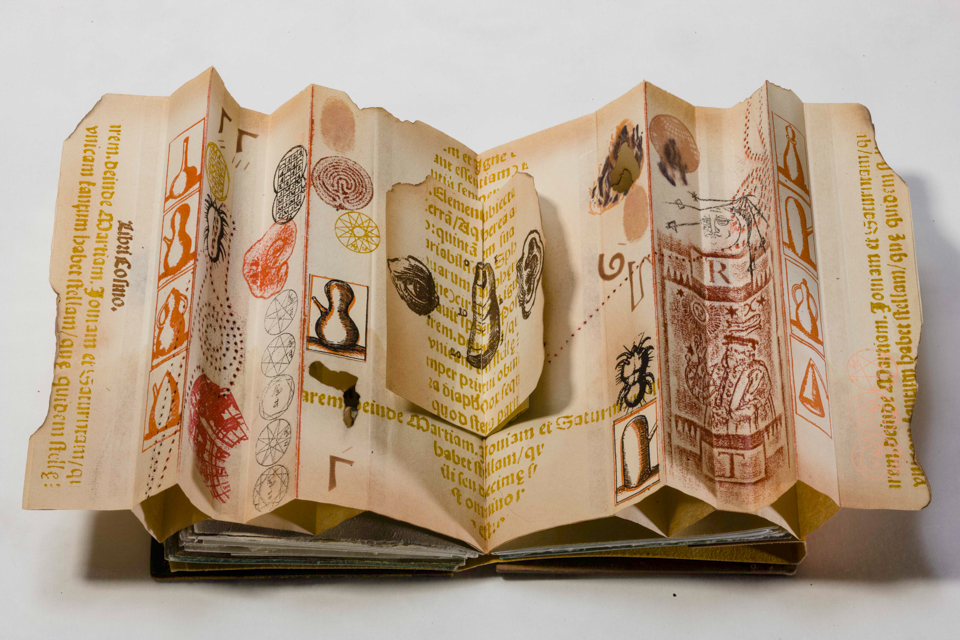
Heidi Kyle stated as a book conservator and she was inspired by unusual book structures, these inform her own practice. she says this about her work, “This experience has also taught me that, from the repetitions of the fold, there is always the potential for new structures to emerge. In my creative practice, I experiment, divert, re-build, and alter with the intent of keeping the book alive as a mechanical object of extraordinary diversity”. THE ART OF THE FOLD. 2020. Art Of The Fold – Hedi Kyle & Ulla Warchol. [online] Available at: <https://www.artofthefold.com/hedi-kyle> [Accessed 8 December 2020].
She primarily runs workshops and teaches as her practice across the US, Canada and Europe, providing a service, going into teaching at Program for Book Arts and Printmaking at the University of the Arts. she creates one of a kind forms that are held within collections all over the world.
After researching many practitioners it seams many make their work for commissions as well as one or a kind or limited edition collections.
In the real world i would have to consider place, price, promotion, people, process, physical environment and product ( this was learnt during my behind the barcode field project), to make myself more commercialised. Although I am torn to where my books belong. they are sculptural pieces in their own right so would they look out of place in a gallery or part of a book collection.
Analysis for Commercial and Commission based work:
Place
Online, business fairs, markets, clientele service, commissions
Price
Relatively cheap raw materials, cost needs to factor in the labor and making a profit. Luxury low to medium price range affordable for what it is. Need to source materials, specialist hand made papers, binding materials
Promotion
Sales, advertising products, working with other companies e.g designers, artists, running workshops at business fairs, publishing books? social media
People
independent practitioner, I may eventually require the help of others to produce.
Process
Production line, making the paper, prints and then binding them into products. Drying, hand making, and binding are lengthy process.
Physical environment
Online business, sell via events, clientele, Physical studio needed for production/ meeting clients
Smart meeting end of the studio and work space the other
Product
Hand made, mold and deckle needed, facilities to make press and dry the product, paper cutting and binding facilities, bespoke, unique etching, printmaking and letter pressing.
The Petcha Kutch presentations forced a fast thought process of idea and expression of concept. Doing it in this fast-paced way was challenging because I had never done this kind of presentation, but I found it was an effective way for idea generation form the group and this was helpful. Having 6 words to focus my project on allowed me to structure and focus my work according the words I had been dedicated. These were diversity, traditional methods, illustration, nature, storytelling, nature and juxtapose. Although I found juxtapose and diversity harder to explore in the narrative, the other words I felt I explored well in both aspects of the project the bowl form and second artefact.
The Gesamkunstwerk Bowl project was challenging for me, I struggled with the constraints of a bowl form as I have previously been quite open to exploration of material, form and scale allowing for a diverse and sometimes unexpected outcome whereas this project seemed quite controlled and predictable, challenging my creativity. This bowl project focused my skills into a vessel, I thought this initially would limiting my creativity, getting over this barrier allowed for an outcome that combined my previously discovered skills combining components of the book binding process, using papermaking, letterpress and printmaking. Using my dedicated six words: storytelling, diversity, nature, traditional methods, juxtapose and illustration. Considering the current times we find ourselves in, during the second welsh COVID-19 firebreak lockdown I became aware of a more intense feeling of isolation and loneliness being portrayed in the news and I could see evidence of this around me, this moved me to want to make this the subject matter of my bowl form. Using Roath park as the focus of my storytelling I used quick illustration of people walking around the lake, focusing on the older population or people walking in isolation. I then took these illustrations and using dry point printing I explored the use of ink to create negative space and the exaggerated feelings of isolation. Then applying these techniques to hand made paper made from COVID-19 news articles, this produced a grey tonal paper with large flecks of text created an interesting medium for me to explore traditional paper bowl making using paper mache. I then collaged letterpress text and prints to darken the interior of the bowl in order to intensify the feeling of loneliness through a sense of being trapped in your own thoughts this is the reasons for me placing him into the interior of the bowl. I carried this into the 60 second bowl video by overlaying news bulletins and headlines to create a sense of being overwhelmed noise (letterpress text). I used the video to take an elderly man on a journey through the park by making his arms and legs mechanical, by making him out of paper the sense of fragility is heightened.
This project took me out of my comfort zone and I started to explore materials that I would usually use (paper, letterpress, illustrations, stitch) and applied them in an unconventional way. Although this project did not go as smoothly as I had hoped I feel the video and the bowl form expresses the isolation I intended.
I decided to continue the themes I explored during the bowl project into the second artefact as I had struggled to understand and decide what I wanted to focus my work on. After conversation in group meetings I had come to the conclusion I want to continue to explore processes of print, papermaking and illustration and combine them with traditional book binding. The qualities of a book structure allow it to be tactile, personal experience (immersive), allow for reader engagement through imagery, visual, interactive, fluid, allow for sensual interaction of sight, smell, hearing and touch, the feel and type of paper.
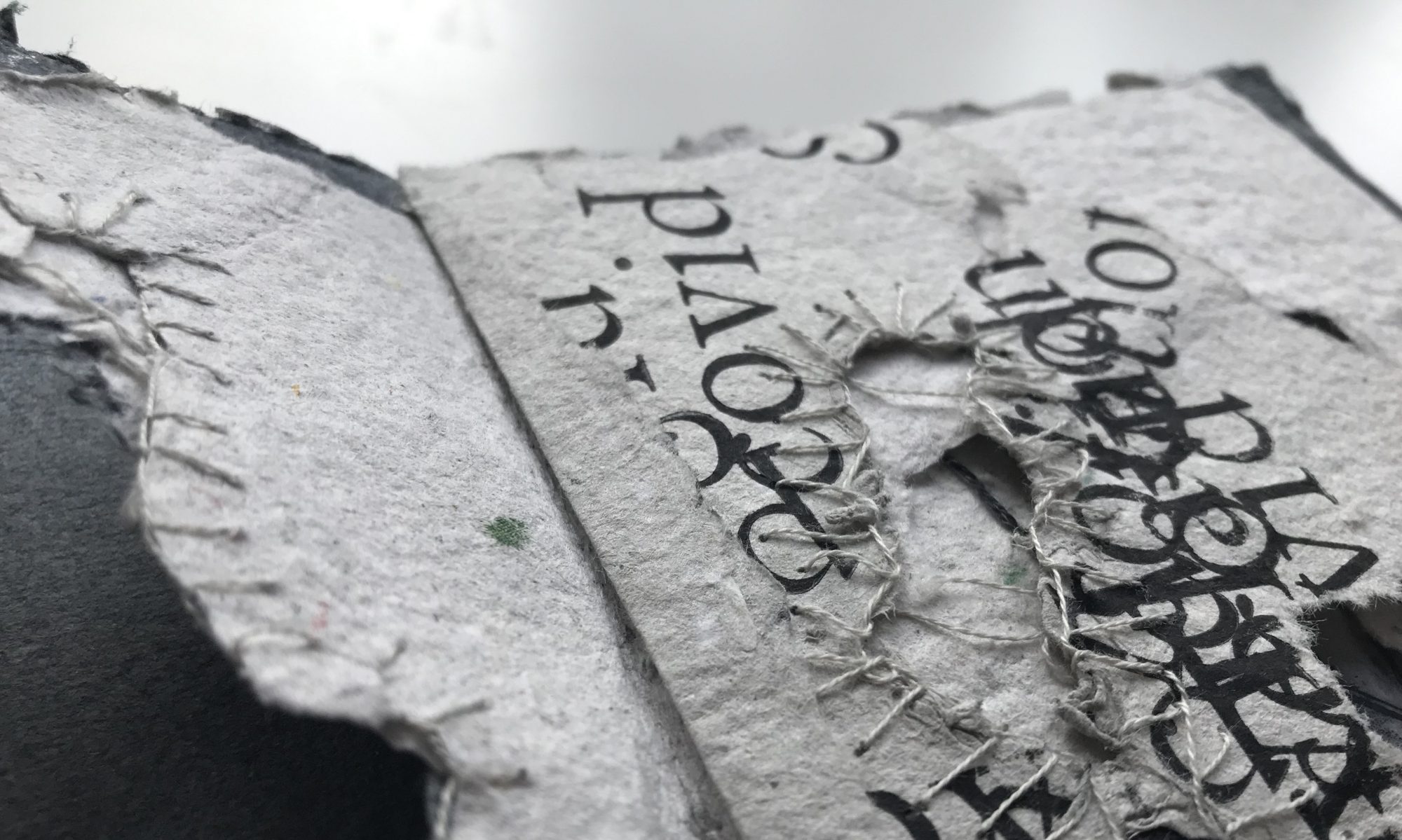
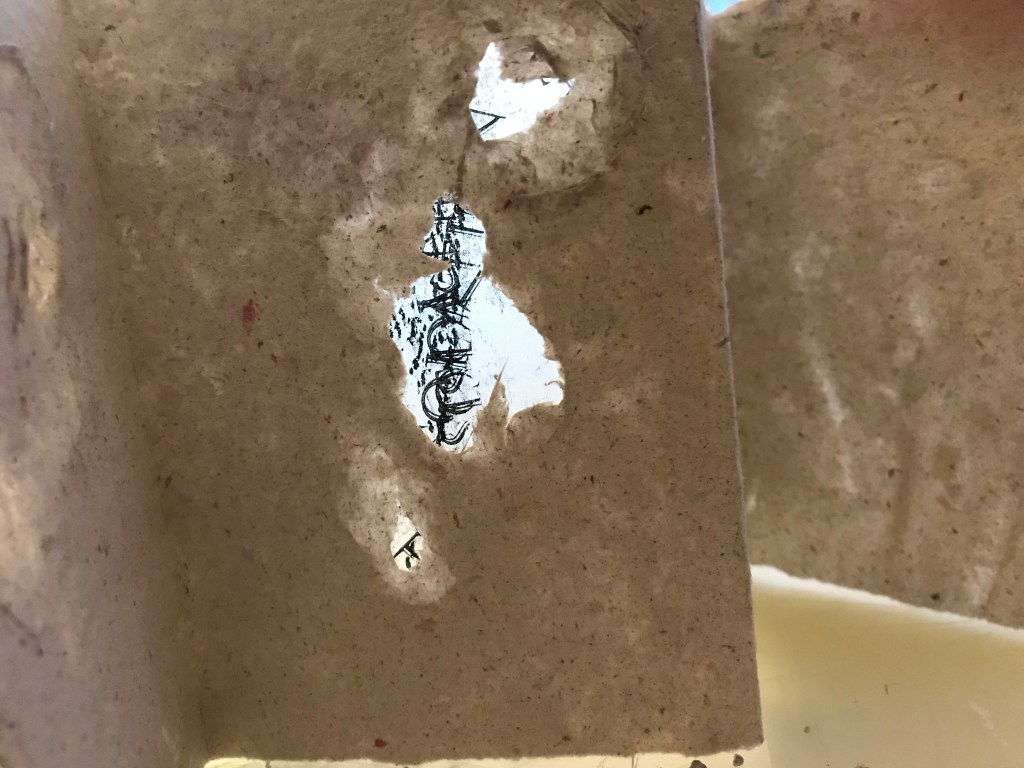
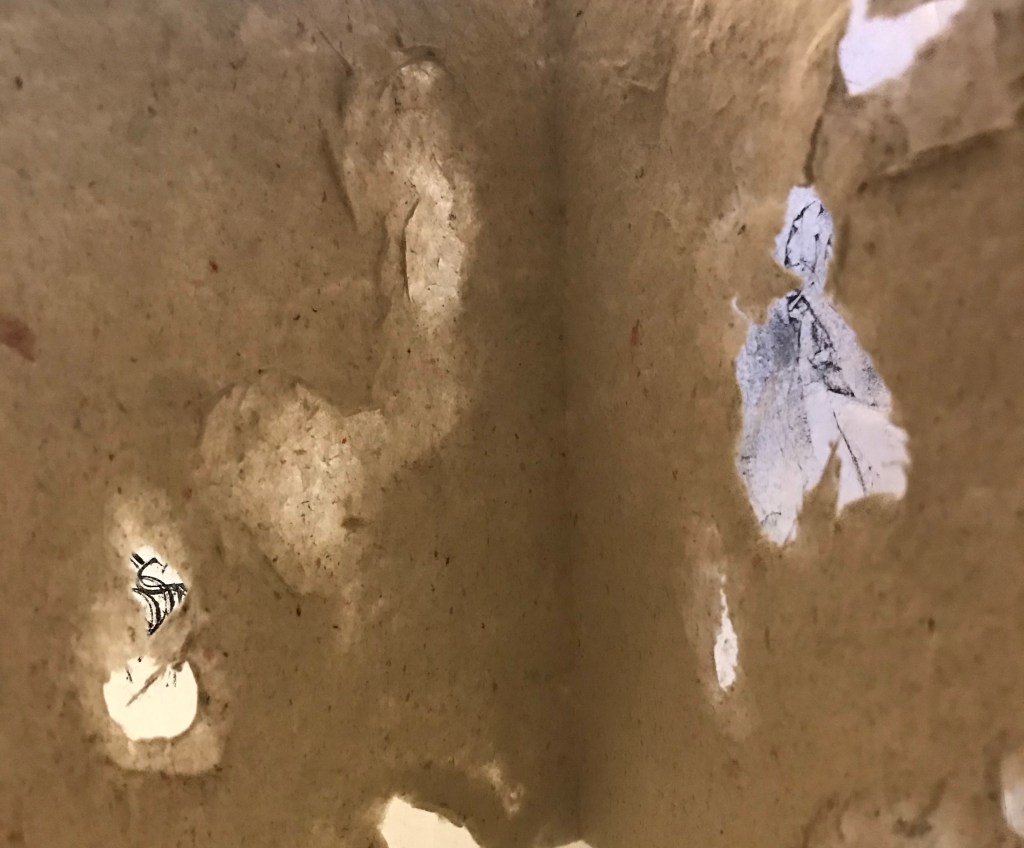
My second artefact explores the feeling of isolation in a similar way to the bowl project. I wanted to create a book that complimented the bowl form. the book explores the layers of isolation felt by vulnerable and ageing people during the COVID19 pandemic both physically within the confines of their home and mentally. I made the paper from newspaper articles for the fragile qualities to represent the vulnerabilities of the old men and the stitching further explores the themes and defines the layers between the pages to create depth.
If I were to do these projects again, I would want to approach the themes with more confidence as I found I was unsure and indecisive when exploring my options, I found it set me back. I had quite a few wobbles during this process of exploration as I was still very undecided with how I wanted to continue into my final major project. Now I have cleared up my decisions and decided my intentions I feel more positive in continuing into the final major project. The limitations of the facilities slowed my production down as I was at home longer than I intended, but I now feel more confident with the studio and the booking process, so I feel next term I will be more competent and will be able to continue with my work in an effective way under time management.
I want to design a project around the book form, exploring the ways in which print, paper, stitch and traditional methods can be combined to create an artist book. I intend to use my time exploring methods of printmaking, letterpress and bookbinding and papermaking. I am drawn to the structure of a book for its immersive qualities that allows for the form to be tactile, personal and interactive. I will be using the traditional aspects of binding and printing methods whilst exploring contemporary content and structures. I am interested in the sensory and material qualities that paper has and combined with stitch and print they can create really interesting material outcomes. I have been drawn to exploring more contemporary artist book designs as I find the combination of both content and structure are both significant and important aspects of book design in creating an interesting artifact that speaks for itself with little text to encourage the viewer. I am hoping to create a collection of tactile forms exploring a variety of book structures and bindings both contemporary and traditional. Using the facilities within the print room I will be focusing my time on printing methods exploring letterpress, dry point printing, Lino, etching and collagraph as well as using skills learnt through paper making to explore the material and textural qualities of making hand made paper. I believe this process I am combining when stitched into a book form drawn upon the senses of sound, touch smell and sight this is important for the personal experience I want the viewer to be immersed within.
I will be focusing my first couple of months in the print room, focusing on the production on paper, print and practicing book structures, developing a theme within the form(s) This time experimenting will give me the beginnings of the content to my book form(s).
This will then develop into the production of the book structures in the third month. Assembling the orders, making adjustments and working into the forms with stitch.
I will then be focusing on the presentation of my final forms, writing up explanations of my work and completing the book structure(s) and getting ready for submission.
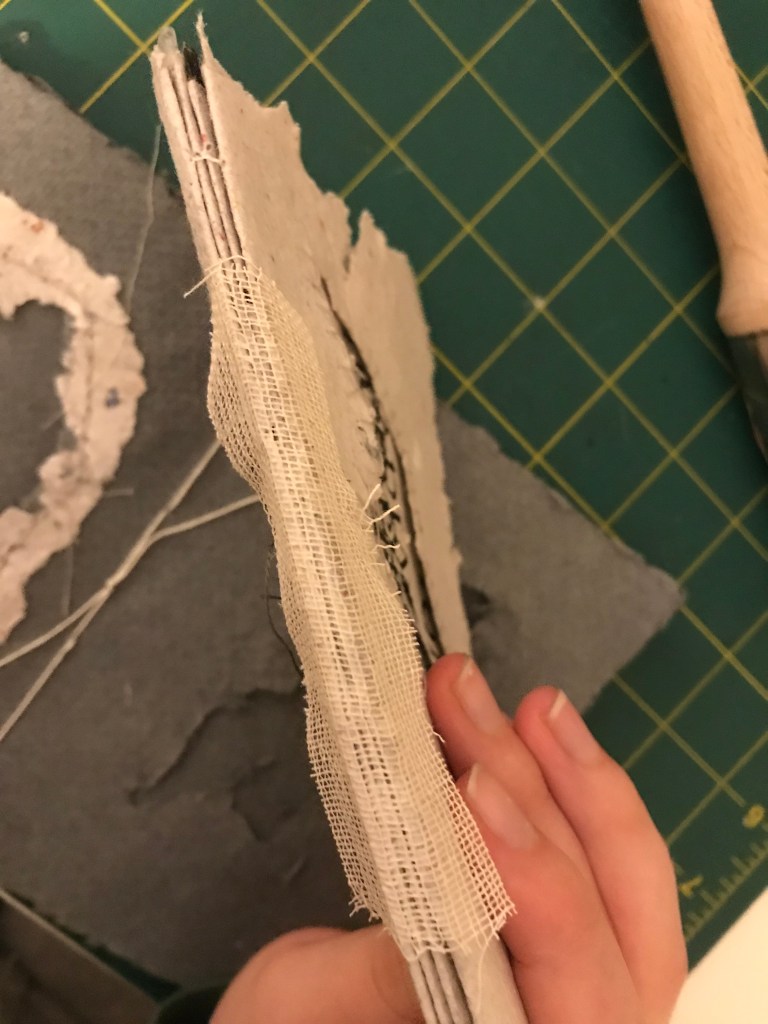
When it came to sewing all the signatures and tipped in sheets together I found I was hitting quite a few design problems due to the the way I had comprised the sheets and designed the book. the quality of the paper being thin, torn and fragile meant that I couldn’t use the tick linen thread I would usually use for binding that gives strength and stability and instead I had to use a finer cotton thread making the book block even more fragile. I also found sewing the tissue paper and tracing paper prints into the signatures tricky because of the brittleness. I designed a sewing pattern that allowed for all the sizings of the pages to line up and accurately be sewn together. I decided to bind it into a hard back cover as it gives it protection and strength as well as conceal the pages within.
Making the hard back cover went okay but it was important that I was extremely accurate with measuring and cutting the grey board and the book cloth. I decided to use a more plastic looking book cloth that they have in uni , this is purely for the protection of the pages within. I decided on grey as it found it complimented the colour of the sheets within.
If I were to sew this book again I would consider the order and the way I sew them together prior to sewing then, I decided to combine concertina pages (that concealed translucent sheets with classic signatures making the actual sewing more challenging). I was hoping to take more images of the process but this part of making a book is some time critical that I forgot and i wouldn’t have had time before the glue dries.
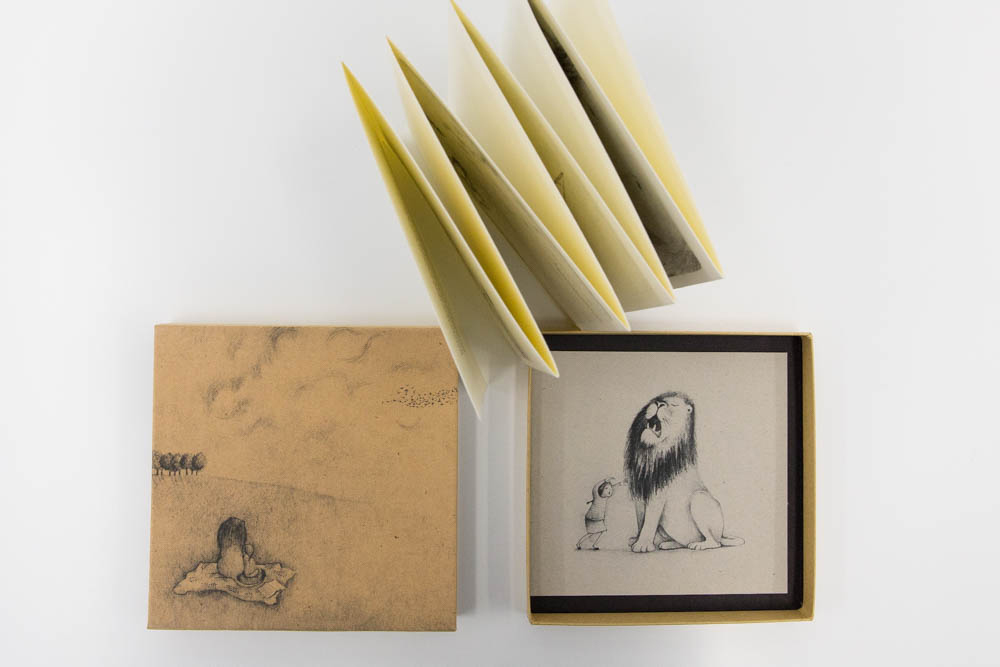
I came across Esther Connon when I was browsing through the online crafts festival, I then traced her back to her online website and shop. Her practice explores illustration and print through storytelling. She applies these to a range of ornamental objects as well and book forms. she tells stories primarily through drawing using little text. she now self publishes short children’s story.
Although her work or practice does not directly link to mine, it is interesting for me to look at how a book could be made in a professional commercialised context, the pricing and how Connon advertises and displays work for the public eye.
Although my works lends itself more to the work of Hedi Kyle where she produces book art as more of a collectors item focusing on unique and one of pieces made for the collectors market. It is important to consider both Commercial and collectors markets to see what the competition is as well as where my work belongs.
Esther Connon, Night Night Lily £20 handmade concertina book.
For my second artifact I will be binding a book as I am exploring vulnerability and isolation as a continuation of the bowl project I felt it was important to be using appropriate papers that express fragility.
I have spent this week making paper using newspaper articles. Making my own paper allows me to have better control over the thickness and quality. The material quality is something I am extremely interested in as it can influence how you feel or think about an object as the tactile nature if paper can influence the way something looks.
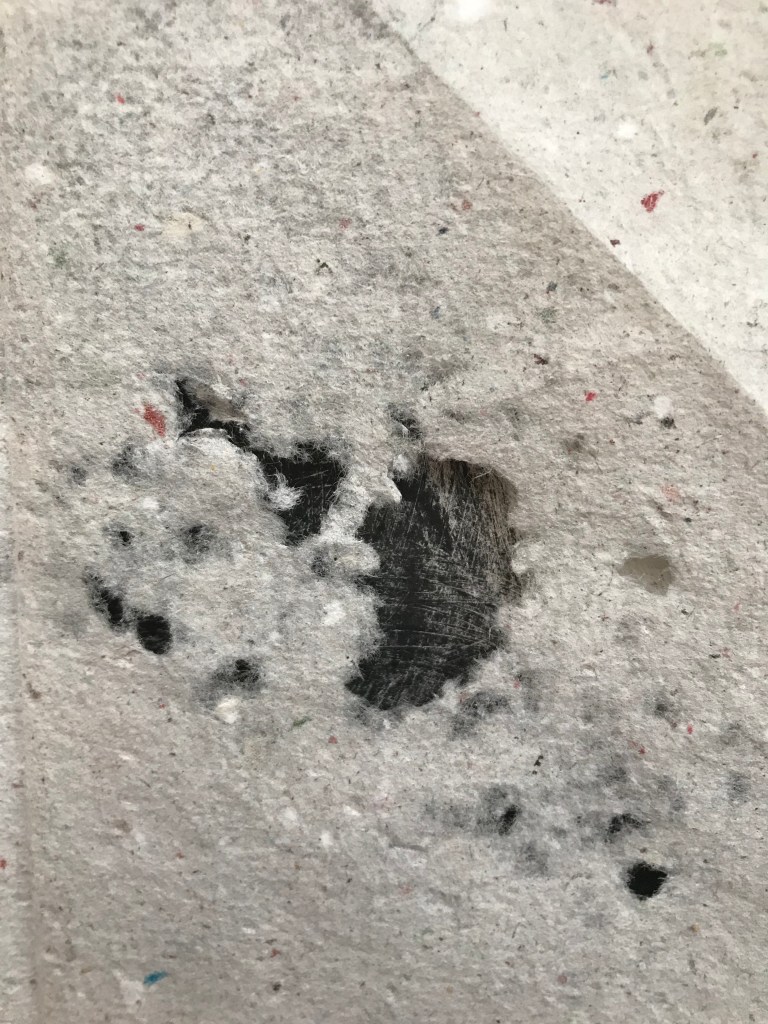
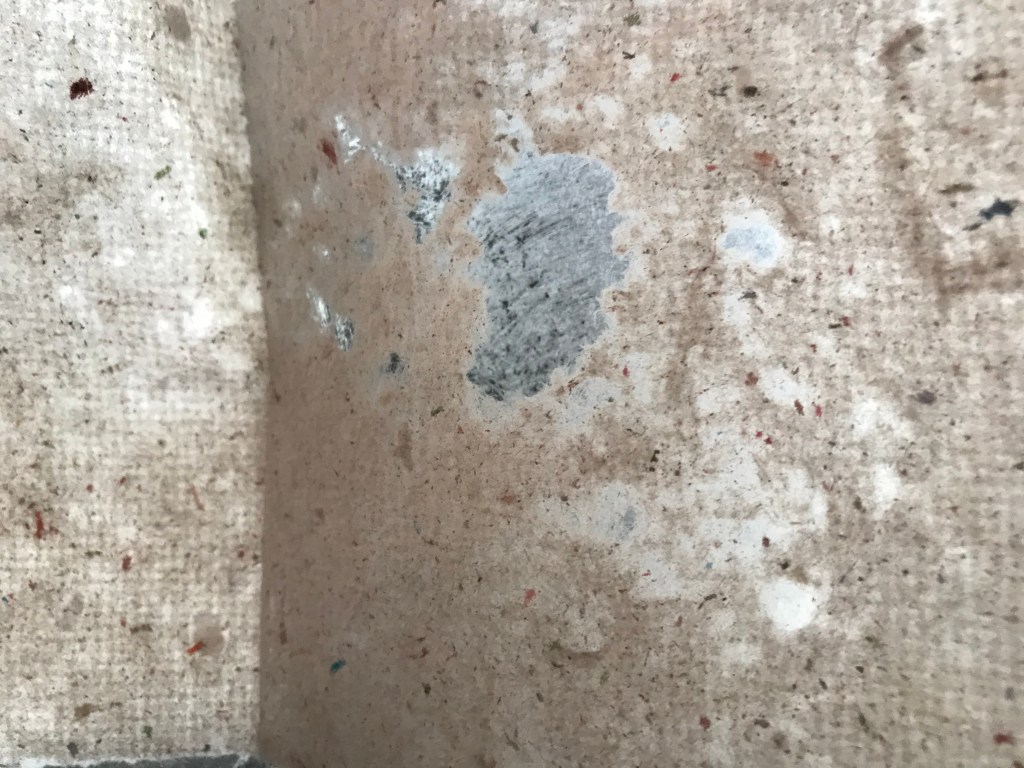
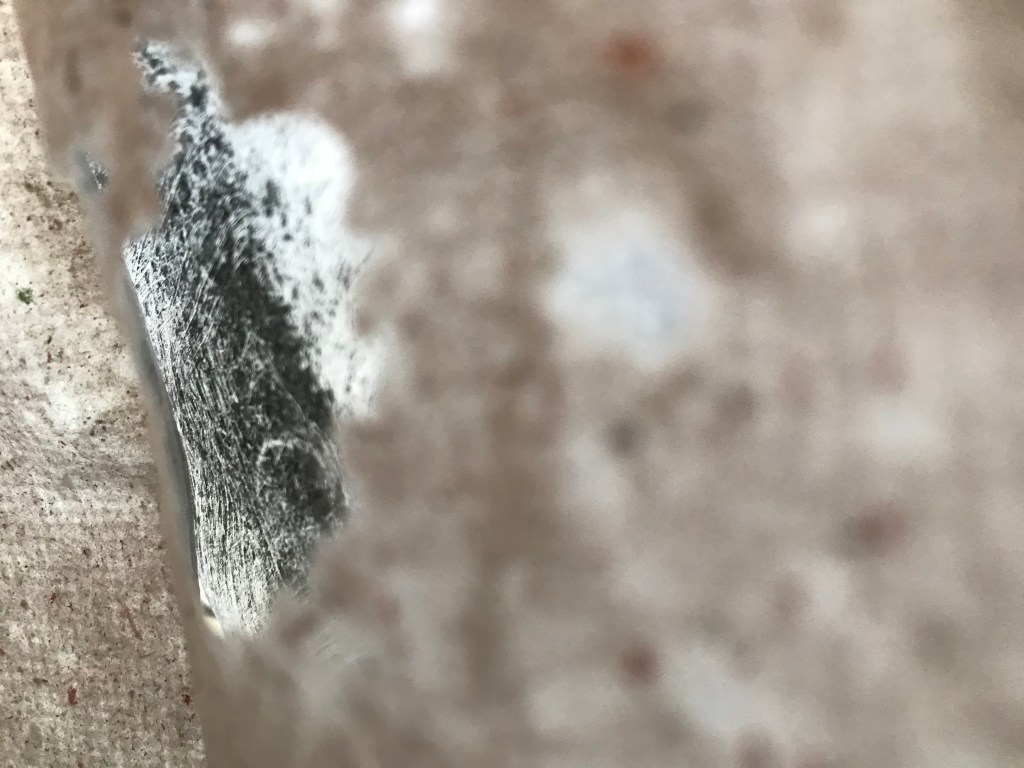
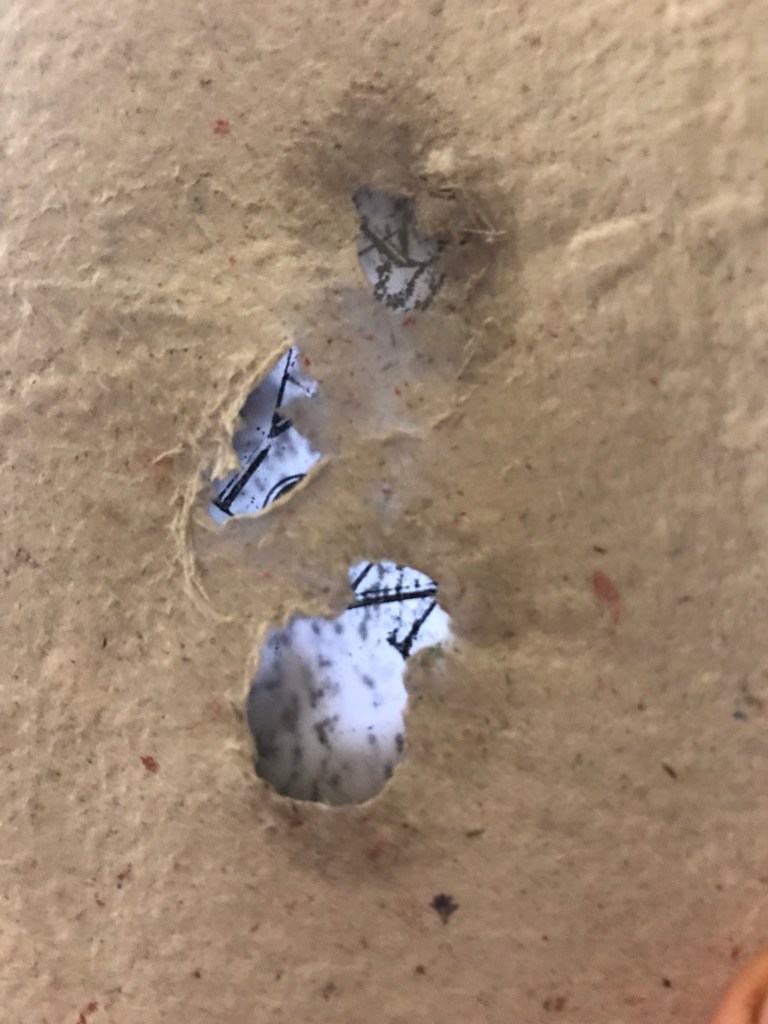
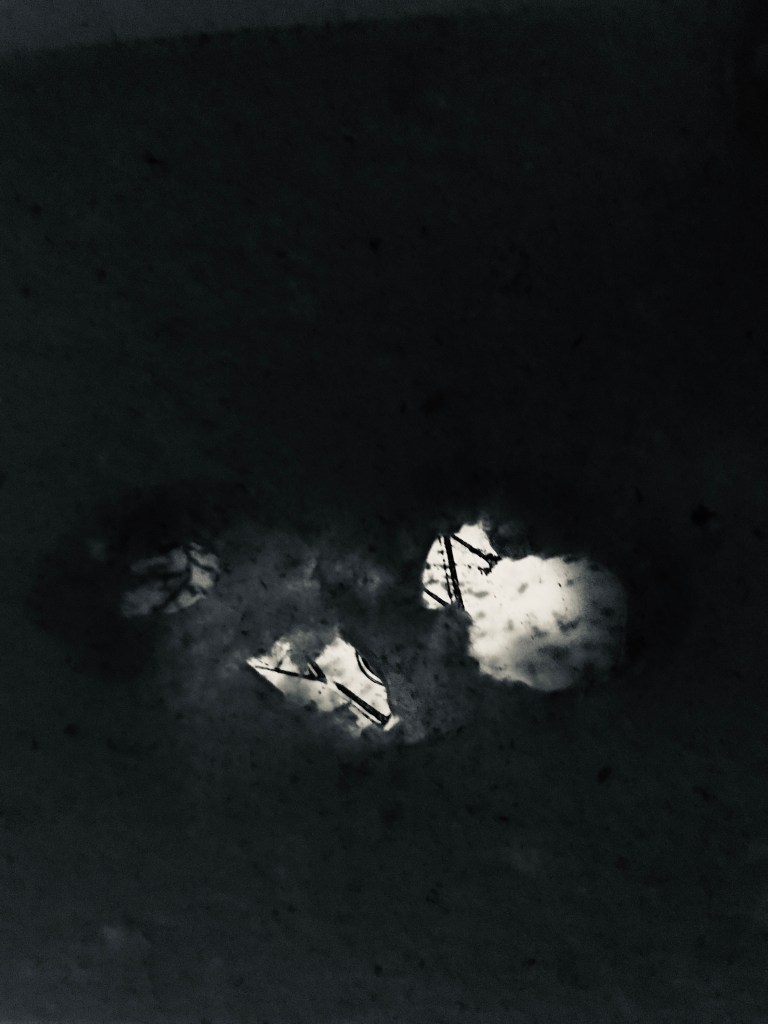
Whilst making my paper using a deckle and frame some of the best sheets were where the water pulp mixture had thinned out and the paper became more tissue paper like and very fragile with torn edges. This fragility represents the fragility and isolation of the old man in my video. when removing these sheets of the cloths that I dried them on I notices where the paper has not transferred a whole sheet small holes where in the paper. this made me think of the isolation and how I would represent the feeling. Layering these papers up creates an interesting composition as well as fragility and depth. I want to explore this further with my book form.
As a result I have been exploring and experimenting with how I could put a composition together and how I would best express this through a binding.
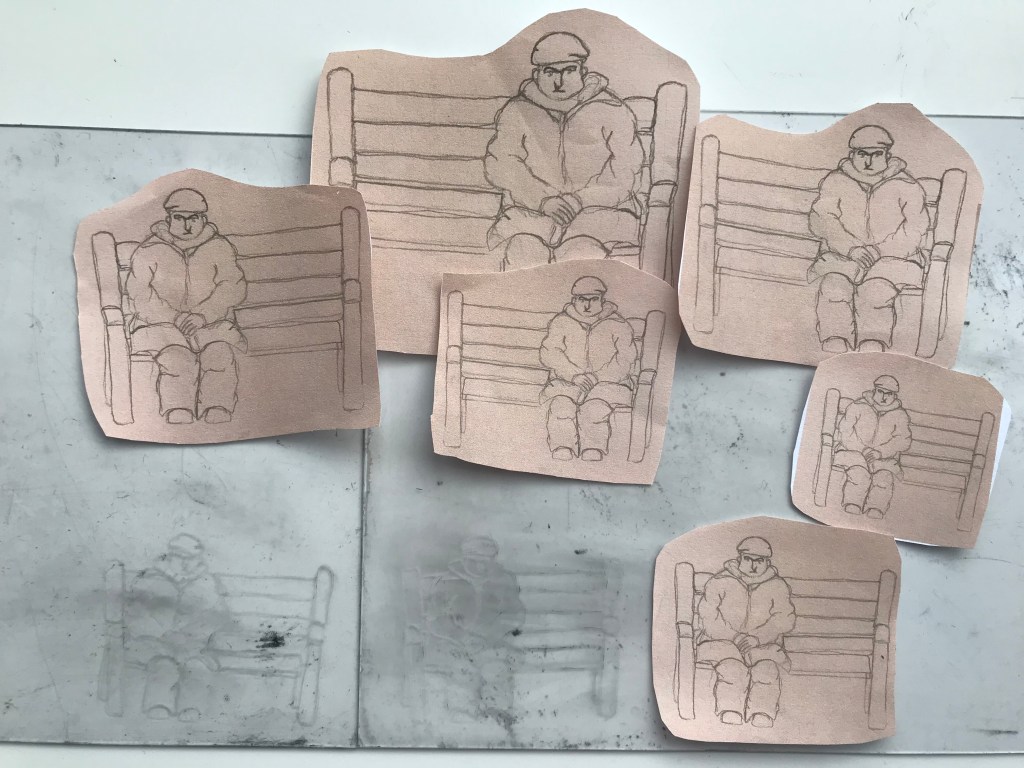
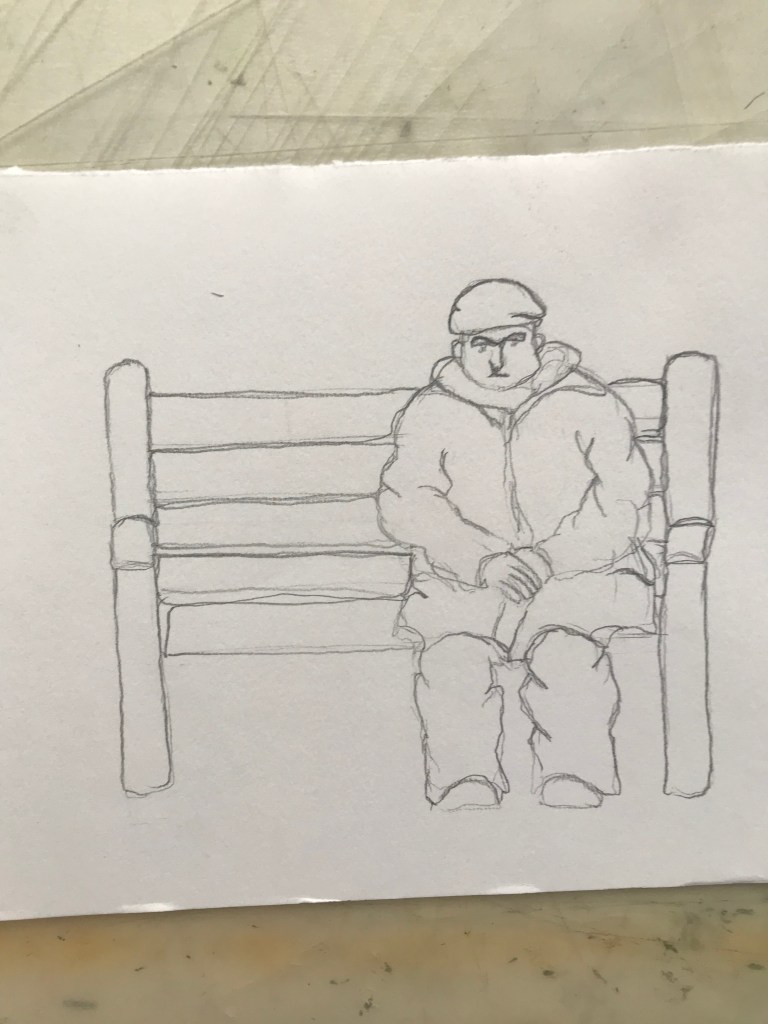
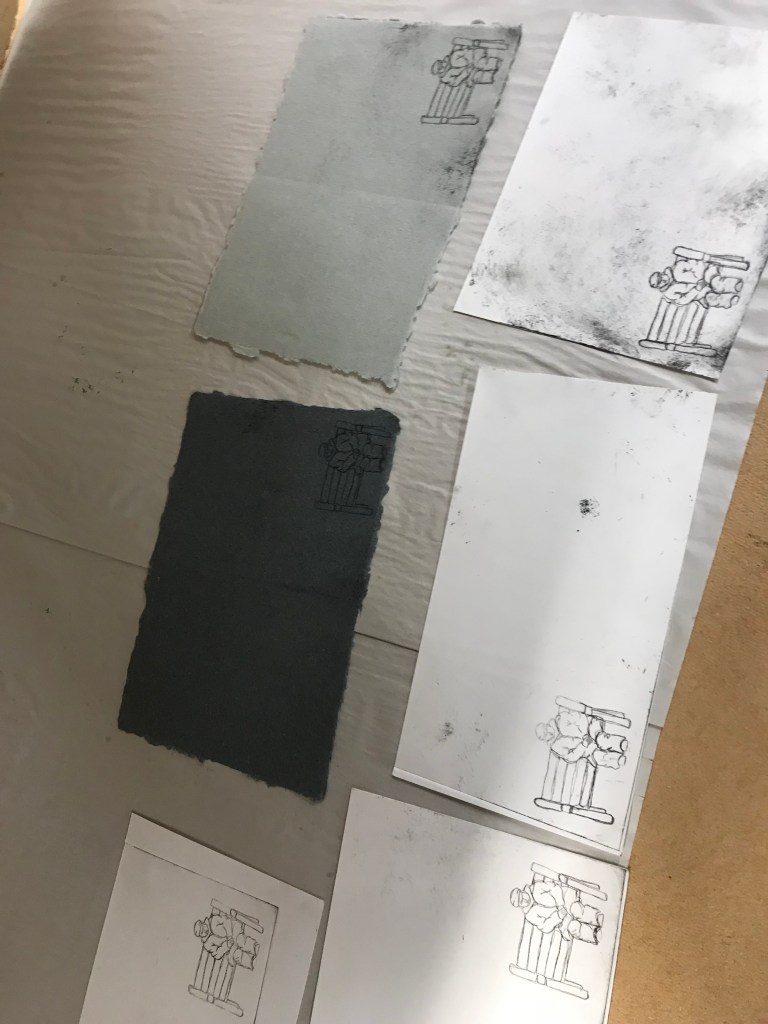
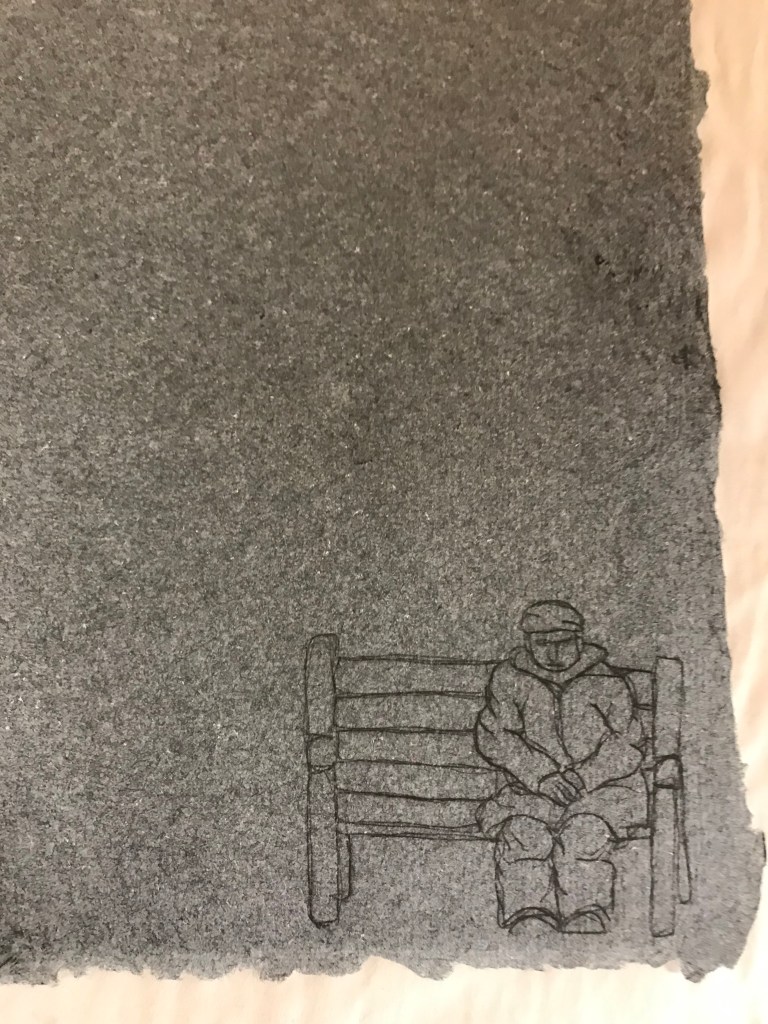
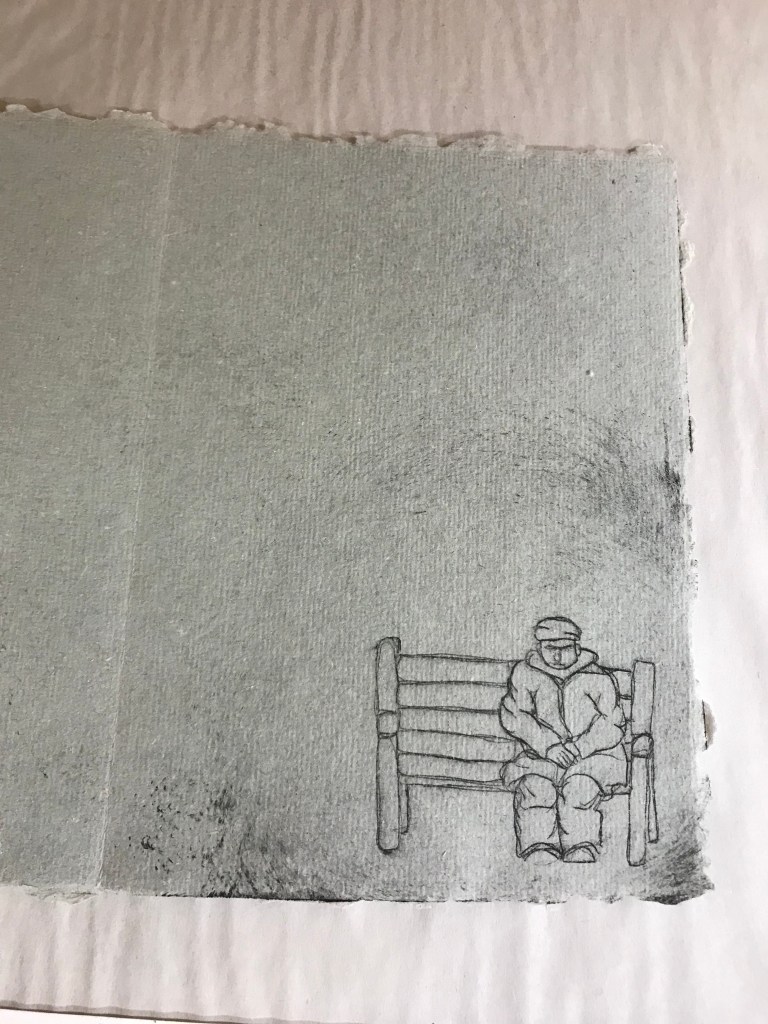
I wanted to make my endpapers for my final artifact a bit more interesting than just black hand made paper. I decided to etch a drawing on the old man. This man I have been using through my bowl, video and second artifact so I found it fitting that he should be placed at The end of my book. I wanted to make him seem small and vulnerable so I played around with the scale in order to find the best fit for the book block as well as the best size to represent the feeling of being small, isolated and vulnerable. In reflection this was interesting as I had trouble matching up the images and took me a couple of attempts to realise everything i was drawing and printing had to be reversed so that it was in the correct placement on the page. I think this was successful and a small detail that adds to the overall outcome of the book.
Due to the restrictions of covid I cannot access the artist book collection, but I wanted to find out more about it and organised to speak with Doreen who has specialist knowledge about the artist books. This meeting was extremely beneficial to me in exploring my ideas as well as expanding my knowledge and gaining insight into collection, as well as specific artist book artifacts.
We discussed book structures, the importance of the content and structure and how these work in unison I am quite interested in how the structure can inform the reader or create a journey that is personal and unique through the tactile form on a book and binding. I am interested in exploring a range of structures, but the one I am drawn to for this project is the concertina book, as this can be stretched out, double sided, sculptural, linear, you can also add additional pages that can be tipped in.
The qualities of a book structure allow it to be tactile, personal experience (immersive), allow for reader engagement through imagery, visual, interactive,fluid, allow for sensual interaction of sigh, smell, hearing and touch, the feel and type of paper.
Doreen was explaining the origin of the artist book, they came around during the 1900 when the artist book movement pushed to make art more accessible and this saw a rise in artwork being published and bound into book as a way of the artist becoming known. these were made by the artist and where usually part of a limited series or a collection but they can also be one off and unique works. These can also be published as part of an artist exhibition to explore the concept of work or can be a sculptural form in their own right.







 Lara Hoad Artist Designer: Maker