EXPERIMENT: bound sculpture

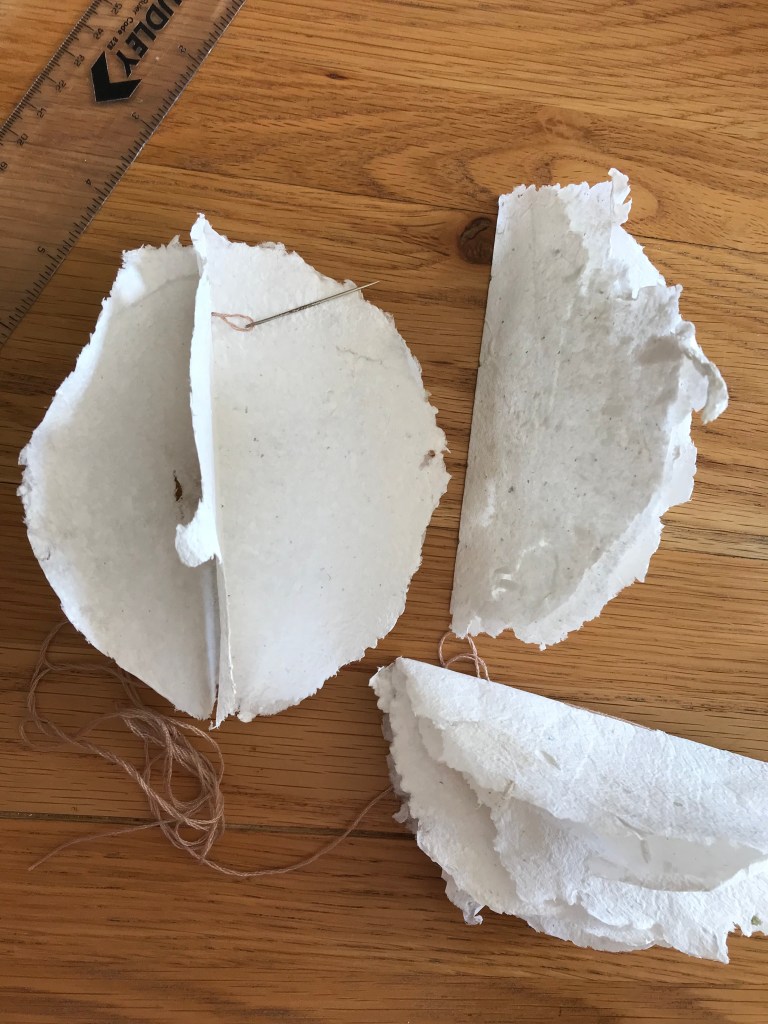
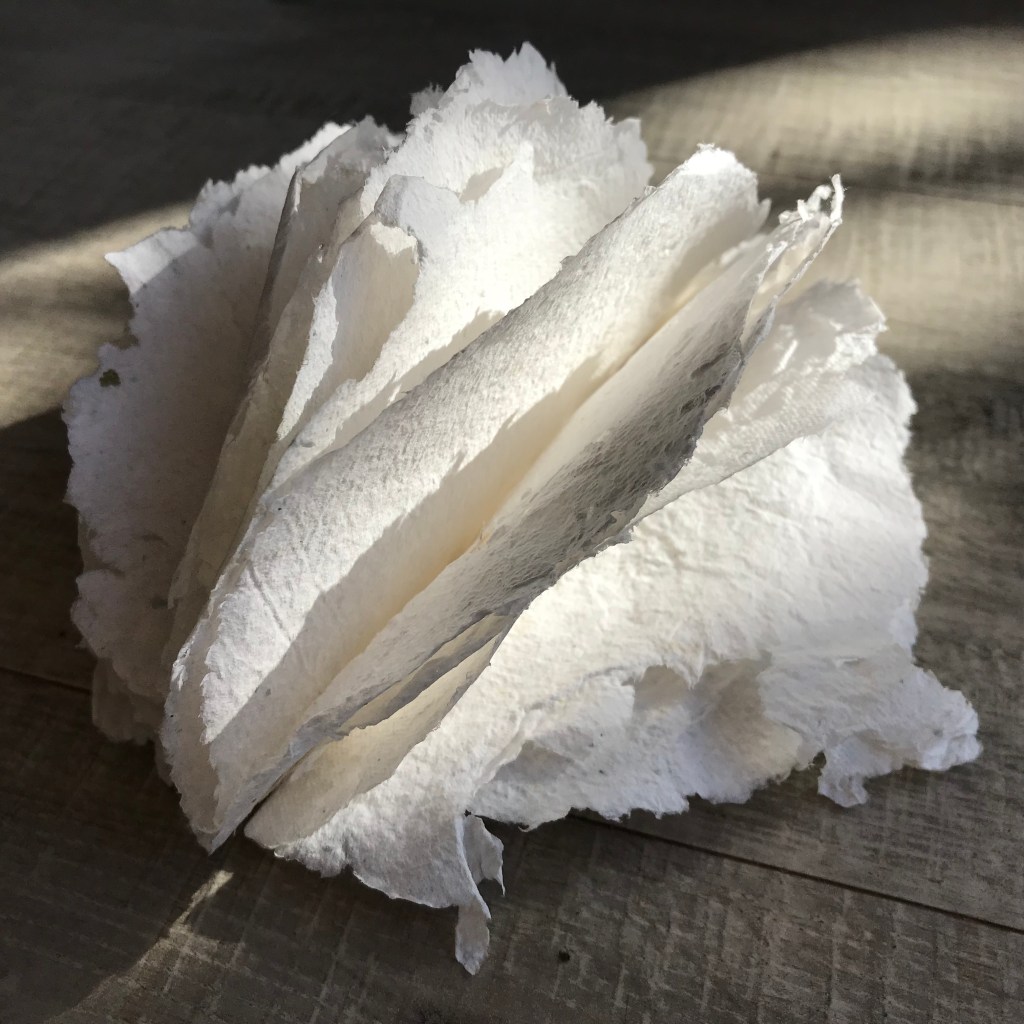
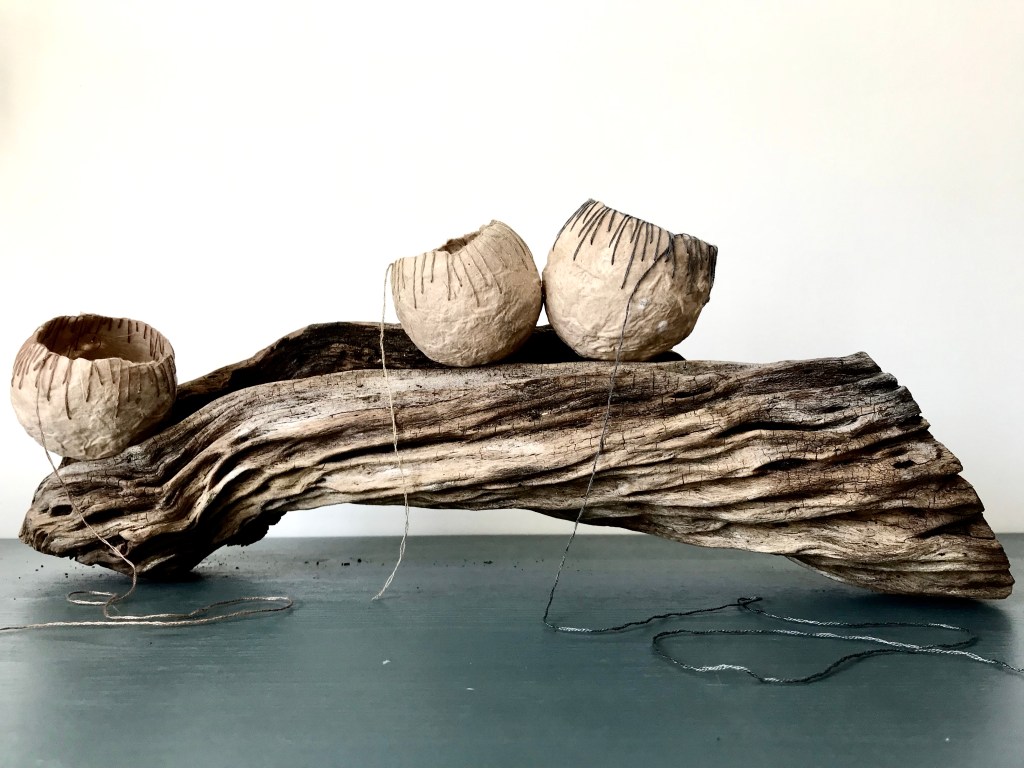
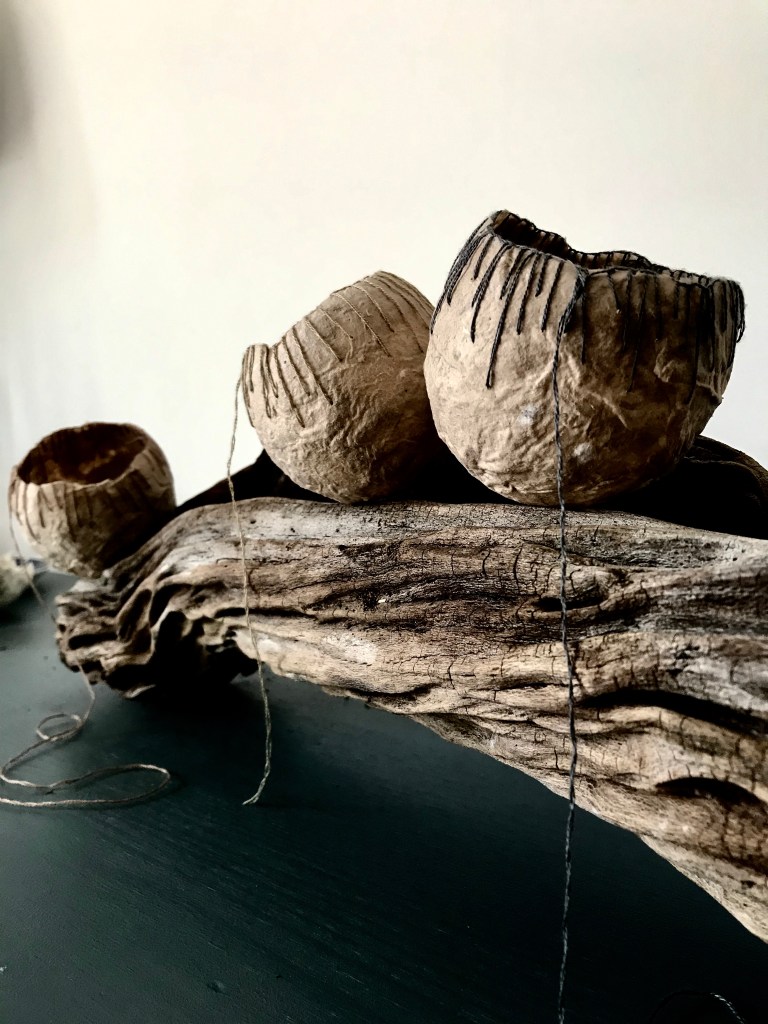
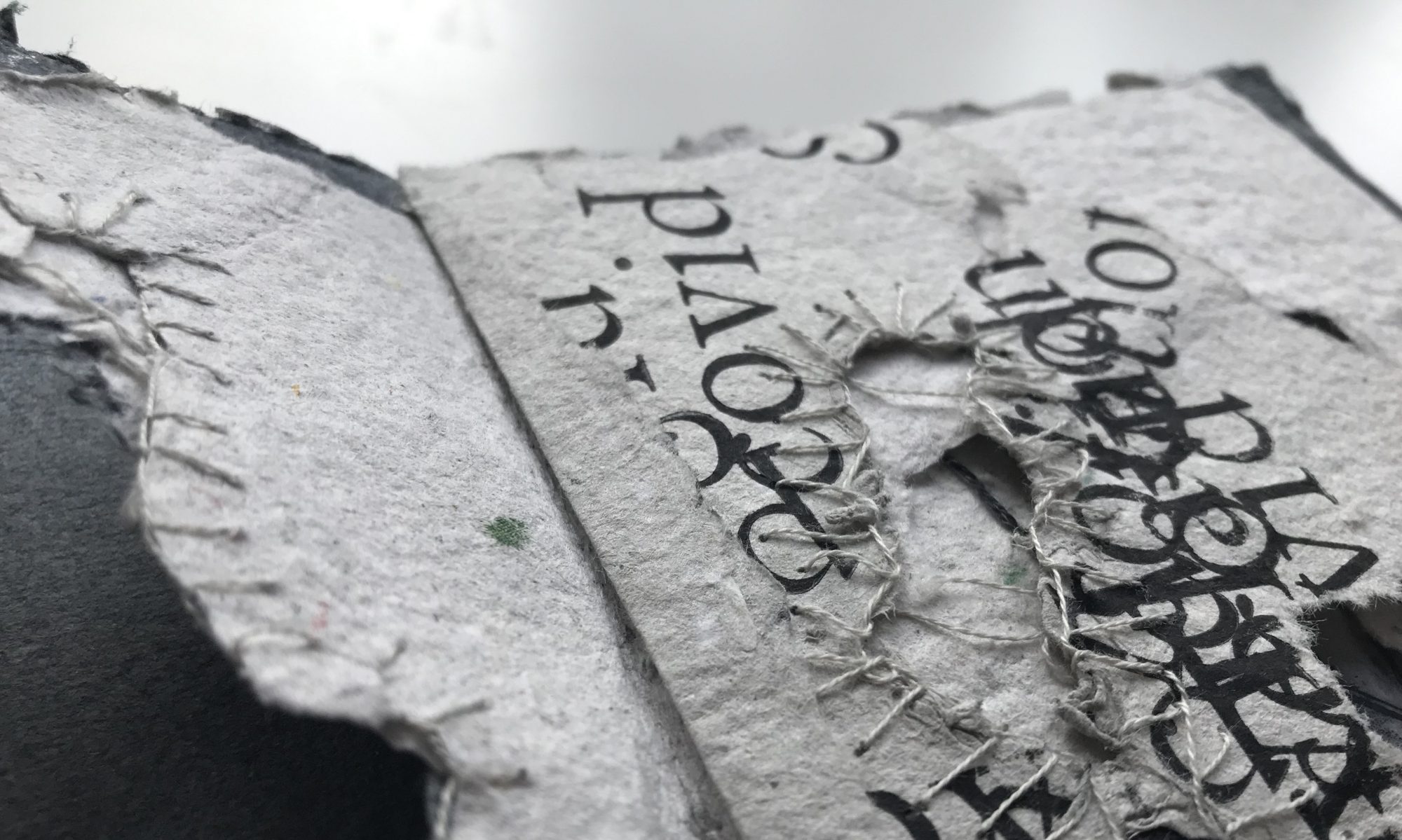
Embroidery hoop, recycled cartridge and corn flour hand made paper. I experimented with binding the circles of paper together using a multi signature bookbinding stitch, I really enjoy how this binding technique emphasises the papers deckled edge, giving it volume and highlighting its fragility, making the form very organic. When photographing this form I used natural light to create shadows between the layers of paper highlighting the textural qualities.

EXPERIMENT: natural dyes

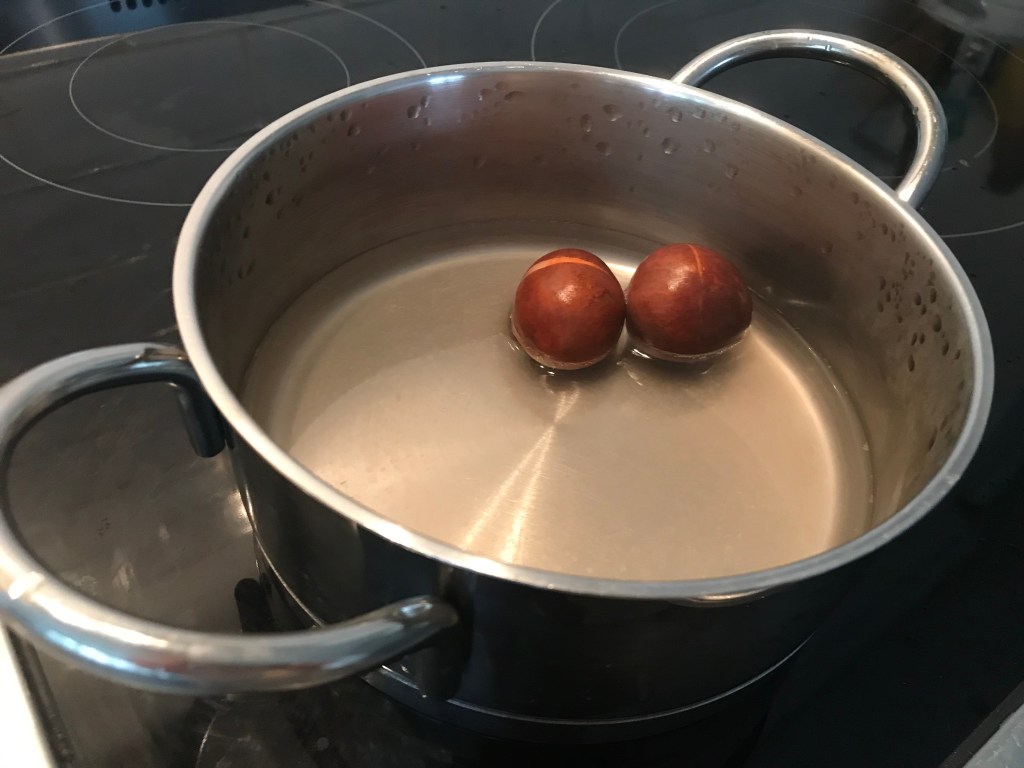
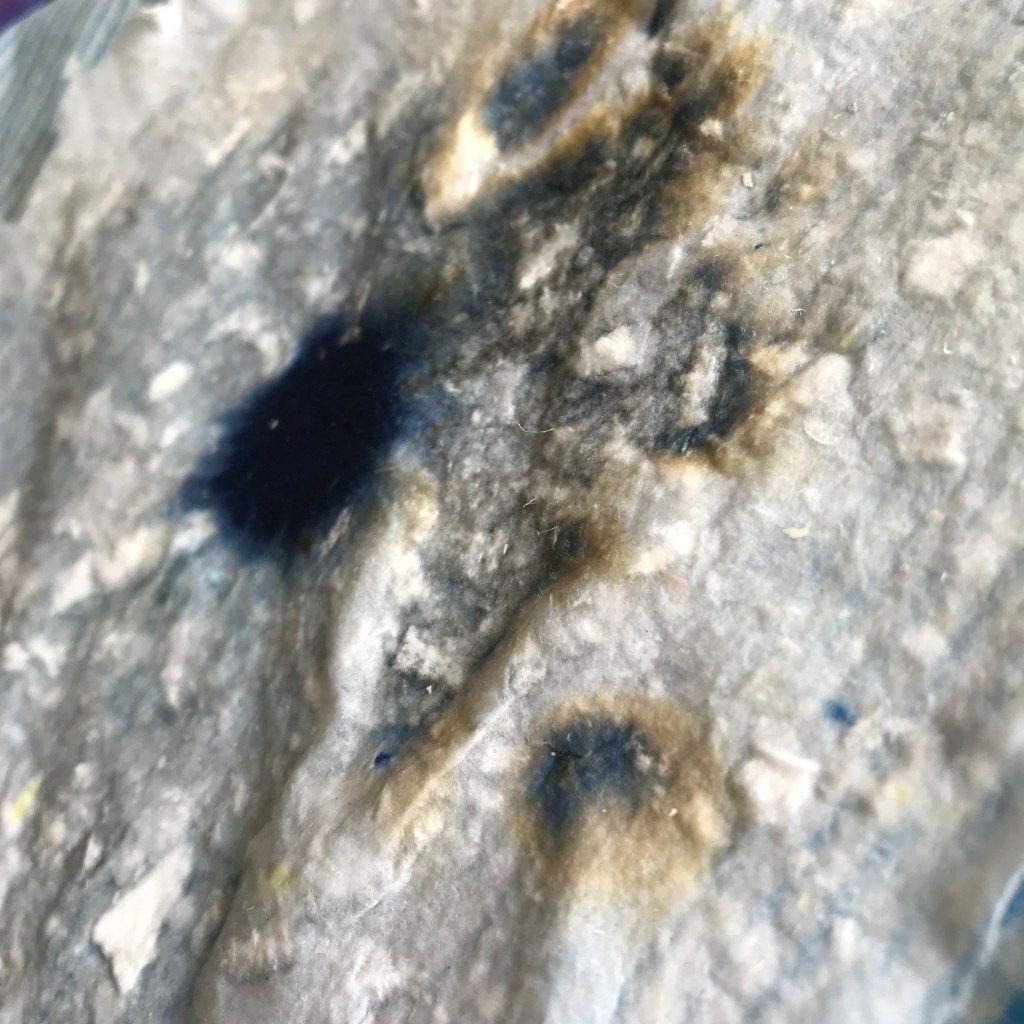
After the success of the ink experiment I wanted to see if I could create the same effects using a home made natural dye. Using avocado stones I wanted to create a brick dark pink colour. I boiled the stones with water and salt until the natural pigment became deeper and more concentrated. I wanted to explore both controlled and uncontrolled approaches to colouring the sphere forms.

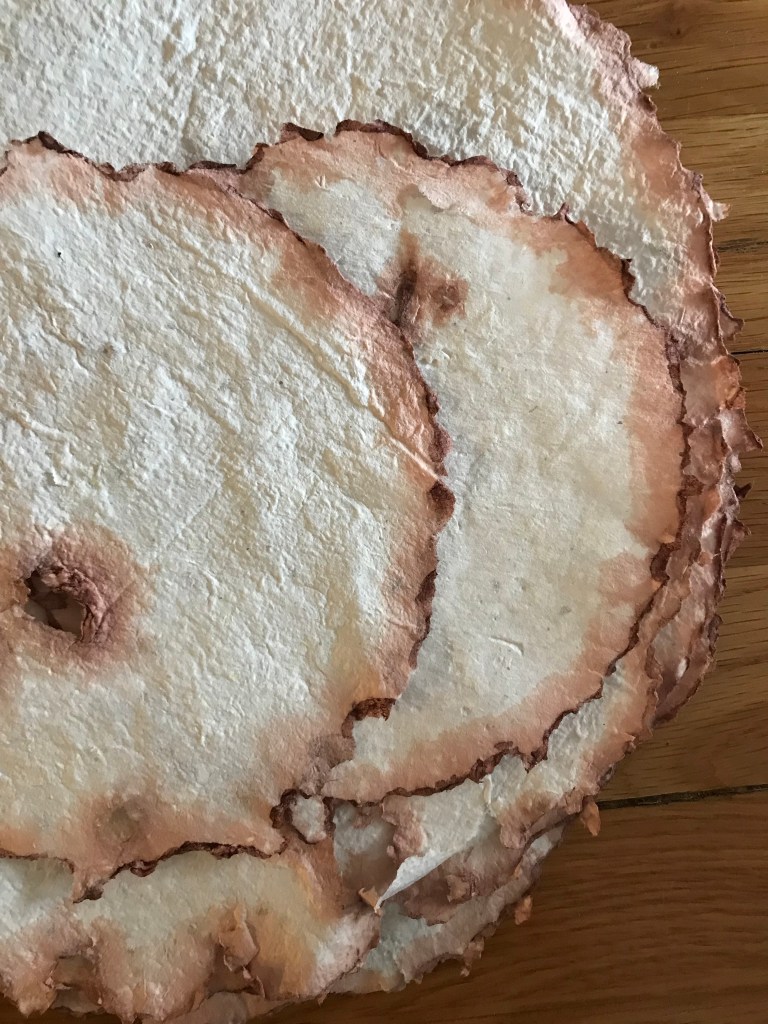
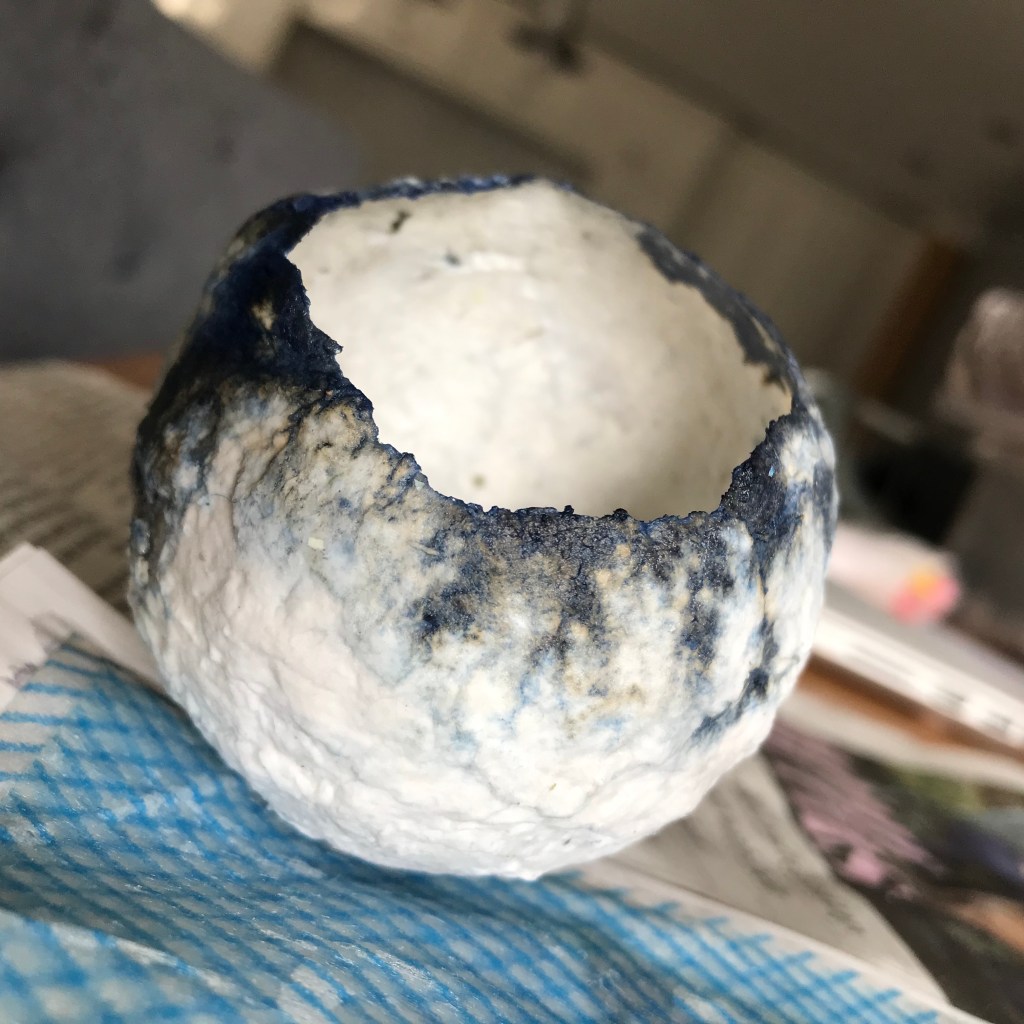
For this experiment I used spheres made using corn flour glue, so I was worried that when they became saturated with water that they would disintegrate and loose their shape. I dipped one of the forms and painted onto the other to experiment if there would be a difference to how the dye would disperse through the forms. I really enjoy how this dye looks they remind me of the natural decomposition or rusting you get on the edges of leaves, funguses or plants.

Surprisingly the spheres held their shape pretty well and the dye seemed to disperse through the forms well. I really like how the colour has worked out with the paper, this is paper I created using an embroidery hoop and the colour picks our the deckled edge well, making it look aged but also exaggerating the shape as the ink traveled through the paper. moving Forward i am hoping to experiment more with home made natural dye and if i can using things i have collected, this is also dependent on if I can find materials that contain tannin, which may be harder to come by this time of year.

MINI RE-EVALUATION: reflection and moving forward

My main focuses for this project was to explore the medium of paper, through its origins as raw and recycled materials to the manipulation of it into sculptural forms. This has resulted into quite process and experiment lead work, exploring what works, what doesn’t work ect.

For me my interest with nature comes from living so close to the New Forest, taking inspiration from natural forms, shapes, colours and textures. My work tends to develop from both my location and my paper making and tradition. I can see my work being a collection of artifact forms that reflect upon natural inspiration, as a result of collecting, photographing and documenting the great outdoors. I enjoy the satisfaction of knowing my work can be recycled, I have always had an interest in being sustainable and green and is something that I am conscious of day to day. I enjoy how my work explores and connects to the ideas surrounding biological metabolism and biodiversity. Moving Forward I want to push and explore these ideas considering placing these forms in the location that I took inspiration and exploring how they interact.

Covid 19 has definitely changed my approach to working, I have taken inspiration from the nature great deal more, collecting materials and finding inspiration from my daily walks, to explore artistically through form.

The limitations of paper make the medium challenging to use, especially hand made paper, the quality differs massively from standard papers and it has taken me a while to develop ways of working and handling it, both when it is wet and once it has dried. I now feel competent and happy using the paper as I have developed effective techniques that retain the qualities I am looking for within the paper, that I take from natural inspiration. (fragility, natural curling and shrinkage, opacity, ephemeral)
EXPERIMENT: uncontrolled ink

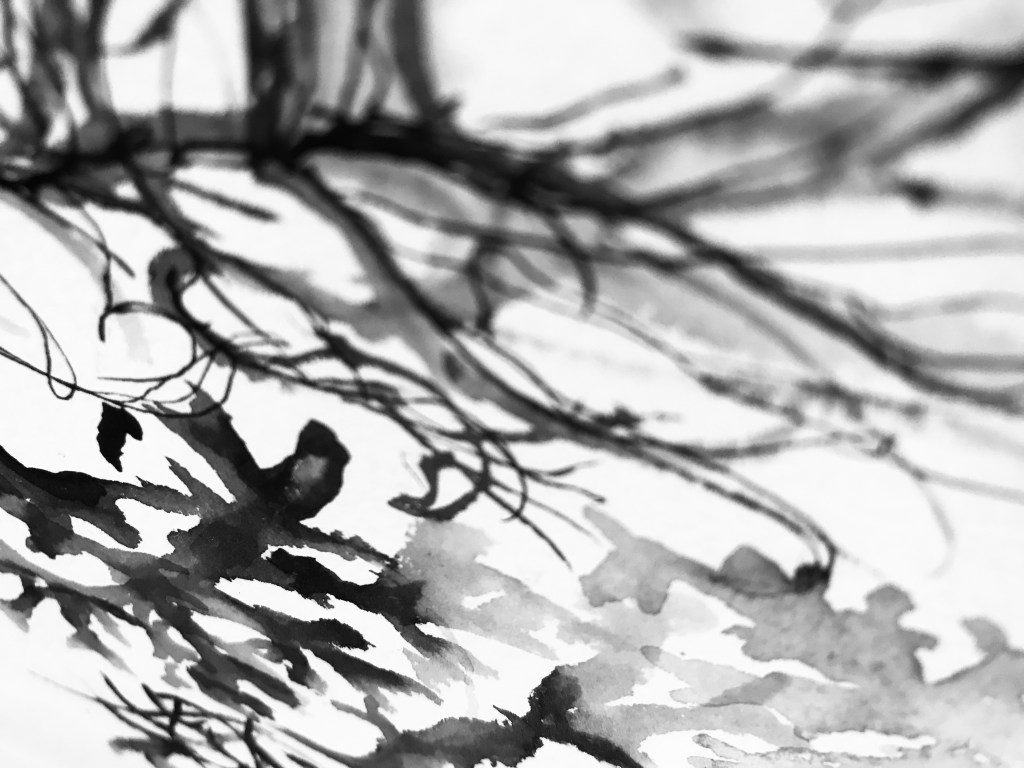
I wanted to explore how I could add natural and uncontrolled colour to the forms, to see how for the ink would travel through the wet forms, the outcomes are rather beautiful, uncontrolled and vain like, clinging onto the cracks and creases in the handmade paper. I am really excited by this, the colour travels extremely well and the colour changes as it moves through the forms.

EXPERIMENT: making spherical forms and alternative glue

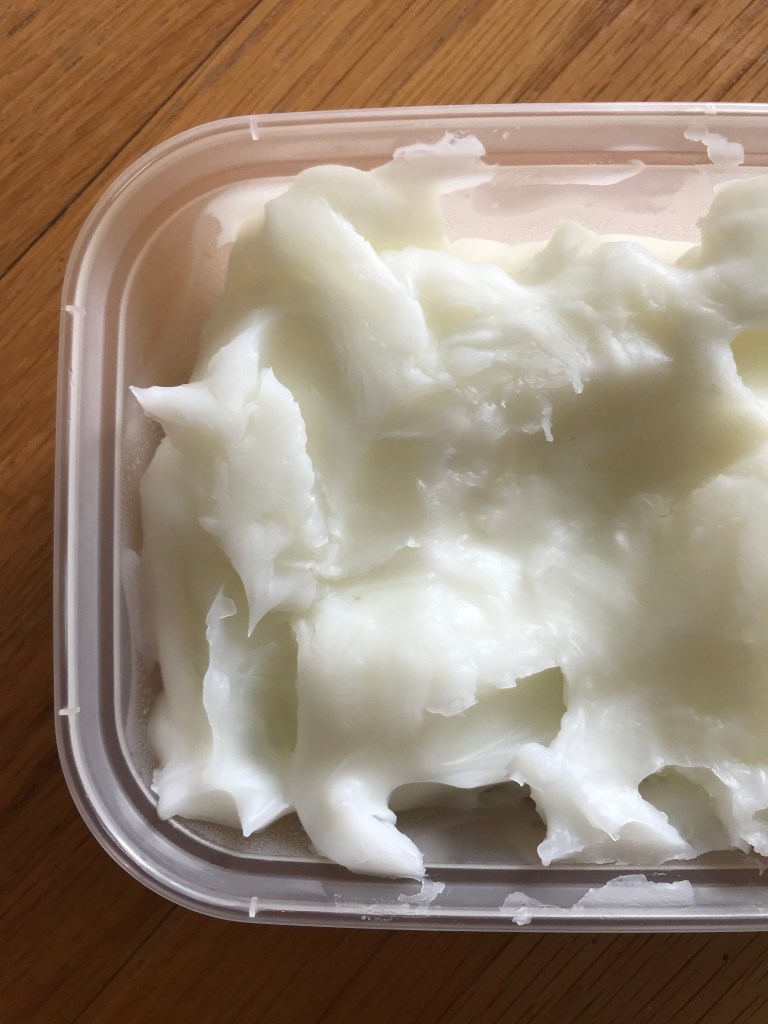
Cornflour “Glue”

I don’t really know what to call this other than a glue, it’s a paste like substance that is a natural alternative to PVA and therefore I wanted to experiment to see if this would work as an alternative to PVA. To ultimately reduce the amount of artificial and non biodegradable materials I use within my forms, I also found the PVA spheres I made previously for my stitch experiments became rigid and felt quite brittle making then hard to manipulate with stitch, this may be due to the amount of glue to water content I used (this may require more experimentation to perfect)

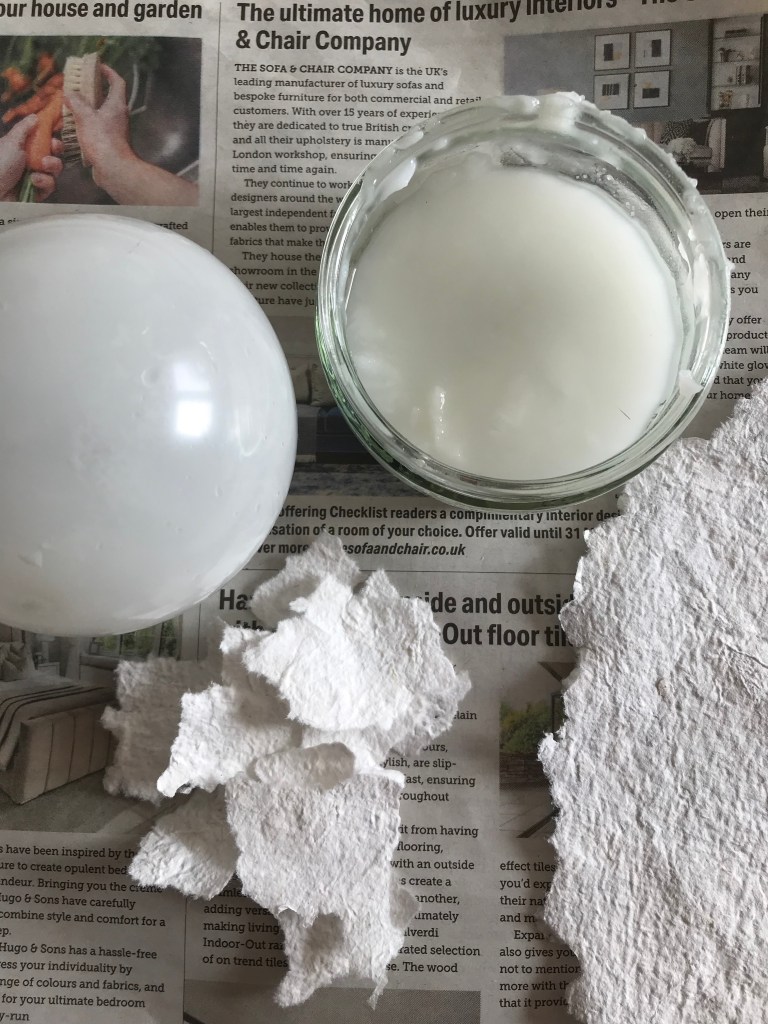
This was made using 1/3 cup of cornflour to 1 cup water, boiled until it thickened and went slightly translucent, to use this as a usable paste for my sphere forms I have to thin them down the glue to use with my handmade paper.

By tearing up bits of my handmade paper and pasting then onto the ballon I am able to control the thickness and opacity of the forms, the process of papermaking itself is very controlled and repetitive but the paper created is unpredictable and changeable, so at the drying stage of the paper I have very little control. These forms are a mixture of controlled and uncontrolled process and I really enjoy that.

Using the corn flour glue itself was very similar to PVA, I am yet to see how these change during the drying process and how long these will actually take to dry. I am hoping it will dry transparent but I am not yet convinced, I have a feeling it will have a milky layer.

Experimentation: with stitching and composition

I really enjoy how the stitching compliments the spherical forms, the spheres are slightly opaque and the light comes through the forms in patches highlighting the fragility of the forms. These forms were made using balloons, hand made paper and Pva glue. Although with I am happy with how successful this experiment was, I want to consider how I can be more sustainable in my practice and making work that is environmentally conscious or biodegradable (but given the current times we are in, it is currently harder for me to do this but is something I am conscious about as well as exploring alternatives). I enjoy how these forms interact with the wood collected and found in the New forest. I could see these forms being part of a collection of sculptural forms that respond to a woodland environment.

I am drawn to the oval forms within nature as for me the organic shapes, I think it would be beneficial for me to document circular or oval formations and natural forms I find within nature, This is also something Andy Goldsworthy has focused on with his work by exploring arrangement and structures within a location, it would be interesting for me to explore how these behave or work within an external setting.

Below, is a initial plan and quick sketch of what I envisioned the forms to look prior to making them. Moving Forward it would be interesting to explore how these forms would look with dispersed natural colors or dyes, I want to conduct an experiment to explore how the colour moves and seeps through the forms when it is uncontrolled and more organic.

Experimental free hand sewing using machine, on hand made paper
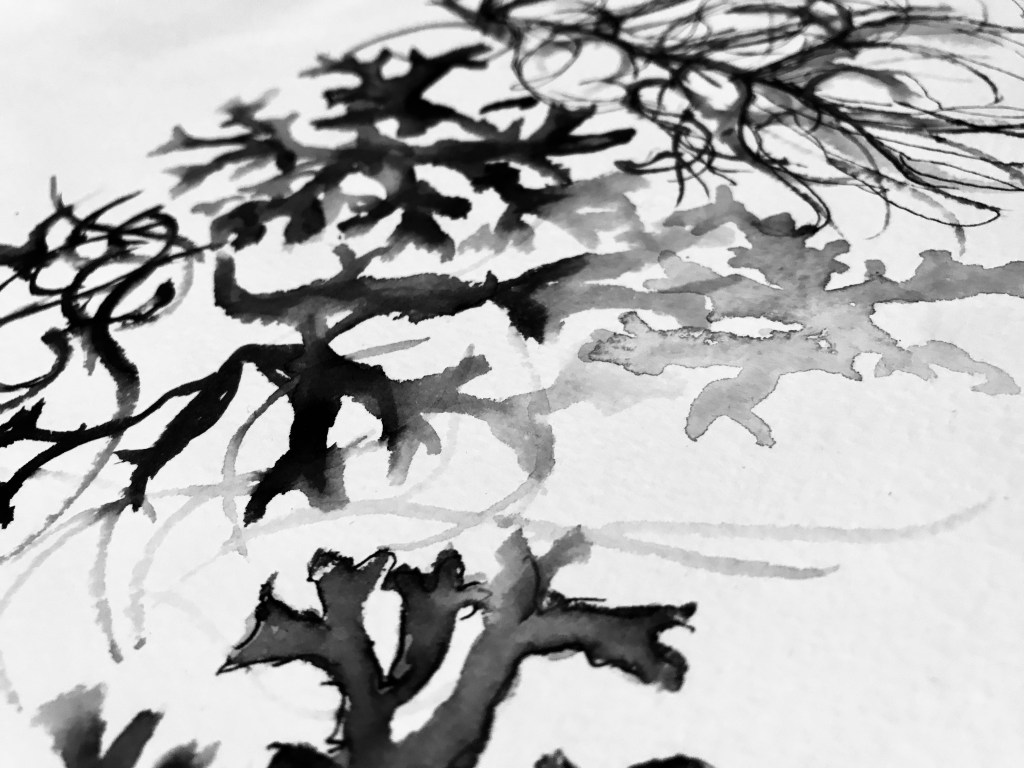
watercolour
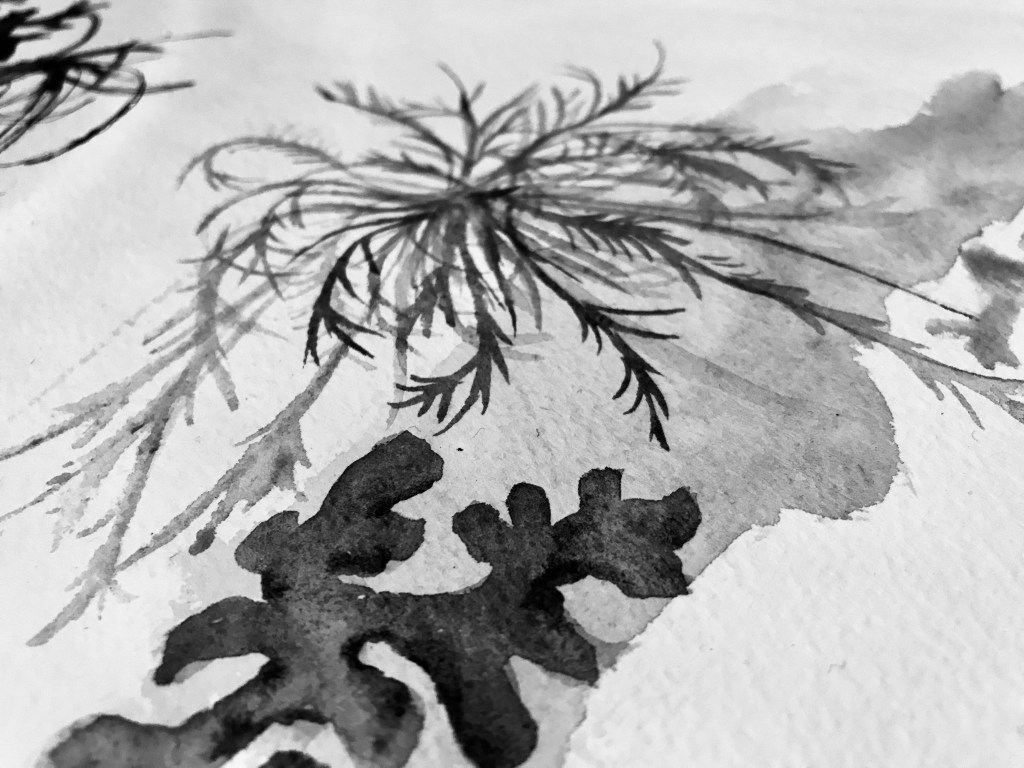
pen and ink

ARTIST RESEARCH: Andy Goldsworthy

After looking into the work of Jane ponsford and talking to Jon during a group tutorial, Im starting to see a connection or an interest in site specific work that has a focus on a location or a landscape in relation to natural materials

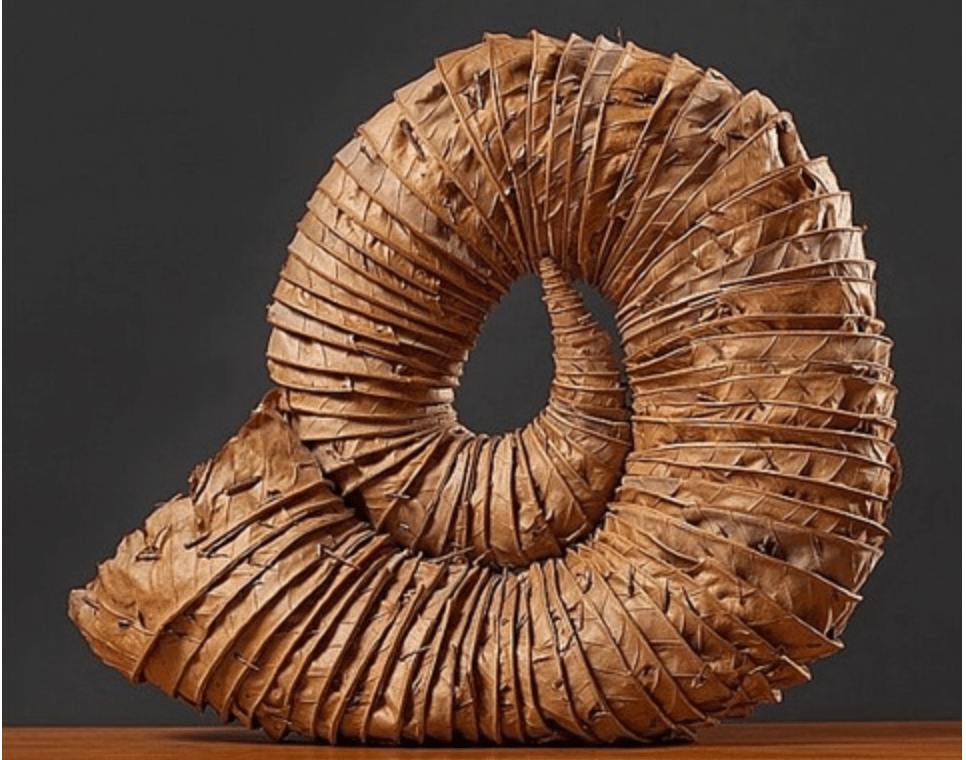
I have always been aware of Goldsworthy’s work and has been something that has informed previous projects of mine. His work always interests me because of the natural structures and shapes that appear within his work, as well as how they interact and work alongside the environment. Sometimes framing a view or drawing the viewer’s eye through the landscape. working with the landscape, using found materials, sometimes manipulating them in a studio and returning them. His works are also ephemeral, these things are not permanent they decay, erode and disappear back into the environment.

Holes / Middleton Woods, Yorkshire / 1 February 1981 (https://www.tate.org.uk)

Leaf Horn
, 1996 (http://www.artnet.com)

Although my practice does not directly relate. For me th interest in Goldsworthy’s work in in the collection of material and use of the environment and landscape to make non permanent ephemeral works of art. that one day will once again become part of the landscape.

Moving Forward, I am interested in combining my environment to my work where I collect my materials and get my inspiration and by doing so, making a stronger connection to where I am sourcing my materials, documentation and taking my experiments back into the environment that they were inspired by.

IAPMA: The International Association of Hand Papermakers and Paper Artists

IAPMA is an organisation for paper artists internationally representing a leading the way with paper as an art medium and contemporary art form. Its aim is to undertake an international exchange of artistic ideas and share information about hand papermaking and paper art.

This is a paid membership and could be something that may be of help to me share and explore my ideas, gain knowledge and experience and talk to other artists with a similar material quality. the membership is £60 a year so would have to be something for me to consider moving forward. The membership gives you an account, a gallery page, access ot IAPMA networking, monthly newsletter, access to a members contact list.

This is potentially something that would be of great benefit to me when i am starting to develop myself professionally. but it is also costly for me currently so that would have to be something to consider.

Design a site like this with WordPress.com
Get started