EDGE: alternative materials

For this project I want to be addressing elements of EDGE: ETHICAL, DIGITAL GLOBAL and ENTREPRENEURIAL. My work has always had a focus on Ethical aspects and I often consider renewable materials to use as an alternative no non renewable. I was considering alternative materials to use for this project and did some research around artists who use unusual materials in their craft or maker work.

I came across the work of Ruby Silvious who uses recyclable materials in her work. Not only do I love the concept of using something of discard or no value and creating something decorative or of worth with it. She also uses waste products and recyclable materials to create works of art.

Pen and ink on cracked eggshells
RUBY SILVIOUS. 2020. RUBY SILVIOUS. [online] Available at: <https://rubysilvious.com/shop—prints/view/1893633/1/1893643&gt; [Accessed 18 October 2020].

Initially I saw these as just painted egg shells but then after looking more closely I started considering them as vessels in their own right. each unique and individual. pen and ink on eggshell. this is just an everyday throw away by product of every day and also the cooking industry.

It is interesting to consider the hidden value of things and ways of repurposing broken or rejected goods.

Teabag Papier Mache Bowls (With images) | Tea bag art, Used tea bags, Paper  mache bowls
RUBY SILVIOUS. 2020. RUBY SILVIOUS. [online] Available at: <https://rubysilvious.com/shop—prints/view/1893633/1/1893643&gt; [Accessed 18 October 2020].

Silvious also did the same with bin worthy tea bags repurposing them into delicate bowls with intaglio printing on the surface. the bowls have a really lovely fragility and opacity to to them. although these wouldn’t be a practical vessel to use for liquid it has a decorative quality to it.

Paper and other mailable type materials will be ideal for me to experiment with. To consider the ethical impact of what I am creating and I would like to explore ways I can use materials that have lost their purpose.

A team of students from imperial college london have created a biopolymer from used lobster shells. Although this product has a fuction; to provide nutrition to plants as well as creting a product as a replacement for large scale manufacture of single use plastics. the material qualities of the lobster shell creates a really interesting alternative material.

The main thing I can take away from this is the possibilities for using a waste material and making it into something with practical and aesthetic value.

Colossal. 2020. Search For “Recycled”. [online] Available at: <https://www.thisiscolossal.com/page/3/?s=recycled&gt; [Accessed 18 October 2020].

Considering these works I am now very inspired to have a greater emphasis on the recycled aspects of my work and ways I can repurpose something that would otherwise be a waste material.

ARTIST RESEARCH: Gizella K Warburton

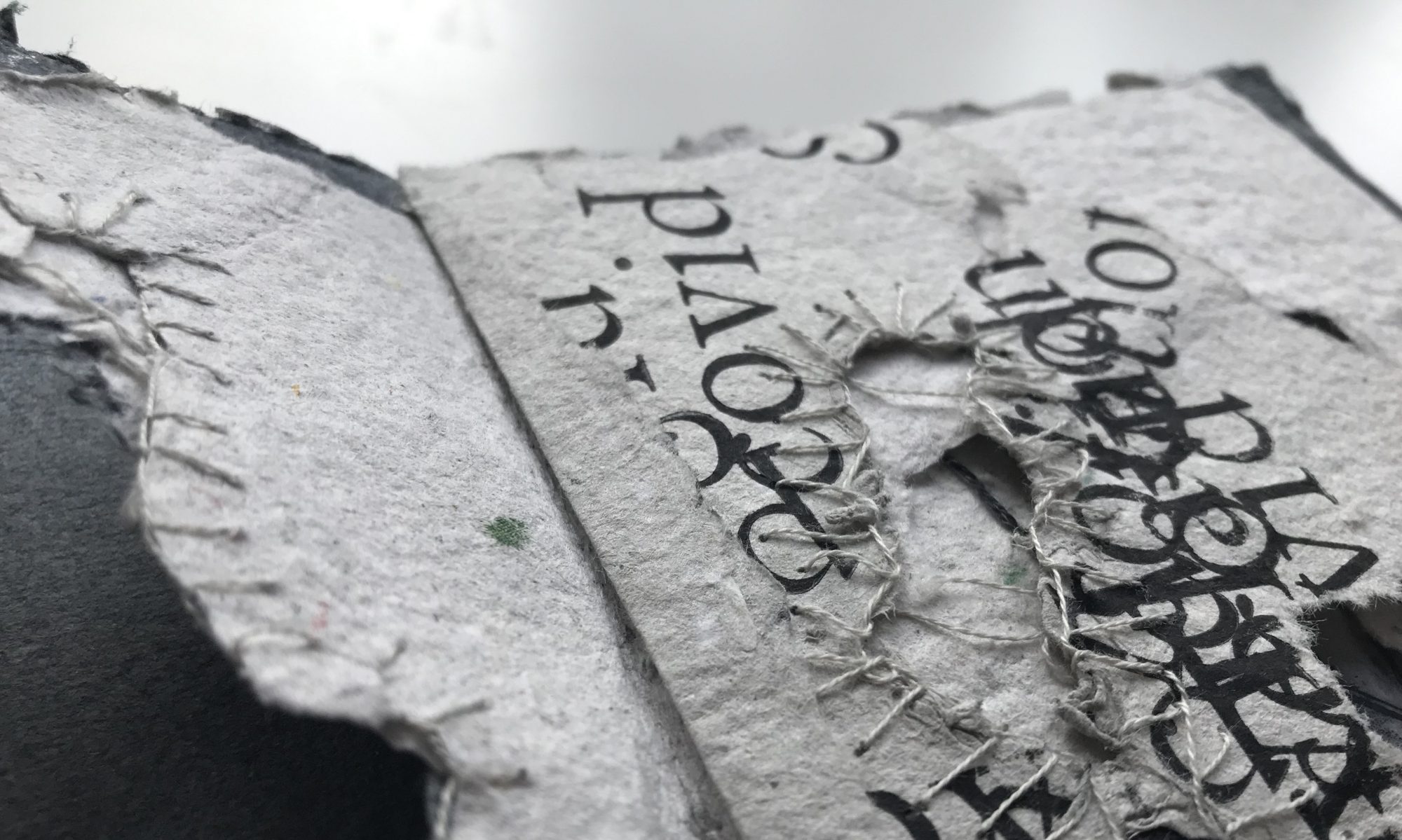
Whilst researching for traditional paper craft I came across the work of Gizella k Warburton. She has developed a unique mixed media contemporary craft approach to a bowl. I am drawn to her work for the textural variation as well as the use of stitch and paper and fabrics. she describes her work on the interior spaces blog (Selvedge Magazine. 2020. INTERIOR SPACE. [online] Available at: <‘My current practice has its origins in stitched cloth,’ Gizella explains, ‘though undoubtedly rooted in embroidery and patchwork, I experiment with and refine processes in a search to describe the way elements have imprinted themselves in my mind.’) as ‘My current practice has its origins in stitched cloth,’ Gizella explains, ‘though undoubtedly rooted in embroidery and patchwork, I experiment with and refine processes in a search to describe the way elements have imprinted themselves in my mind.’ There is a sense of refinement and control with her work. The use of stitch is used for structural support but also provides a form of delicate decoration. I find this interesting as it is something I have considered bringing into my work to relate it to my book binding skills.

ritual-form-vi_01_sm

Moving Forward I want to experiment more with the manipulation of paper and experimenting with ways of incorporating stitch into the work, while illustrating fables and stories.

RESEARCH : kashmir paper mache

When considering materiality for this project I wanted to consider traditional methods. I was interested in the use of paper mache because of its hand building property. I delved deeper into the research of the origin of the material and discovered its ties with Kashmir, India. it was first introduced to India during the 14th century. The indian process involves soaking paper for 3 to 4 days to form a pulp and mixing with rice glue to form a malleable paste that they form into objects using moulds. this they then polish and coat with a lacquer. These are usually formed into bowls vases, bowls, boxes and other small artifacts that are richly decorated using paint and gold. This is a process that is dying out in the area.

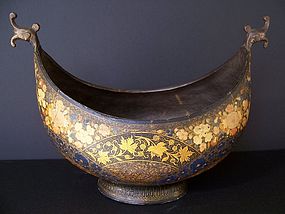
An Exceptional Lacquered Kashmiri Kashkul, 19th Century
Trocadero. 2020. An Exceptional Lacquered Kashmiri Kashkul, 19Th Century (Item #967079). [online] Available at: <https://www.trocadero.com/stores/BodhisatvaCollection/items/967079/An-Exceptional-Lacquered-Kashmiri-Kashkul-19th-Century&gt; [Accessed 15 October 2020].

This is an example of a 19th century Beggars Bowl formed from paper mache. These vessels are usually highly decorated and support a highly intricate design. Often featuring folk art, fables, animals and flowers. I enjoy the vibrancy and eye catching details within this design.

beautiful indian kashmir hand painted papier mache bowl c1900
This is another example of a Kashmere bowl with a guided interior. I think these bowls are extremely beautiful and represent great skill in tradition.
Sellingantiques.co.uk. 2020. Beautiful Indian Kashmir Hand Painted Papier Mache Bowl C.1900 | 421350 | Sellingantiques.Co.Uk. [online] Available at: <https://www.sellingantiques.co.uk/421350/beautiful-indian-kashmir-hand-painted-papier-mache-bowl-c1900/&gt; [Accessed 15 October 2020].

I am drawn to this technique for its possibilities but also the ability to make something of no worth, value or interest into an artifact of great value and richness. I enjoy being able to make recycling a part of my projects and I am keen to have this sustainable element within my work as this is something I have always been conscious too.

THE PLAN, THE PITCH AND THE GOODS: Initial ideas

The brief given; to create a gesamtkunstwerk bowl. Which typifies the values identified during my gesamtkunstwerk presentation (nature, diversity, juxtapose, traditional methods, illustration and storytelling). this bowl can be seen as an object or concept in the context of design and craft.

After talking to Ingrid in my personal tutorial, the ideas that i should consider to be present within my work is the use of traditional methods in order to explore my interest in book binding.

Developing my interest and technique in bookbinding needs to take primary position for this year as this is what I feel I want to continue after my degree. therefore I feel this needs to come through and be combine into this bowl project. To do so I need to think less about a physical book bound form and more of an object that uses the traditional forms, methods and material values of a hand bound book. considering stitching, materials, printing, lettering and illustration.

My current thoughts to explore paper cut and paper mache vessels that explores the restoration and conservation and building technique of bookbinding that I seek to become competent in by the end of this degree.

To do This I am going to explore paper mache as a means to create a delicate form that I can control the scale thickness and opacity of to explore the fragmentation seen when repairing older book. This I will then be able to experiment with colour illustration print, text and paper cut.

PRESENTATION: Gesamtkunstwerk, Pecha Kucha

When considering what makes a ideal, the objects artists and locations that came to mind were the ones that had an emotive sense of nature. As I was selecting my 15 objects I started to see similarities from one object to another. I have always been drawn to texturally beautiful things, nature, sculpture and tradition. I have also always been fascinated by fables and mythological creatures.

If I were to do this presentation again I would consider categorising my Gesamtkunstwerk objects into related ideas or objects. finding stronger connections between each. looking back on this task I was disappointed by the delivery of my ideas. I was thrown by the 15 seconds. I feel I was trying to fit too much information into the time and should have focused more on the way the objects made me feel.

The best part about this task for me was the feedback I got given for my chosen objects in relation to my own practice. I was intrigued by the words that came up and how accurate they were to my work and interests.

The words from my group were: Photography Home ceramic land art inspired by nature detail bookbinding Kraft handmade storytelling texture tactility detailing iconic vibrant luscious ilott on canvas storytelling multimedia binding material diversity gorgeous fantastical sculpture site-specific generation duration ephemeral representative powerful semiotics kinetic connected Collection Beautiful juxtapose physicality whimsical magical texture colours niche next media contemporary hybrid traditional methods intense colour colourful colours patterns atoms abstract native ad nature and animal illustrations storytelling meaningful aquatic ocean life narrative personal development and and traditional and contemporary

The 6 chosen words for me were: NATURE, DIVERSITY, JUXTAPOSE, TRADITIONAL METHODS, ILLUSTRATIONS, STORYTELLING

Design a site like this with WordPress.com
Get started