EVALUATION

I came into this project with limited knowledge of forming from the figure, life drawing and figurative context. Although it has always been something I am interested so it was important to me to picked this field as it would be a chance to expand my knowledge and crafting skills. It did! The contextual lectures allowed me to expand and learn by having new influences and a historical understanding. I particularly found this helpful when making a presentation as being shown artist examples inspired me to delve deeper and discover more for myself.

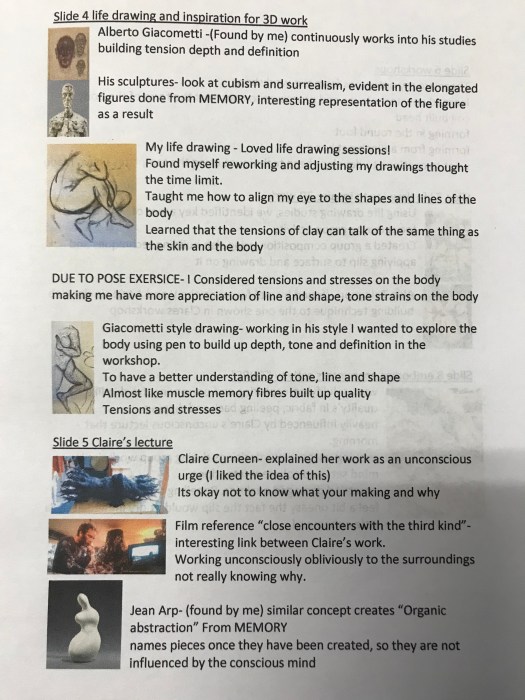
The wide scope of workshops challenged and expanded my skill set and I have now banked new techniques that I can further progress with. it was helpful having these making workshops as the 1 to 1 support and techniques were very helpful. Having the chance to work from life drawing has been really helpful not only to understand the proportions of the figure but also to gain a bigger understanding of clay and applying similar techniques and behaviours it was interesting to compare and contrast the clay to how skin behaves. although at first I found it a little weird having the life drawing session where we held a pose, this session helped me understand the stresses and tensions that the body goes through but also this was helpful for me as I started to communicate and understand these stresses within my own work.

I enjoyed the group aspects of this project and under taking the final embodies encounters task I was able to come at it from a new perspective and consider and play with new understandings and provoking feelings to create and experience by using mixed medias. I really enjoyed working as a group although this is not always the easiest thing as people have differing views and it challenges communication skills, I don’t often get a chance to do it very often but it was interesting how our worked pulled together with similar understanding and ideas, we all had a similar interest with exploring in the realms of wax and the resistance when combined with clay. This outcome explored the tactile nature of fabric and how the composition changed state over time similarly to skin and the fragility of the materials through cracking and ripping. it was interesting having a group conversation as it was helpful to understand other people’s thought processes through this activity and some really interesting narratives arose from it.

Moving on from this project I have developed a real interest in the human form and figurative modelling and it is something I am keen to pursue further. learning initially about the ageing, damaged bodies and inside out I have become interested in attraction and repulsion and how these can be communicated in order to make the audience feel a connection or discomfort, this idea interests me as challenging this could throw up some interesting outcomes.
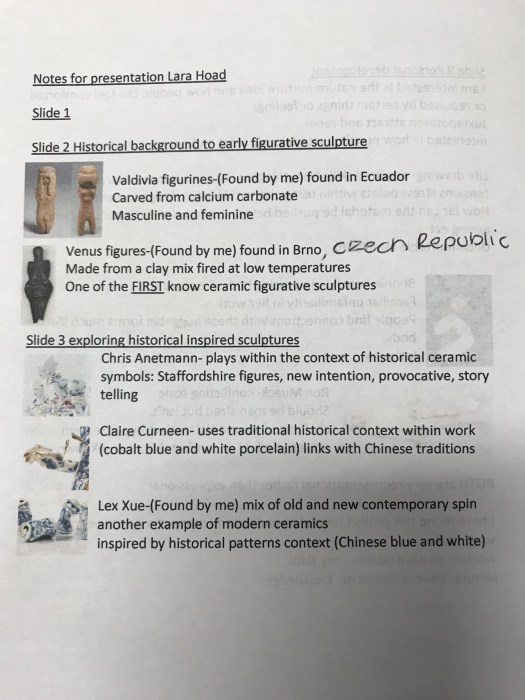
GROUP CONVERSATION ON EMBODIED EXPERIENCE TASK

key words and phrases from the session that interested me. We explained our embodies experience work to our group…

Inbetween, reality, unconscious, dissolving, tripe, embodied experience, transition, repelling, pivotal point, repel, absorb, pull, stretch materials, material values, interaction, beads of sweat, dripping, finer details, documentation, living changing capacity, changing state of material, ephemeral, permanent, membrane, cracking, seeping, oozing, bleeding material, texture comparisons with skin, tangible qualities, neriour system, the body as a container, absorbent surfaces, analogies with absorbed water in hands wrinkles when wet, swelling ankles, fragility with age, changes of the skin, disease process, bodies consumed during illness, fragility, repelling repulsive, body as a shell, interiors and personalities stay the same, integral similarities with the qualities of clay, time frames in humanity, understandings of immortality, autobiographical elements, attune to language of of material, tuning into a material within the interactions of the person with the clay, empathy understandings, mechanisms of interaction, humans from time frames of mortality, timescales, moral dilemma of materials, reduce, reuse and recycle, capturing a moment in time, what will happen to these once the session is over? reusable fabrics? wasted, material empathy, taking aspects of the body, sense of becoming, empathy.

EMBODIED ENCOUNTERS WORKSHOP

IMG_2184

I loved this workshop! this was a totally new experience for me I have never worked in this way considering an all round feeling or experienced for the viewer. Expressing ideas, qualities and feelings. we discussed as a group the key interests to evoke during this exercise, what we are interested in showing and what our favourite firms from the  workshops were.

(I have no photo evidence from the plaster workshop using the fabric moulds as it was very messy and I was too emerged in the workshop to remember to take pictures of my foot and hand. we first made fabric moulds by drawing, then using the sewing machine to sew around the shapes to create a ‘pocket’ for the plaster to sit in. These images were taken the morning of this workshop once the forms had set and solidified into held positions, I curled my fingers of the hand to create a more interesting composition.)

IMG_2169

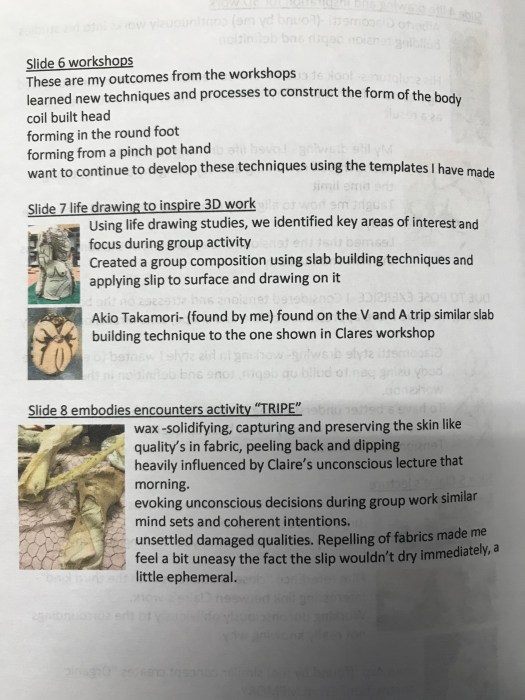
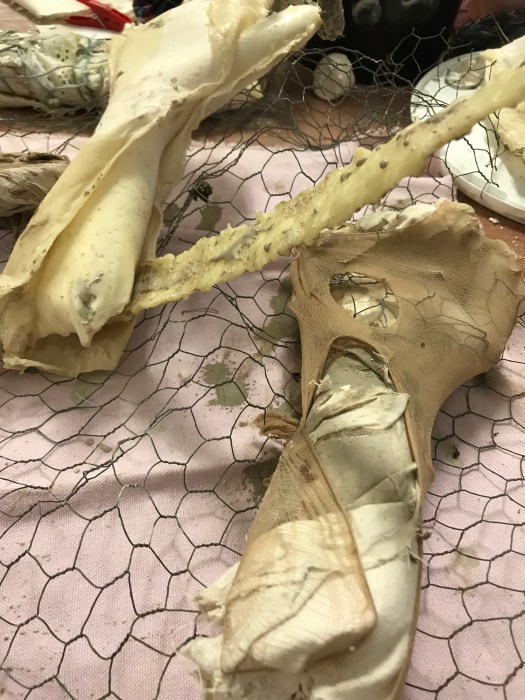
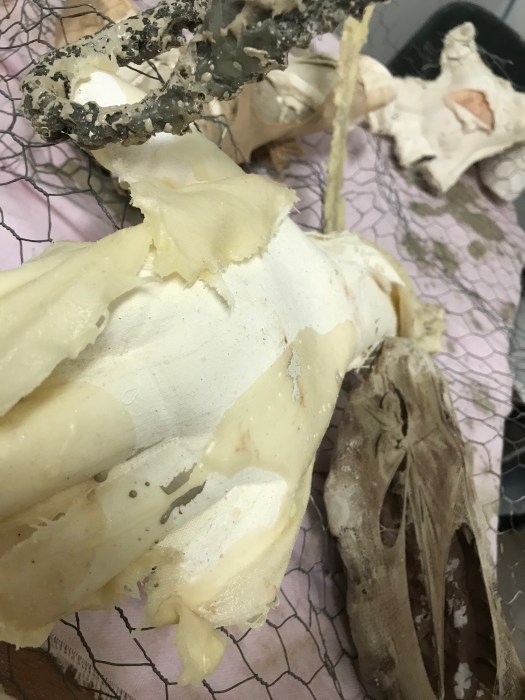
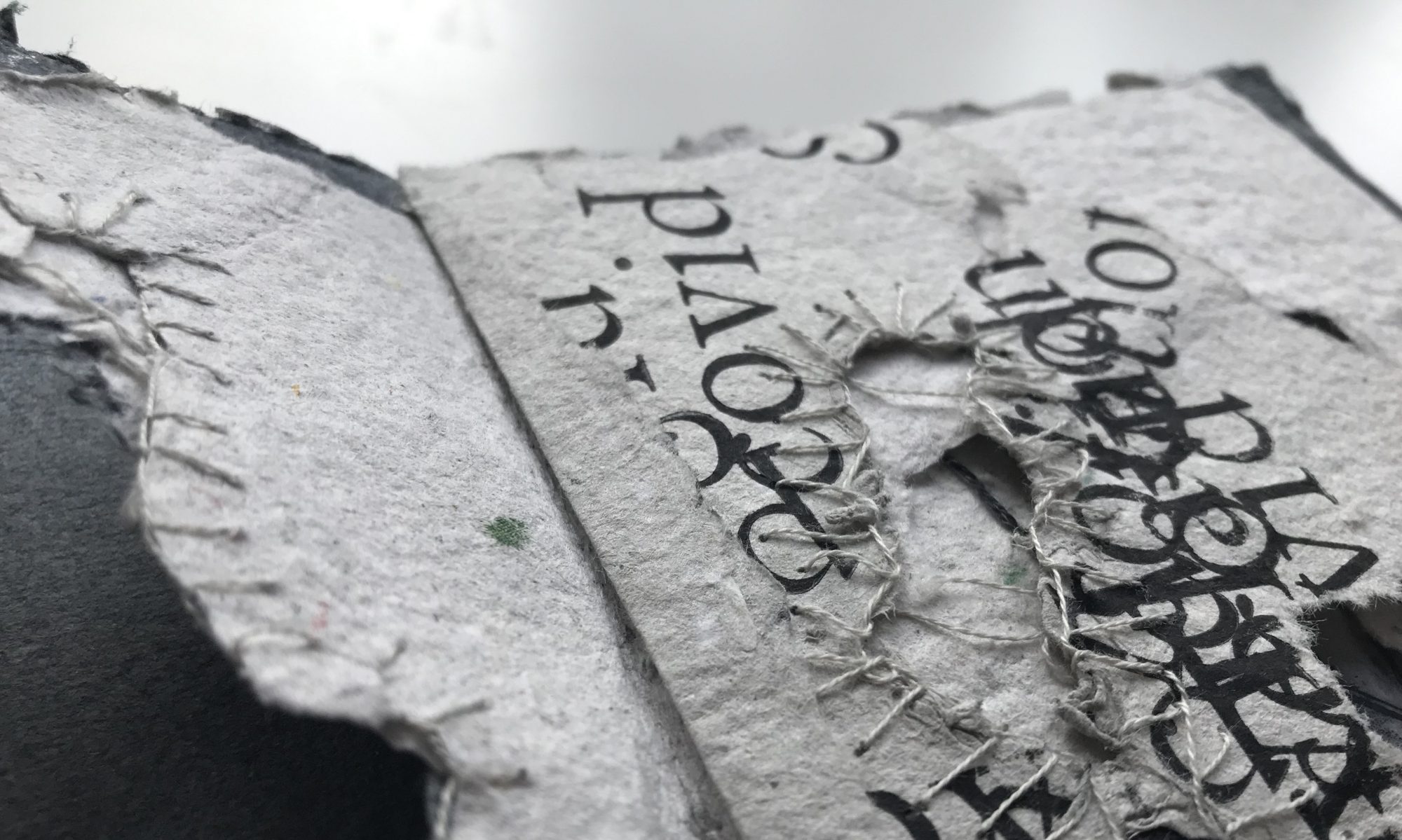
we started my manipulating and ripping the fabric from our plaster forms this became an interesting discussion of making an ephemeral nature of skin was resembled within the fabric, so we wanted to give the form permanence by stiffening the fabric using wax.

I  bound my plaster hand within a pair of tights and use mixed mediums to submerge peel and rip the form to create connotations of damaged skin and revealing layers of the body, bandaging and repairing broken skin. I have had operations where I have felt like I’ve been torn apart and sewn and pulled back together.

IMG_2183

we wanted to bring the forms together so we experimented by dipping the resources given to us (wool fabric, lace fabric and knit) to create these “tripe” like forms that when these fabrics were dipped in wax then submerged in slip repelled each other forming this spinal tripe skin like quality. these we hung to intertwine with the placed hands.

IMG_2180

This was an interesting exercise to undertake after having claire’s lecture where she spoke about the unconscious mind as we felt as a group we were making things to play and explore not necessarily knowing the final outcome by pulling similarities and ideas around as we were working.


CLAIRE’S LECTURE

The most prominent part of learning about Claire’s practice and artistic interests was her work discovering the unconscious mind and how you can be making work not necessarily knowing what it is you are making or why you are making it, she explained it is okay to not to know. she compared this to the film “Close Encounters Of The Third kind” where the character unconsciously has the urge to make a huge mountain structure, unaware that what he is unconsciously sculpting already exists and he has been inspired but is oblivious to what it is he is making until he sees it on tv.

Richard Dreyfuss in Close Encounters of the Third Kind

Sachs, B. (2019). Close Encounters of the Third Kind remains an uncanny mix of globalist optimism and private horror. [online] Chicago Reader. Available at: https://www.chicagoreader.com/Bleader/archives/2017/09/05/close-encounters-of-the-third-kind-remains-an-uncanny-mix-of-globalist-optimism-and-private-horror [Accessed 9 Dec. 2019].

This links to her practice where she explained how she had an interview over one of her pieces of work; a large tree like structure, she didn’t know why she made it but it became the elephant in the room during the interview as it wasn’t spoken about. claire explained then how she didn’t know why she made it.

IMG_2271

Claire Curneen’s work shown to us in the lecture

The idea of unconscious creations is rather lovely as it allows the artist to make freely without having any barriers or avoidance. similarly to this idea, Jean Arp figuratively sculpts unconsciously creating “organic abstractions.” These pieces created by Arp are named prior to there creation to avoid influence during the making process of the conscious mind.

Winged Being’, Jean Arp (Hans Arp), 1961 | Tate. [online] Available at: https://www.tate.org.uk/art/artworks/arp-winged-being-t02007 [Accessed 9 Dec. 2019].


HEAD BUILDING

I missed the head building workshop due to illness, I wanted to have a go at this technique by creating my own head. I contacted someone who attended and they explained the process to me. they used a coil building technique to work on the head getting wider as the head grew from the neck to the ears. then adding features after or as they went. I gave this a go and I am very happy with the result I was to have loose detail on the face by mapping the key features to gesture.

IMG_2191.JPG


HAND BUILDING WORKSHOP

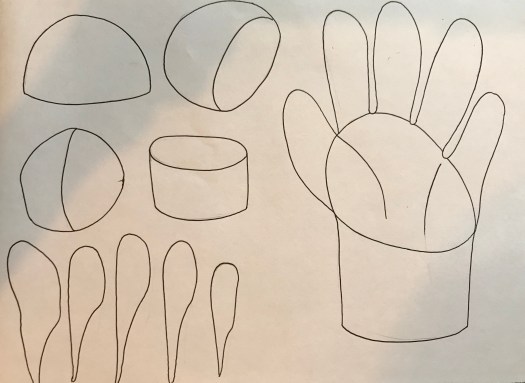
During this workshop we where shown how to construct a hand from a pinch pot technique. this evolved joining two pinch pots together to create a hollow ‘palm of the hand’, then using this to attach the wrist, fingers and add details. This was an interesting technique to use but a very simple and effective method, and it was helpful having your own hand available for reference. IMG_2164

I created this template as a rough guide so I will be able to recreate this construction again.

fullsizeoutput_3b3.jpeg

GROUP SLAD BUILDING WORKSHOP

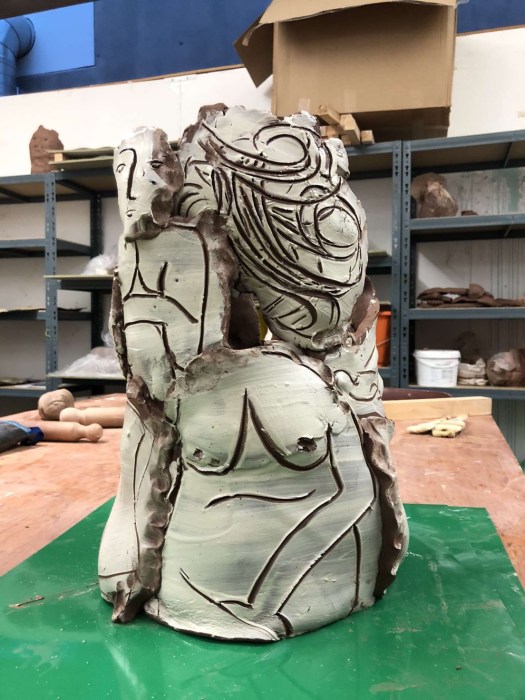
This workshop explored the figure through using our  life drawing studies to inspire and influence shapes and key areas of focus within the form. this technique involved rolling out slabs, applying a slip to the surface and then craving out the features using tools, to emphasise the shapes of the body and make our constructions more three dimensional we pushed out the clay from the other side. this was an interesting experiment as it made me more aware of how much you can push and pull clay to withstand its own weight.

IMG_2244

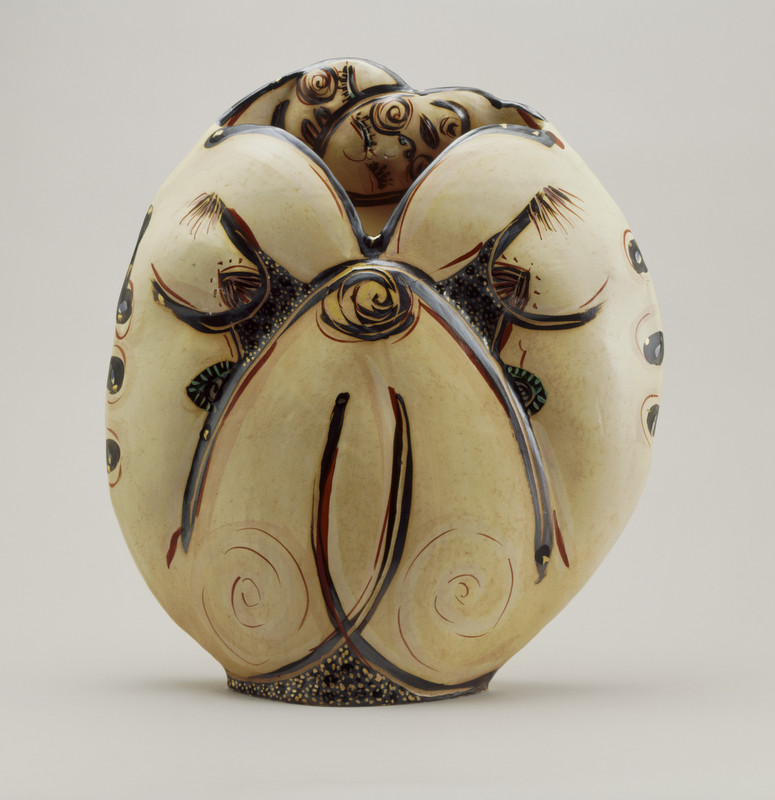
During my trip to the V and A I found the artist Akio Takamori, who creates figurative pieces using a similar slab building technique.

Aiko Takamori vase

 Thom, D. and Thom, D. (2019). Out On Display #4: Akio Takamori and ‘Queer Objects’ • V&A Blog. [online] V&A Blog. Available at: https://www.vam.ac.uk/blog/museum-life/out-on-display-4-akio-takamori-and-queer-objects [Accessed 9 Dec. 2019].

Design a site like this with WordPress.com
Get started