COLLABORATE FIELD LIGHT PROJECT: EVALUATION

If I could develop anything further a result of the field rotation I would want to develop on the pinhole project, it would have been nice to be able to have more time in order to experiment with the doodling in the dark room further, pushing it to see if there would be scope for any more development on the idea, I would also want to design adaptations to the pinhole to enable the camera to capture changes in the shapes of the pinhole.

I now think light is a very important aspect of all design whether it is a direct result of the light or incorporating light into a composition, this has allowed me to focus on the qualities that light give, for example in creating an atmosphere and mood, as well as using it to explore a technique and inspiring a sculptural form.

I think as a maker I was very open minded to how other disciplines would approach themes and wanted to learn and adopt different working methods form these disciplines to allow my work to develop in a way that shows understanding of cross discipline ideas.

COLLABORATE FIELD LIGHT PROJECT: INTERIOR

Our task is to make a collage of images to portray a space using juxtaposing ideas, as a group we where given peaceful and aggressive. These we mind mapped to unpack the meaning of these two very different words we came up with words associated with the meanings and the way the words made us feel.

AGGRESSIVE: dark, reds, textures, noise, large, sharp, angular pointy, messy.

PEACEFUL: calm, quiet, soft, lines, whites, bare, clean

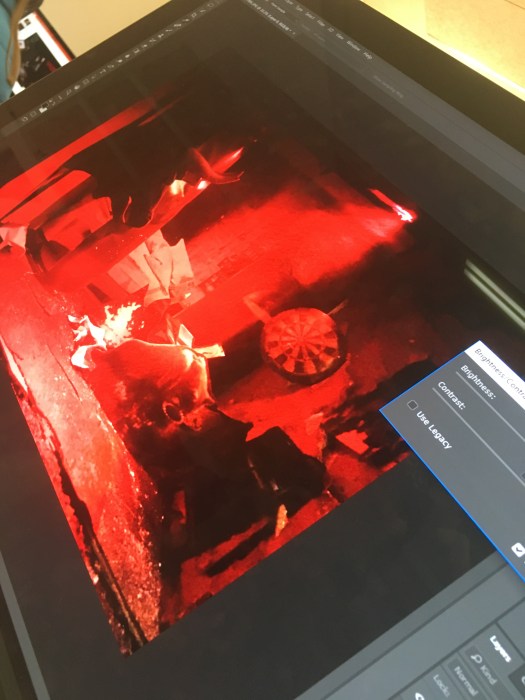
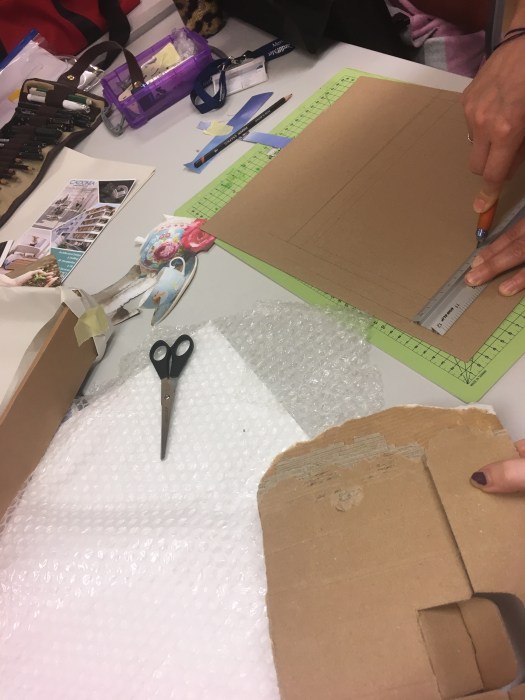
We wanted these collages to portray the feelings associated with the word. We wanted them to feel as if you where looking inside the room because of this we decided to create a 3D composition so when photographed it’s as if you are inside the room. We wanted to use a collection of found images and materials to layer inside the boxes.IMG_6577For the aggressive room we found colours associated with aggression where black and red, we went with this and wanted to incorporate red light into the design this is so that the room would become an intense red colour so that if you were in this room you would feel aggression, we did this by creating a canopy that sits over the box that we used with red film and when the light comes through, intense strobes of red enter the room. We also wanted scratchy corrugated textures to be incorporated into the design, this is because we felt scratches where an aggressive texture. This we intensified using Photoshop to manipulate the contrast.IMG_6581

Whereas with the peaceful room we wanted to create a welcoming environment that makes the viewer feel calm and relaxed by using soft furnishings and textures and light colours. with this we then edited the image on Photoshop and softened the edges as well as add some yellow hues and contrast to make the room feel warmer.

Working with interiors is something totally new to me and it was a valuable experience to be able to build and design a composition with the help of people from that discipline. As a maker I was able to place my practical skills in making the rooms and editing using my basic Photoshop skills. I enjoyed this collaboration the most, there was only three of us in the group two makers and one interior, this enabled us to be freer with incorporating ideas and sharing knowledge, something that is harder to achieve in a large group environment.

COLLABORATE FIELD LIGHT PROJECT: MAKER

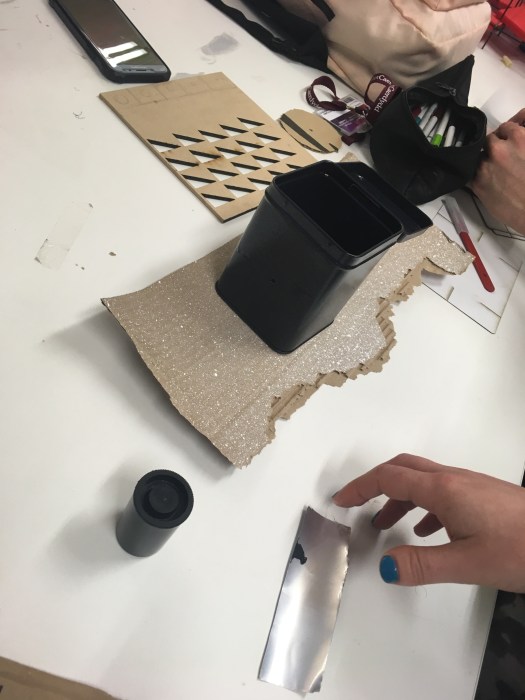
Our task was to explore light through the use of a pin hole camera, we started by constructing the camera from a tin. As discussed as a group we where keen to mind map a range of ideas for how we could capture the images.IMG_6499IMG_6527

One of the ideas was to obscure the shape of the pin hole, in reality we found this a challenging concept to get the hang of as when we were constructing it, we found we were letting too much excess light into the camera, this would cause the images to be overexposed. Therefore, we found the best option was for us to explore the pin hole using the traditional method.

We started the focus on landscapes to explore the technique involved in the pin hole, but found the images where not very inspired and had no focus or direction so we wanted to capture portraiture as this allowed for more interesting compositional change.

we also explored landscapes this lead to an issue… we left the camera for a long exposure shot when we went back to the camera it was gone, this meant the remaining photos had to be taken on a demo pin hole camera so where we had previously found an ideal exposure length we had lost this so it took us a fair amount of time to refined the correct exposure this turned out to be 7 mins in the photography room with all the lighting.

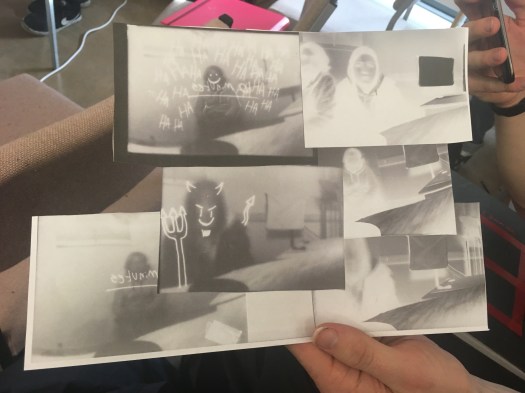
We wrote the timings on the back of the photos so we could refer back to them, while developing the images we noticed the writing was also developed causing an accidental doodle layer effect on to the images. We went with this and explored it further causing some effective outcomes that we transferred to postcards.

img_6592.jpg

We documented our processes and photographs in order to be used to create the ornamented reality using the HP reveal app. Using trigger photos to set the video into motion. We found we wanted to approach this video as a technical demonstration of the dark room and pinhole process.

IMG_6574

TRIGGER PHOTO

As this was my own subject area, I found the transition into the work was very smooth and I felt I was able to advise non-makers with previous skills I had acquired from this course previously, as this was the case, I also found imputes from other members interesting as some of the ideas I would not have considered. I found this collaborative task interesting as we were able to become very experimental in such a limited time through trial and error and experimentation. The main point of change was from when we decided to focus on portraiture, then one we had direction and the happy mistake we were able to spend a day developing and exploring this technique further in the dark room.


COLLABORATE FIELD LIGHT PROJECT: CERAMICS

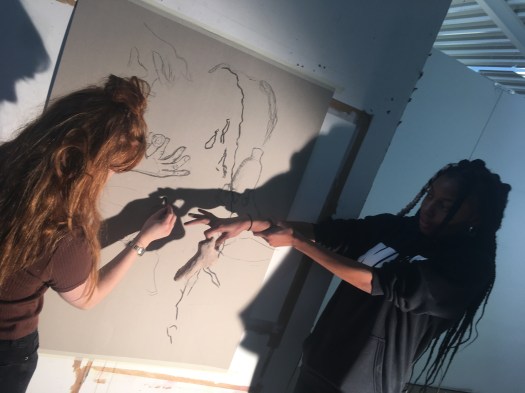
The project involved Exploration into shadow and light. We started by exploring shadow through drawing, as a group we found objects to cast obscured shadows. We found common themes of spikes and overlapping caused by the use of a book as well as the human form causing shadow.IMG_6449

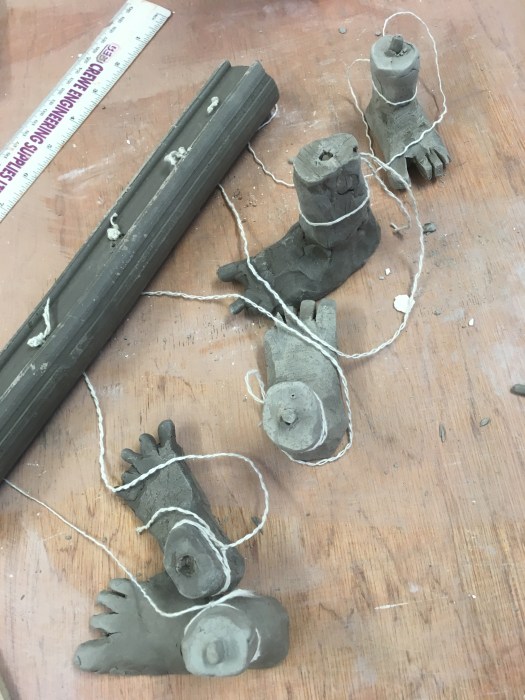
IMG_6451We where told our next task was to translate these drawings and sketches as a group into sculptural forms using the slab building method.

We decided our focus for this would be for us to collaborate our drawings into a constellation where we combine both these spiked angular forms with the more organic human shapes.IMG_6481

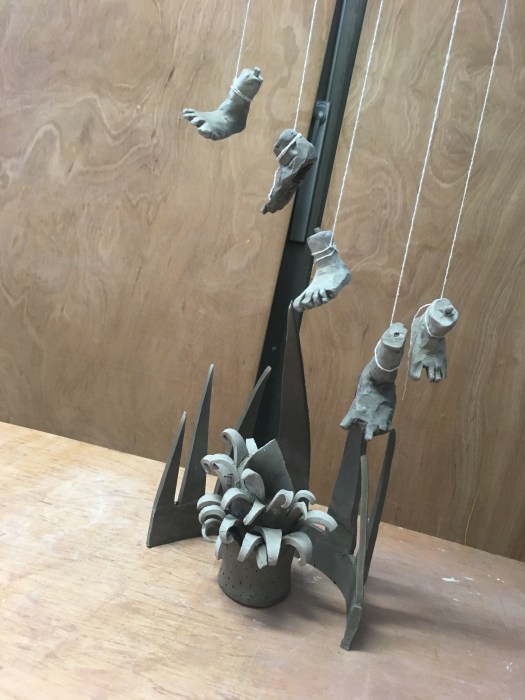
We decided to make to the forms hang from an extruded length of clay and have the spiky forms sitting underneath the feet.

During our presentation of our work I felt we clearly explained how we approached the task as well as conclude our work to this outcome.

I found this group collaboration challenging, as multiple opinions and imputes made it hard for us to come up with an agreed theme with our work. Also, different working methods became evident and flexibility with ideas and concepts where a necessary part of this group work for the project to flow smoothly.

Working within this discipline with the knowledge and skills already gained through maker I was able to contribute to the decision making and creative side of the task, although I have very little knowledge on clay, I was able to adhere these to the task using basic slab building methods. It was interesting to see how other disciplines approached the task somewhere more hands on with three-dimensional work and some less so. I found this rotation challenging in terms of collaborating everyone’s ideas into one outcome, this was challenging to do as collectively we had big differences in the way disciplines work, as soon as we sorted those issues then we were able to work effectively and efficiently. We developed our ideas initially through drawing medium, this came pretty naturally to the group, transferring these ideas into paper maquettes became the challenging part, as some of the group found it hard to visualise the 2D light inspired drawings into 3D outcomes.IMG_6484

final outcome

SUBJECT SPECIFIC LIGHT PROJECT: CONCLUSION

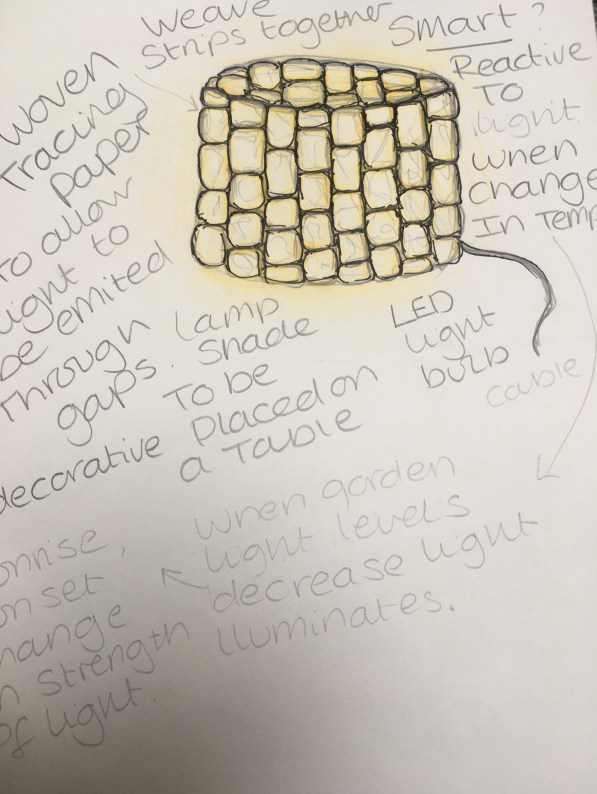
Reflecting on this light project task, I have enjoyed the challenge of having limited materials, therefore undertaking the task was fairly challenging but I found my outcome successfully uses tracing paper to construct a working light with smart potential.

Overall I enjoyed this light project and am excited to continue on the theme of light and start to use cross disciplinary methods to experiment with other subject areas and working as part of a team.

This will hopefully expand my skill set and allow me to improve my group working. the rotation I am most looking Forward to collaborating with is the interior design, this is something I have not yet had a go at and am excited to see what its about and work with people from that discipline.


SUBJECT SPECIFIC LIGHT PROJECT: DESIGN SHEET

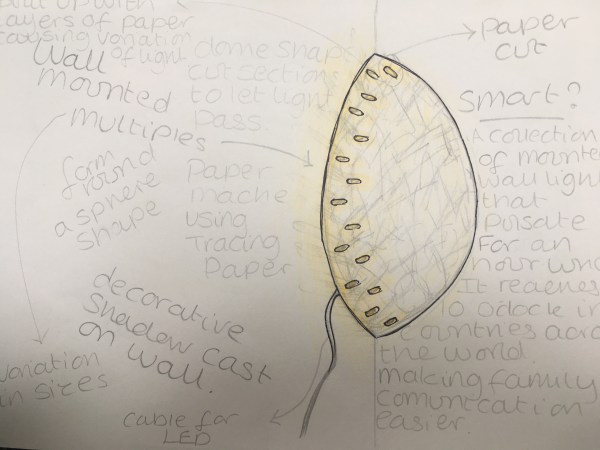
Playing with ideas I found my original idea focused on the opacity and shadows emitted. To maximise is aesthetic potential, this Idea had potential, but I was more interested in ways I could represent something and have bigger effect when presented.

I explored options with spherical dome shapes as its simplicity can be very effective when presented as multiples and varied in size. We where also told to explore and visualise the forms in a smart way. I wanted the lights purpose to be symbolic of its shape therefore…

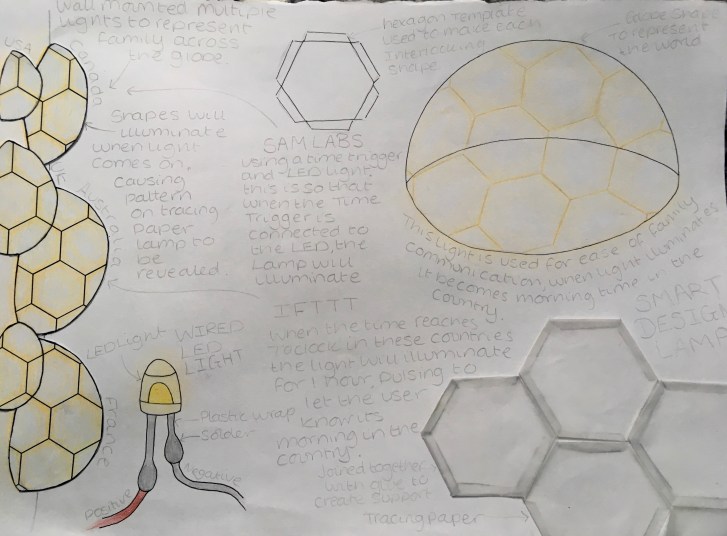
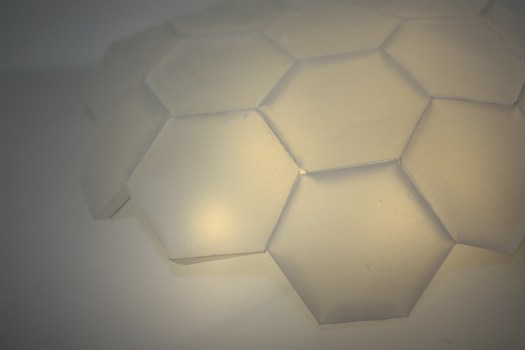
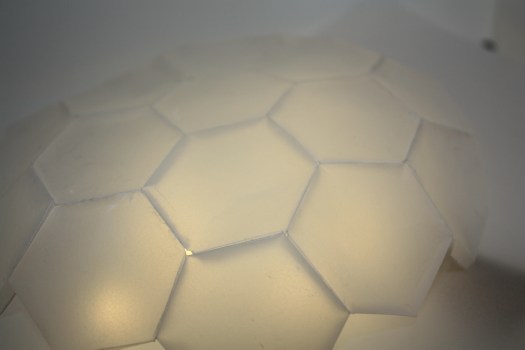
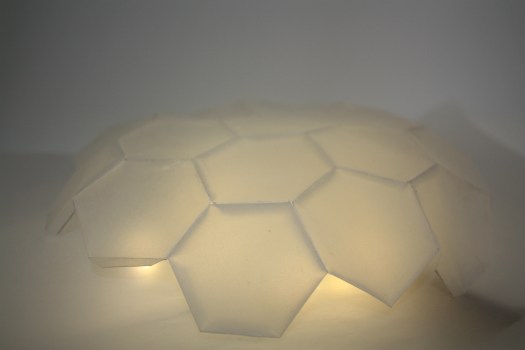
With my design sheet I wanted to explore ways in which I could keep in touch with family abroad, by having some kind of reminder to inform me when they were awake because of this I decided the dome shape would be appropriate to undertake as my form, to represent the world. I have family in the UK, Spain, Australia, USA and Canada. keeping in touch with them is always a problem because of time differences. These lights will aim to resurrect this issue by using time triggers to enable the LED light when the time reaches 7 o’clock and will illuminate for 1 hour fading in and out. This will create an interesting ever-changing constellation of light. Using tracing paper as the main material was challenging and I started by experimenting with using it as a paper mache material, although this would have work, I found the flexibility with the material limiting and it deformed when it dried. I then considered how the forms could remain in this dome shape and still continue to illuminate in a similar way. I used a hexagon shape to build up a 3D dome to create the lamp shade. I am pleased with my final outcome it was challenging to find a final solution as I didn’t want to loose the shape too much.

Looking into the potentials of prototyping I was inspired by the need of technologies to inform modern needs and understanding. I found the applications of Sam lab and IFTTT extremely influential in understanding how these things integrate and work with each other. Being able to see how the circuits work and have potential was really helpful in visualising my own work.

fullsizeoutput_115.jpegHaving a crit helped me identify ways of adapting my design to consider other potentials to create a more effective product.

Considering syncing the forms to alarms so I know when my family members are awake.

Could they have one? Two ways so that they can see when I am awake

If I wasn’t limited on material use would these forms be effective in alternative materials such as porcelain because of its opacity or concrete because of its textural value?

Would they be colour coded or have distinguished features to tell each country apart?

If I didn’t have the restraints of tracing paper, I would develop these forms to have more textural value and be more of a spherical dome shape, I also believe the light emitted from this type of lamp shade would be much more beautiful and would affect in a dappled light and shadow effect.


SUBJECT SPECIFIC LIGHT PROJECT: SMART TECHNOLOGYS

Being shown the possibilities of SAM LABS and IFTTT, I have now become more open minded to the lengths I could push my smart ideas.

SAM LABS is a technology designed for you to prototype circuit boards using blue tooth connection blocks that work in sync to create a working demo. This kit was helpful to start to visualise the ways in which I could make my lights smart and what is necessary in the circuit to get it working in a practical manor.

IF THAT THEN THIS is an online app that allows users to connect and sync all the devices together to allow one to talk to another. This I found eye opening as I could imagine ways in which I could use this in my light.

This technological way of creating links between the light and usable motions in order to trigger, interests me greatly and I found being shown the apps inspiring.


SUBJECT SPECIFIC LIGHT PROJECT: BRAINSTORMING

Looking at the theme of light I started to brain storm ideas that could have a “smart” potential, that would have use to me. The materials given to us to use felt really limiting at the start and I found It hard to widen my ideas beyond a sheet of paper, I wanted to consider the forms in 3D.

Talking to Ingrid initially helped me to visualise my ideas into working maquettes and talking through my ideas with other makers was helpful to identify ways of making the lights smart, the reason for doing so and how/ if the design links to the smart use.

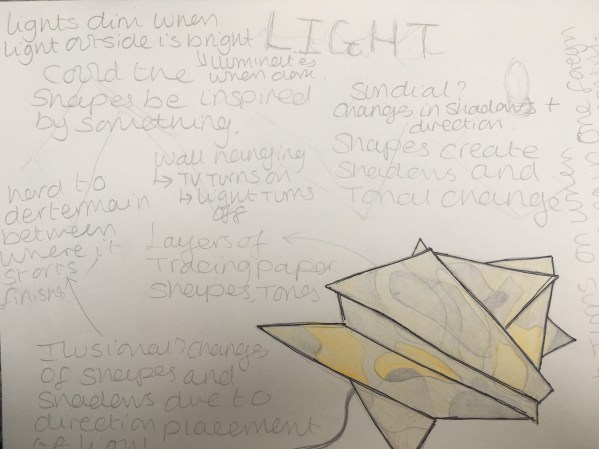
I found my ideas initially tended to sway away from linking the design and the smart ideas together as I was more interested in the aesthetics created by the light. Because of previous research I found the most interesting thing about light was the surface and pattern created through the use of light, material and shape, due to the limitations of the material: tracing paper, I found it challenging to explore a range of ideas. I was most interested in the way I could use shape and layering to adapt the tone, shapes and shadows coming from the light.
IMG_6596

IMG_6598

IMG_6597

Exploring light as a noun adjective and verb gives me freedom in order to create a light that isn’t only decorative but also functional.

noun

the natural agent that stimulates sight and makes things visible.

synonyms: illumination, brightness, luminescence, luminosity, shining, gleaming, gleam, brilliance, radiance, lustre, glowing, glow, blaze, glare, dazzle; More

verb

provide with light or lighting; illuminate.

“the room was lit by a number of small lamps”

adjective

having a considerable or sufficient amount of natural light; not dark.

“the bedrooms are light and airy”

synonyms: bright, full of light, well lit, well lighted, well illuminated, sunny, sunshiny, undimmed, brilliant

“a cool and light breakfast room adjoins the bar”

Googledictionary.freecollocation.com. (2019). Google Dictionary Online. [online] Available at: http://googledictionary.freecollocation.com/ [Accessed 5 Feb. 2019].

Considering all three noun, verb and adjective I am most drawn to the ideas involving all of them as a collective as they all work hand in hand in explaining and using the idea of light as a functional and decorative form.
 

SUBJECT SPECIFIC LIGHT PROJECT: SOLDERING

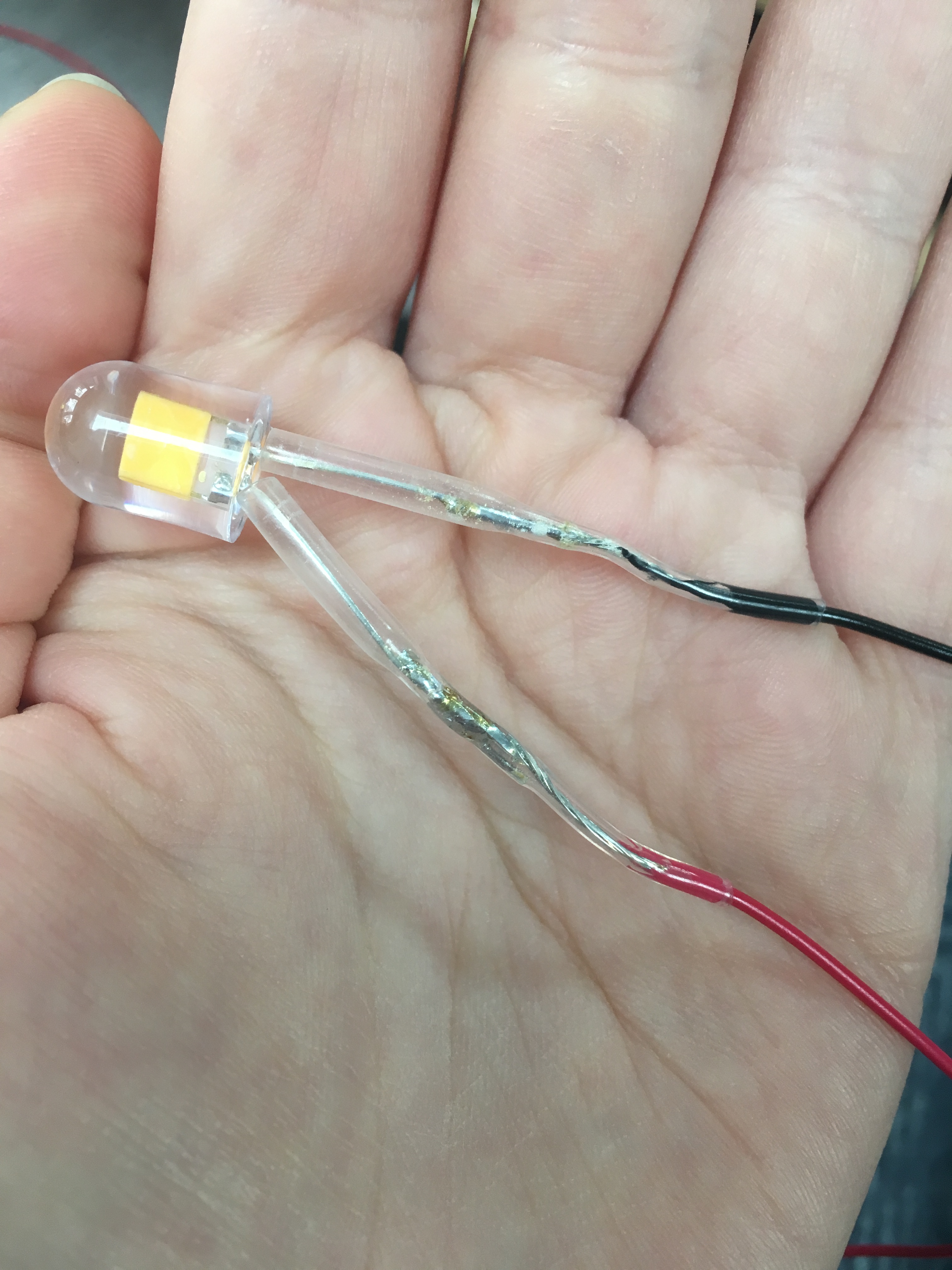
We were shown the process involved in soldering and creating a working light. Negatives from positives and how to hold and join the two using solder, then holding them in place using shrinking plastic.

IMG_6599.JPGThis for me was a really valuable skill to learn and helped me to understand the workings behind the lights we are making and designing.

Design a site like this with WordPress.com
Get started