THE INSPIRATION FROM NATURAL FORMS

I have decided to focus many of my deliverable projects on natural spiral forms, such as shells, ferns and other relate forms. I am interested in the way a solid material made malleable through heating such as pewter casting can be manipulated organic shapes such as those I explored during the small metals workshop.

Throughout these workshops I have been able to explore these themes lightly, this organic shape is something I am keen to explore more in depth in future projects. During these weeks I found I have enjoyed the wood medium most interesting, this is not something I have explored before and I am exited to continue to develop my skills within these area.

4553246140_de3f8f8993

 NaturaLista. (2018). Narceus americanus. [online] Available at: https://www.naturalista.mx/taxa/61341-Narceus-americanus [Accessed 25 Nov. 2018].
FEEDBACK ON DESIGN SHEET

Architectural forms, pavilions and interaction: how these forms can retaliate to architecture both angular and or organic, could these be explored through maquettes and small scale then imagined large scale?

Inside/ outside space and location sculptural form or functional, does it provide or use or is it purely decorative and public art?

Could the ideas be explored through using scales down figures to illustrate scale and size.

Experiment with folding of paper and explore some ideas. Could i use cut paper with a curved edge to experiment with ideas further.

Stiffened fabric? more organic unpredictable outcomes, could these organic forms be inspired by waves and other natural formations.


WORKSHOP: two part slip cast mould

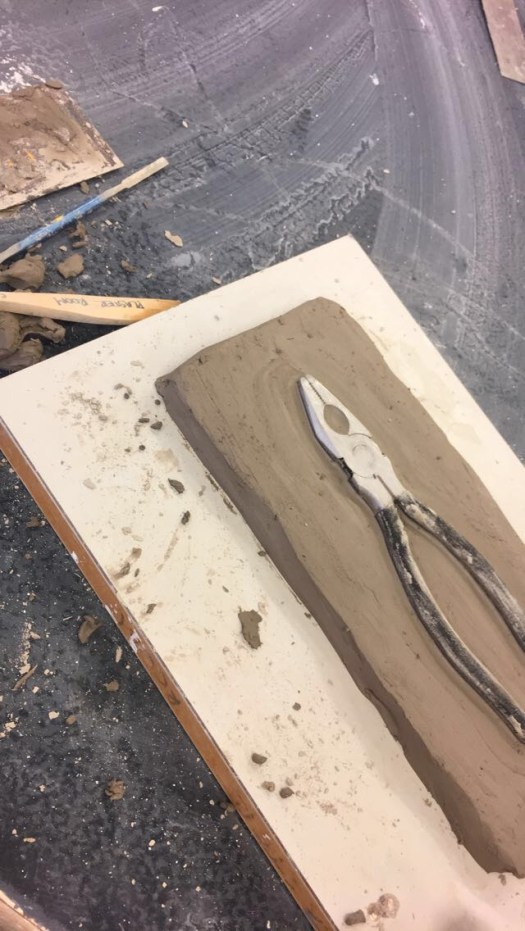
The aim of this workshop is to make a slip cast outcome. I decided to cast a pair of pliers as the brief given to us to focus on was form and function. I am interested in the idea of apposing function and looking at the form of a functional form made functionless through being cast.

IMG_6197

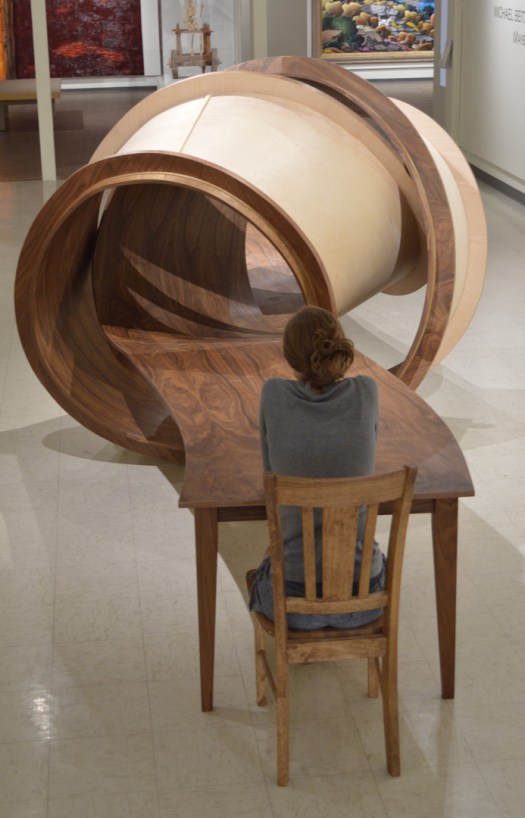
I am interested in exploring the theme of form and function further, this is an interesting concept and how sculptural forms can explore form over function. The work of Michael Beitz explores this, Beitz’s furniture distorts the expectations of a functional item  and explores the decorative aspects of the forms and how it occupies a space and holds its own within a gallery space.

12ea2735a4b7fbedc8f3174cac13ccd9

Not Now (detail) Michael Beitz art. (2018). sculpture. [online] Available at: http://www.michaelbeitz.com/sculpture.html [Accessed 15 Nov. 2018].

2D TO 3D: clay experiments

img_6196.jpgI plan to explore the 3D using clay, this way I feel I will be able to move Forward from paper experimentation and be able to create sharper polished lines using a wire clay cutter. By using clay I will be able to use the horizontal to capture two halves of the distortion creating a negative space void between the two.
I also want to explore ways in which I can bring the distortion of line back into the idea. one way I could do this would be to explore the interaction of this void using wire?

I could also explore this method of cutting using long planes of clay tiles and using multiples? to explore the interaction between the shapes.

RICHARD SERRA

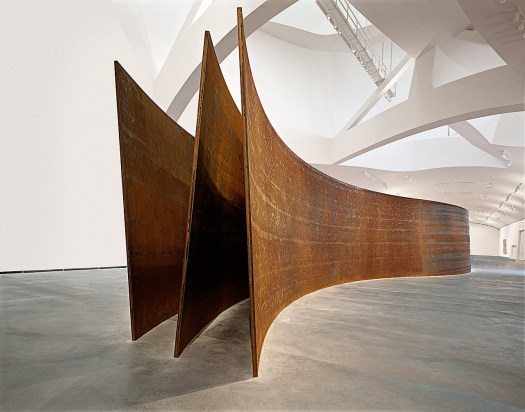
Serra, a minimalist sculpter. Has inspired my 2D to 3D experimentation.  Relating back to the brief I want to focus my experimentation on playing with line, and scale similarly to Serra. I am also interested in playing with shape and manipulation of line and shadow.

serra .jpgSnake by Richard Serra. Guggenheim. (2018). Snake. [online] Available at: https://www.guggenheim.org/artwork/3 [Accessed 11 Nov. 2018].
This piece interests me because of its scale in relation to its environment as well viewer interaction with the space. The negative space between each structure creates a void where the angular shards interact with one another and channel shapes similar to those seen in natural water structures.

This work has inspired me to experiment with paper folding to explore the coherent  interaction between shape, plane, scale and line. I want to continue to explore the disconnection and manipulation of the line once it has been distorted due a change in surface direction, I want to continue to explore this because as a starting point to the project I was interested in the architectural properties of the art school and simple line seen within them, by combining the simple line and the three dimensional form i am able to create the interesting distortion.

STITCH: 2D to 3D

During my stitch workshop, I wanted to explore the potential of materials and techniques in order to find how best to make an three dimensional outcome. I wanted to explore ways of obtaining texture as well as pattern.

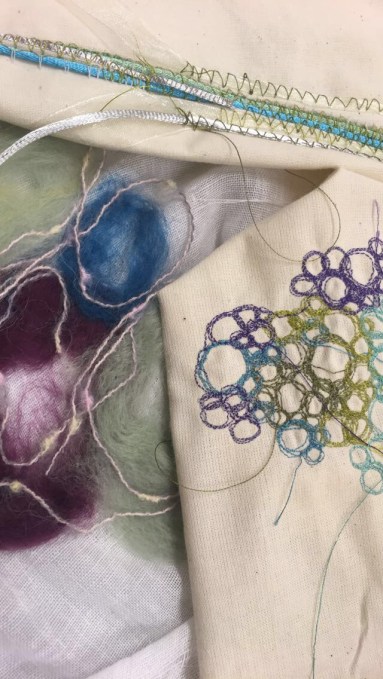
For this 2D to 3D project I want to explore the method of dissolvable fabric and using a free machinery foot to acquire the pattern. During my first of three workshops I wanted to explore other techniques and sewing machine foots such as baby locking, cord foot and free machine embroidery. I decided to focus on blues, greens and purples, I feel these compliment each other well visually.

I found the most appropriate technique to create both texture and pattern is free hand embroidery, I was experimenting on calico today. although this material is good for practicing I feel it may be more interesting to use dissolvable fabrics so that I can create a a three dimensional form when the fabric is dissolved and dries to a stiff form. I want to focus on the spiral form. I was thinking to get this I could manipulate the fabric over a tube shape and let it dry.

IMG_6159


WORKSHOP: wood and metal

During this workshop I was building on the techniques previously learnt. I continued to construct the box by using the band saw and disk sander to refine the edges as well as using grits to smooth the form, moving from 80 to 120 to 240 using a hand sander.

I am pleased with the outcome of the surface I created by using this repetitive technique allowed me to get the best surface possible, creating a surface without marks.

To complete this form I have to apply a layer of sealant and wax to finish the surface to protect the wood from deteriorating.

IMG_6104.JPG

During my metal indiction we were shown how to mould make using a blue solution called vinamould, this malleable material allows for use of hard non perishable items to be cast.

For this induction I decided to cast a tin can, to create the mould I had to roll out clay slabs and form them around the can ensuring the clay wall is supported. then to create the mould the oily solution was heated using microwaves to brake down the solid into a liquid allowing the solution to be poured around the tin.

I will definitely use this process in the future, as it allows for fine detail to be captured in the vianmould, allowing me to cast exact replicas of the original.

Other materials can be used as alternatives such as gelatine, the down side to using this is the material will slowly decompose and break down making in only usable one, where as the vinamould can be used multiple times.

IMG_6101.JPG

2D TO 3D: making line three dimensional

I am interested in the process of making a two dimensional thing; the focus being line, three dimensional.the manipulative nature of line allows for the outcomes to be very abstracted and obscured by light and shadow to the viewer.

A line drawn onto a manipulated surface changes state into a distortion as well as when the view point changes.

I have undertaken some experimentation into this by drawing straight lines on paper and then manipulating the 2D paper by looking at abstracted lines taken from the architecture in the art school to start to understand compositional changes.

I enjoy the idea of these being in a gallery type space where the scale would be really huge and then the viewer could explore round theses forms.

2D TO 3D PROJECT: thinking about ideas

thinking about the brief, some ideas struck me right away on the themes and ideas I could explore. I am interested about the tasks we undertook during our induction that involved drawing from campus. I found I was interested in the architecture of the art school.

Thinking of ways I could convert my 2D drawings looking at the theme of line into 3D has been challenging. Whilst I still want the focus to be on the line and architecture of the school I also what the forms to explore variants of this idea including shape and manipulation and distortion of the line.

I believe the best way for me to start is to look conduct some more drawings and start photographing lines of interest to me around the school. then to find artists relevant to the themes I am exploring and use them as inspiration for my work.

WORKSHOP: metal

During this workshop we were shown how to use machinery such and the cutters and the rollers to manipulate the sheets of steel. We used templates to create a metal box structure where we had to cut out the corners to bend the edges into shape. although I am not keen on metal as a material, I was surprised at how it can be controlled and manipulated.

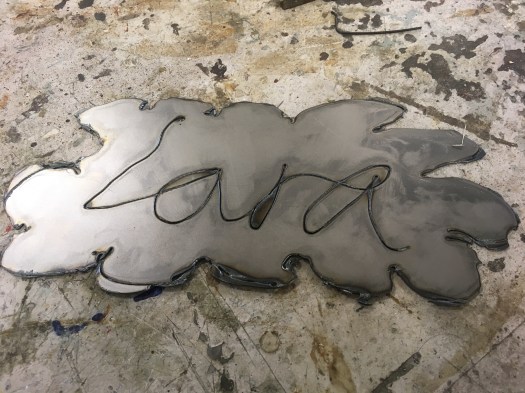
We also experimented with plasma cutting during this tutorial, this was extremely fun and something I would be very keen of using in future projects. The method involved blasting plasma through electrically conducted materials in order to manipulate and burn through the sheet of metal. this process gives of large UV rays so protective clothing was required during this induction including tinted goggles.

This process allowed free hand movements and drawing like motions to cut through the material allowing me to be able to cut though the metal with relatively little difficulty.

IMG_5956.jpg

Design a site like this with WordPress.com
Get started