SUBJECT SPECIFIC LIGHT PROJECT: DESIGN SHEET

Playing with ideas I found my original idea focused on the opacity and shadows emitted. To maximise is aesthetic potential, this Idea had potential, but I was more interested in ways I could represent something and have bigger effect when presented.

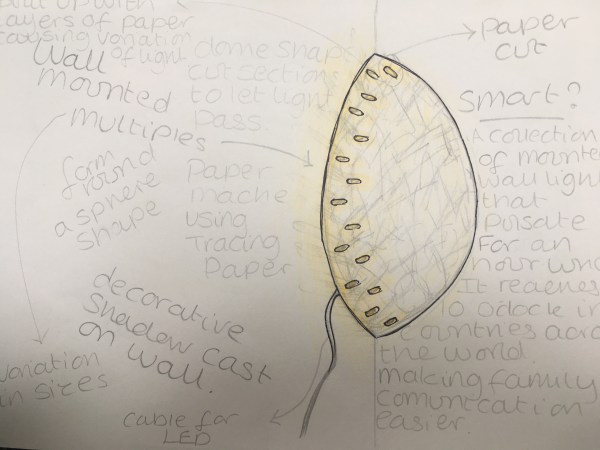
I explored options with spherical dome shapes as its simplicity can be very effective when presented as multiples and varied in size. We where also told to explore and visualise the forms in a smart way. I wanted the lights purpose to be symbolic of its shape therefore…

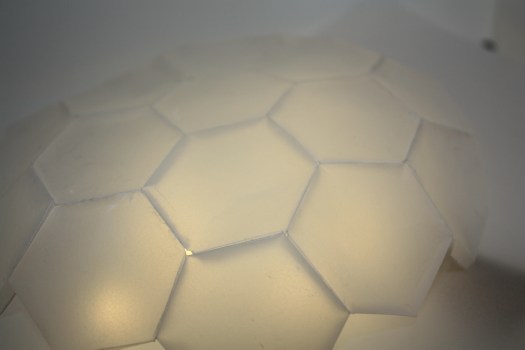
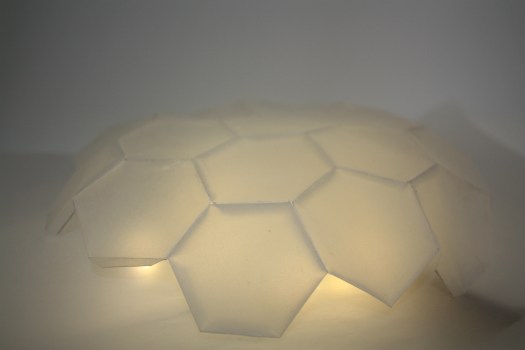
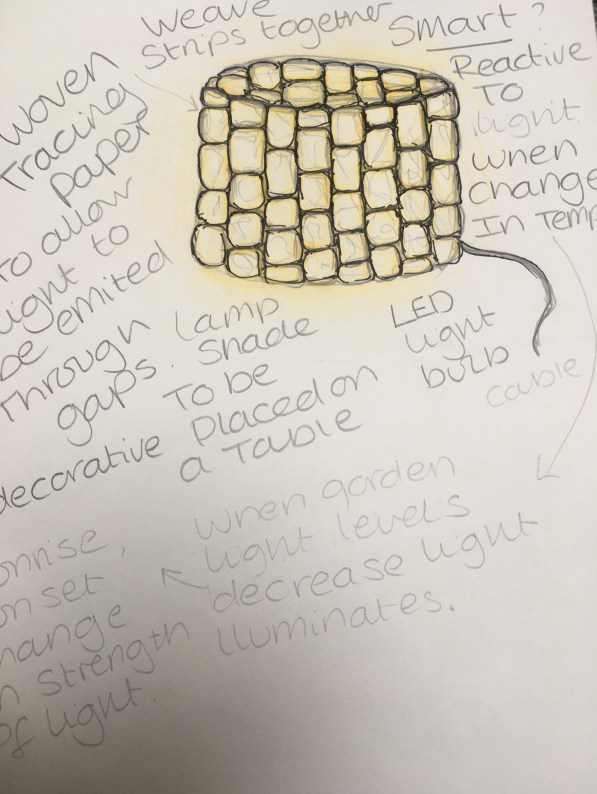
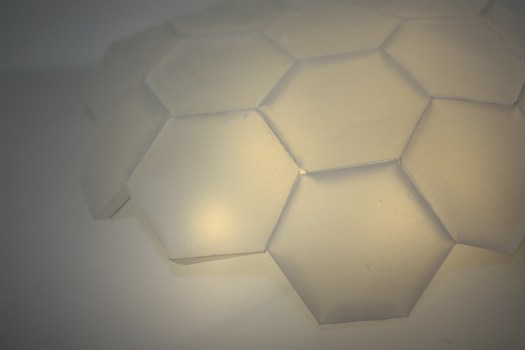
With my design sheet I wanted to explore ways in which I could keep in touch with family abroad, by having some kind of reminder to inform me when they were awake because of this I decided the dome shape would be appropriate to undertake as my form, to represent the world. I have family in the UK, Spain, Australia, USA and Canada. keeping in touch with them is always a problem because of time differences. These lights will aim to resurrect this issue by using time triggers to enable the LED light when the time reaches 7 o’clock and will illuminate for 1 hour fading in and out. This will create an interesting ever-changing constellation of light. Using tracing paper as the main material was challenging and I started by experimenting with using it as a paper mache material, although this would have work, I found the flexibility with the material limiting and it deformed when it dried. I then considered how the forms could remain in this dome shape and still continue to illuminate in a similar way. I used a hexagon shape to build up a 3D dome to create the lamp shade. I am pleased with my final outcome it was challenging to find a final solution as I didn’t want to loose the shape too much.

Looking into the potentials of prototyping I was inspired by the need of technologies to inform modern needs and understanding. I found the applications of Sam lab and IFTTT extremely influential in understanding how these things integrate and work with each other. Being able to see how the circuits work and have potential was really helpful in visualising my own work.
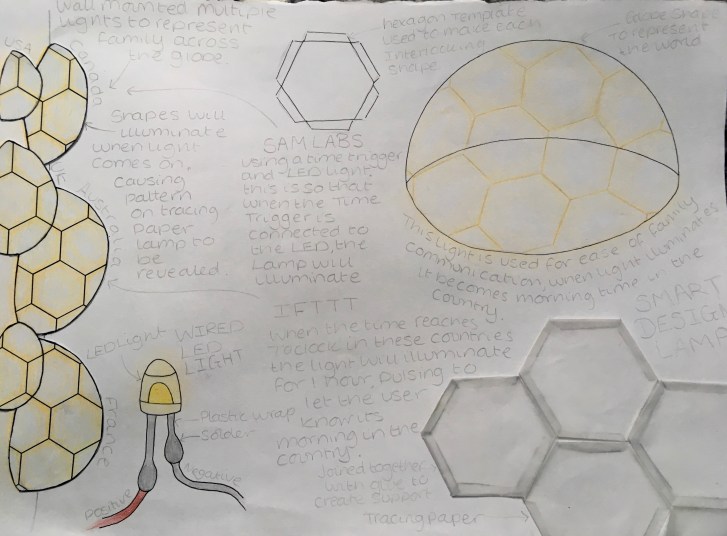
fullsizeoutput_115.jpegHaving a crit helped me identify ways of adapting my design to consider other potentials to create a more effective product.

Considering syncing the forms to alarms so I know when my family members are awake.

Could they have one? Two ways so that they can see when I am awake

If I wasn’t limited on material use would these forms be effective in alternative materials such as porcelain because of its opacity or concrete because of its textural value?

Would they be colour coded or have distinguished features to tell each country apart?

If I didn’t have the restraints of tracing paper, I would develop these forms to have more textural value and be more of a spherical dome shape, I also believe the light emitted from this type of lamp shade would be much more beautiful and would affect in a dappled light and shadow effect.

 

SUBJECT SPECIFIC LIGHT PROJECT: SMART TECHNOLOGYS

Being shown the possibilities of SAM LABS and IFTTT, I have now become more open minded to the lengths I could push my smart ideas.

SAM LABS is a technology designed for you to prototype circuit boards using blue tooth connection blocks that work in sync to create a working demo. This kit was helpful to start to visualise the ways in which I could make my lights smart and what is necessary in the circuit to get it working in a practical manor.

IF THAT THEN THIS is an online app that allows users to connect and sync all the devices together to allow one to talk to another. This I found eye opening as I could imagine ways in which I could use this in my light.

This technological way of creating links between the light and usable motions in order to trigger, interests me greatly and I found being shown the apps inspiring.


SUBJECT SPECIFIC LIGHT PROJECT: BRAINSTORMING

Looking at the theme of light I started to brain storm ideas that could have a “smart” potential, that would have use to me. The materials given to us to use felt really limiting at the start and I found It hard to widen my ideas beyond a sheet of paper, I wanted to consider the forms in 3D.

Talking to Ingrid initially helped me to visualise my ideas into working maquettes and talking through my ideas with other makers was helpful to identify ways of making the lights smart, the reason for doing so and how/ if the design links to the smart use.

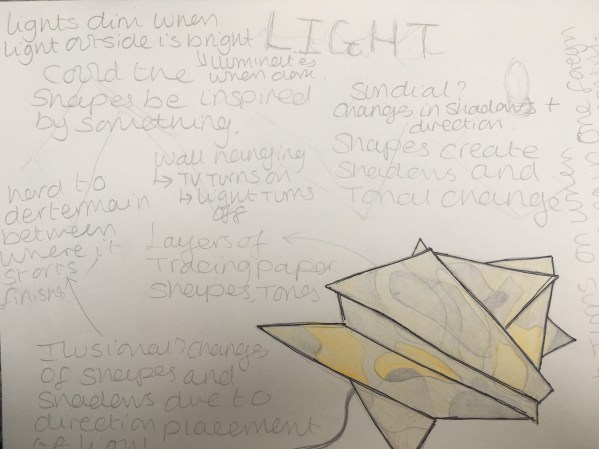
I found my ideas initially tended to sway away from linking the design and the smart ideas together as I was more interested in the aesthetics created by the light. Because of previous research I found the most interesting thing about light was the surface and pattern created through the use of light, material and shape, due to the limitations of the material: tracing paper, I found it challenging to explore a range of ideas. I was most interested in the way I could use shape and layering to adapt the tone, shapes and shadows coming from the light.

IMG_6596

IMG_6598

IMG_6597

Exploring light as a noun adjective and verb gives me freedom in order to create a light that isn’t only decorative but also functional.

noun

the natural agent that stimulates sight and makes things visible.

synonyms: illumination, brightness, luminescence, luminosity, shining, gleaming, gleam, brilliance, radiance, lustre, glowing, glow, blaze, glare, dazzle; More

verb

provide with light or lighting; illuminate.

“the room was lit by a number of small lamps”

adjective

having a considerable or sufficient amount of natural light; not dark.

“the bedrooms are light and airy”

synonyms: bright, full of light, well lit, well lighted, well illuminated, sunny, sunshiny, undimmed, brilliant

“a cool and light breakfast room adjoins the bar”

Googledictionary.freecollocation.com. (2019). Google Dictionary Online. [online] Available at: http://googledictionary.freecollocation.com/ [Accessed 5 Feb. 2019].

Considering all three noun, verb and adjective I am most drawn to the ideas involving all of them as a collective as they all work hand in hand in explaining and using the idea of light as a functional and decorative form.


SUBJECT SPECIFIC LIGHT PROJECT: SOLDERING

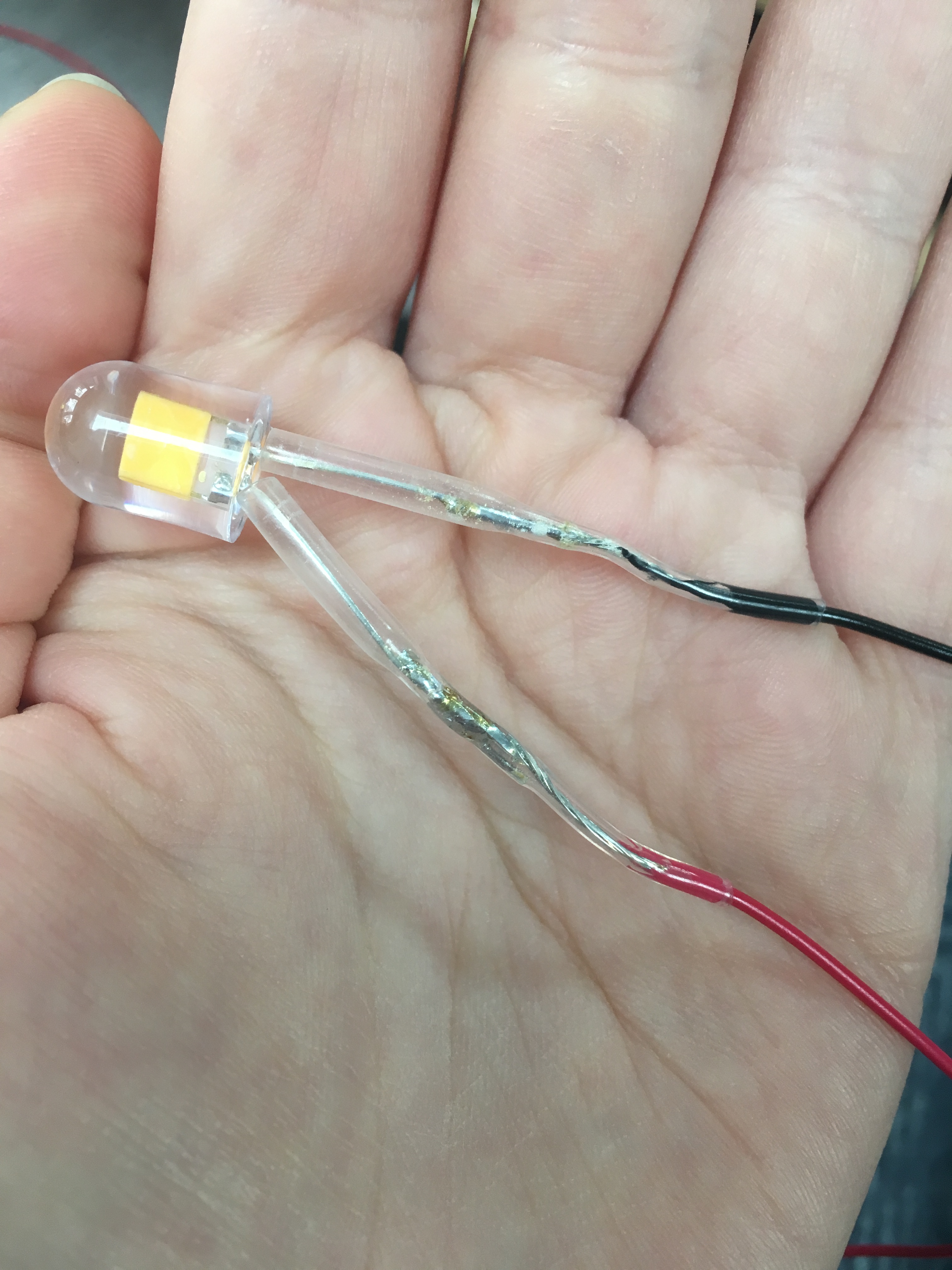
We were shown the process involved in soldering and creating a working light. Negatives from positives and how to hold and join the two using solder, then holding them in place using shrinking plastic.

IMG_6599.JPGThis for me was a really valuable skill to learn and helped me to understand the workings behind the lights we are making and designing.
PRELIMINARY RESEARCH INTO LIGHT: collaborative project

Cold Dark Matter: An Exploded View 1991 by Cornelia Parker born 1956

Tate. (2018). Cornelia Parker born 1956 | Tate. [online] Available at: https://www.tate.org.uk/art/artists/cornelia-parker-2358 [Accessed 2 Dec. 2018].

This work by British sculptor Cornelia Parker explores light as a way of projecting and filling a negative space with intricate shapes to portray a inclusivity to the viewer when  within a room. This work by Parker interests me because of the way the objects are ever so slightly distorted by the the light that is submerged in the centre of the piece acting like an explosion of overlapping shadow.

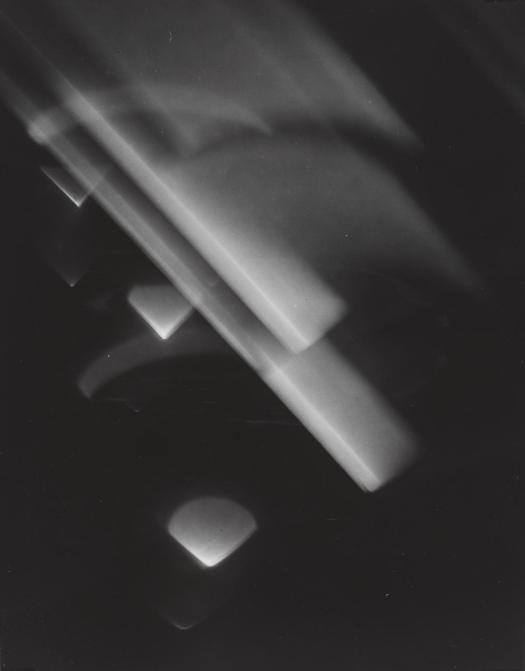
Light B 1930, printed 1970s by Hanaya Kanbee 1903-1991

Tate. (2018). ‘Light B’, Hanaya Kanbee, 1930, printed 1970s | Tate. [online] Available at: https://www.tate.org.uk/art/artworks/kanbee-light-b-t14390 [Accessed 2 Dec. 2018].

Haynaya kanbee’s works focuses on the suggestions of light being captured in a distorted movement as a result of the long exposure of light, capturing tone and shapes. i particularly like this piece as it focuses on the impact of light rather than the light itself, making the light the secondary focus, although without this light being used the image would not exist, this makes it interesting as the viewer has to imagine how this piece was created.

Shell Light 2015 by Lucy McKenzie born 1977

Tate. (2018). ‘Shell Light’, Lucy McKenzie, 2015 | Tate. [online] Available at: https://www.tate.org.uk/art/artworks/mckenzie-shell-light-t14672 [Accessed 2 Dec. 2018].

Lucy McKenzie’s work focuses on the less ordinary light design. Using a natural form as an unconventional lamp shade to emit light. this was part of a collection that explores McKenzie’s ideas about painting. I particularity like this piece as its unexpected and rather beautiful artefact to light from inside, by lighting the found object the textures, colours  and depth of the form is revealed, things that are not as evident without light.


TO CONCLUDE

Exploring this facture module has expanded my knowledge and allowed me to develop an  wider understanding of the workshops and specialist help available to me at the school. I have found undertaking a range of deliverables has forced me to use materials I am not familiar with, although this has been challenging at times I am pleased with my outcomes and I feel they explore and show both technical aspect and a thought process behind what I was exploring.

  • What was your favourite aspect of the Facture module / what would you have liked more of? I really enjoyed exploring and using new methods and meeting the technical demonstrators, I now feel a I am more confident in exploring new methods and using new machinery and techniques to enhance my work


  • What was your least favourite aspect of the Facture module / what would you have liked less of? I felt once I had learnt the techniques required of me, the time and workshop availability seemed rushed and busy. Especially for my last deliverable where I will only have photograph evidence to show to you. I feel at this stage more time would have been beneficial to undertake and complete the deliverables.


  • Overall, was the workload too much, too little, or just right? I found it hard keeping on top of all the different components of the module and I feel I would have rather focused on one project that explored one or more of the techniques taught to me.


  • What did you learn? I am happy with the variety and the amount of practical work I was able to experiment with. And I enjoyed how hands on and interactive this first module has been. And I have also enjoyed the lectures on the Monday I found them really interesting and I have been able to widen my eyes to a bigger scope of ideas and possibilities with making.

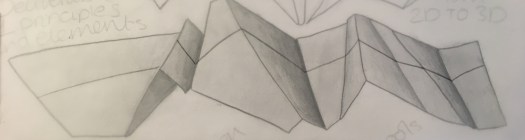
For my 2D TO 3D deliverable I wanted to explore the interaction between line and light, I was interested in how the distortion of line could influence the viewers perspective and change the compositional outcome when viewed from multiple angles. I wanted to explore this as I was interested in the lines seen in the architecture of the school of art and how these could be translated into simple lines in order to be distorted. I explored this using the medium of paper as its malleable qualities allowed more a more manipulative state.

For my form and function deliverable I was interested in playing around with the meaning of the two. As these are waiting to go in the kiln- see the photo. I wanted to make a collection of functional items, the bottles so I could experiment further with the process. As well as play with the idea of the plyers and wire cutters, where I could take a functional object and make it completely unfunctional and therefore the aesthetic form is more important.

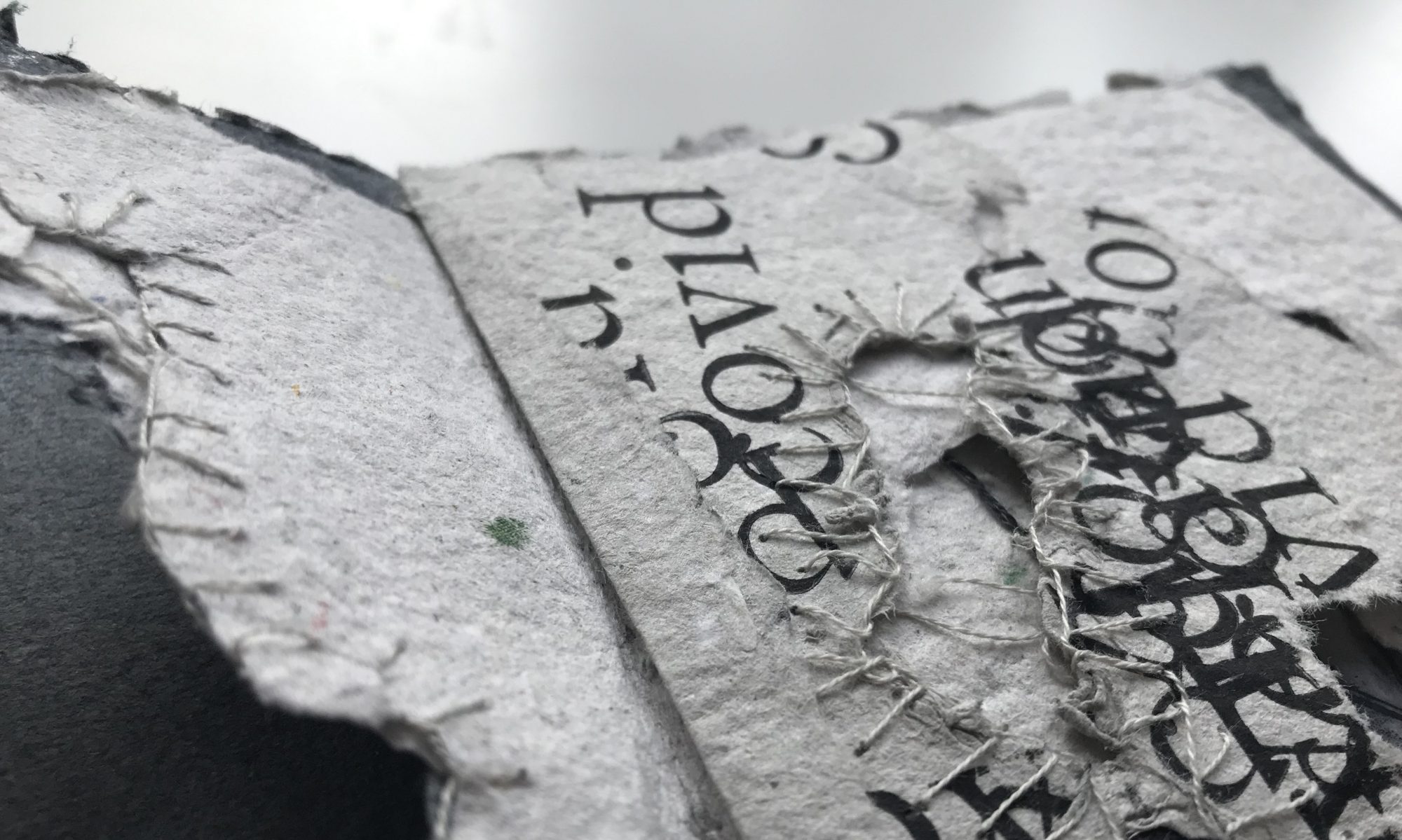
For my 2D TO 3D stitch deliverable I wanted to focus on pattern and shape as well as plane during this outcome. The shape was inspired by organic forms so I wanted the pattern to be representative of this idea too, I decided to focus on the  natural circle form for this.


2D TO 3D: CHANGE IN DIRECTION

Developing my drawings and exploration into line and light i feel the most appropriate medium for me to use would be paper as it allows for a more malleable distortion, the reflection of shadow created by the folds in the paper are more prominent and effective in creating distorted line. Therefore I am disregarding my plans to use clay as I feel paper will be a more appropriate material.

IMG_6319.jpg

Design a site like this with WordPress.com
Get started