FRUIT PAPYRUS PAPER: making paper from fruit

I came across this strange phenomenon of dried fruit as thin as paper. I couldn’t find one particular artist who makes it but though it would be interesting to have a go at making some myself. If I were to do this again I would want to cut the fruit a little thicker and cook it for less time as it was extremely brittle and although it is very pretty it is ever so slightly useless and not practical for book making. I did still enjoy the process of making this paper. they have a beautiful fragility to them and a transparency that enables you to see the natural design of the fruit. The strawberry was particularly fragile where as the apple and the red cabbage where a little more sturdy.


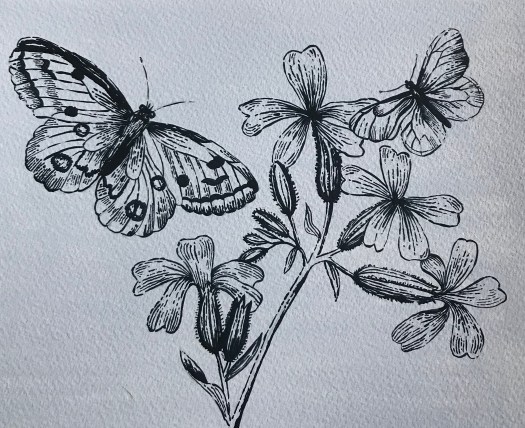
ILLUSTRATION: for a paper cover for a handmade book

I took inspiration from the natural processes and materials I have been using and wanted this to translate in a painting of flowers and butterflies, I haven’t painted like this in a long time so wanted to have another go. Gouache and watercolour paper.

IMG_2528

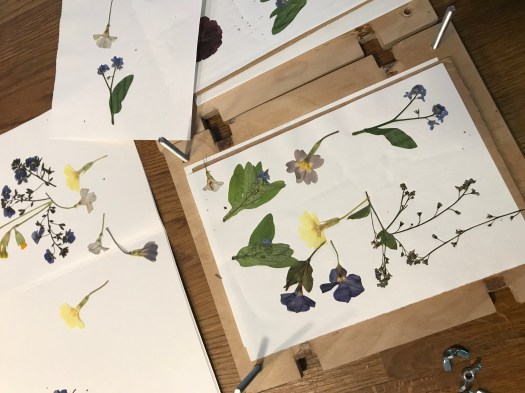
DRYING FLOWERS: using a flower press

I wanted to continue making and experimenting with my own hand made papers, so that when it comes to making the books I can make decorative endpapers. These were very successful, I am hoping that when used with the paper making process they will hold within the sheets as a whole flower.

IMG_2590

KHADI PAPER: research and ordering materials.

As a result of talking to pip about my work and explaining my situation of not having enough hand made paper and the reliable consistency to make an entire book I would need to find an alternative to make books with. so I contacted Tom from printmaking who recommended a few resources and websites as well as this I recently contacted a bookbinder that I have discovered through researching (Lotus Blu books Art) to ask about materials that Moneeza the artist uses when she binds her books. I have found her instagram very beneficial, I know this isn’t my standard go to research strategy but during thee strange times I have found her instagram page extremely helpful as she demonstrates mini tutorials and how she makes her books with step by step instructions. I have found this useful as a self teaching too, watching an artist at work is also very motivational and inspiring.

This was my conversation with her..

IMG_2611

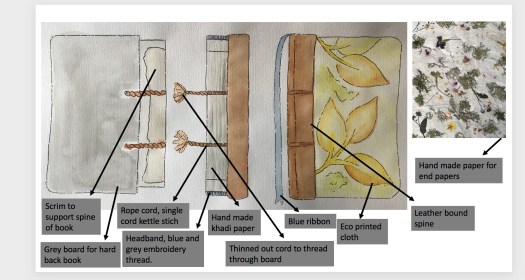
As she recommended Khadi papers I went to look on their website. I wanted an affordable reliable paper that wouldn’t break as I work with it.  I wanted paper for sketching and painting to making into sketchbooks with a deckled edge ( made from the edge of frame as the paper is formed. I was also interested in the traditional qualities of the Khadi paper.

This is what I purchased, 150gsm sheets of white A5 paper and A4 paper.

IMG_2597According to Khadipapers.com (Khadi Papers. 2020. About The Paper – Khadi Papers. [online] Available at: <https://khadi.com/about-khadi-papers/about-the-paper/&gt; [Accessed 10 May 2020]) The cotton rag papers I went on to purchase are made in south india using the traditional paper making method in the paper mill in Karnataka. they are made from 100% cotton rag fibres, these are long and make durable strong paper when pulped. They use a reliable supply of cotton that comes from tshirt cuttings. Neutral ph size is added to the Hollander beater making them acid free. the papers are them formed in a mould and deckle and are pressed between zinc sheets to get smooth finishes. They are then loft dried and surface sized using gelatine, This is traditional for watercolour paper. but the papers can also be used for all kinds of mediums.


FIELD REFLECTION: 500 words

From these field projects I have been able to develop a wide variety of skills that I can adhere to my making. These projects where both a little out of my comfort zone, Behind the Barcode project, more so than figurative modeling. Both these projects have developed my ways of learning and thinking as well as writing and presenting. They have been an enjoyable way of moving Forward and considering different aspects of art that can influence my own practice. I have definitely enjoyed doing the business side of behind the barcode, this has been something that I have a always found daunting. Now that I have completed it I feel I now have knowledge on the basics of selling myself and my work. I can now adhere this learning to my own discipline. Figurative modeling has taught me some interesting alternatives to researching and this is something that I have continued to do. Learning from other artists and using galleries I have been able to become more inspired and knowledgeable especially considering these current times, I have been able to teach myself new skills from watching others at work.

From figurative modeling I have developed my sculpting techniques and have been taught the basics of modeling in the round whilst watching and drawing from still life, this has greatly improved my understanding of line tone and shape and has made me a more competent and accurate sculptor. Behind the barcode was primarily focused on the business. Although during this project I was attending the Wednesday workshops on book binding and paper making, as this was what I was currently learning I decided to focus my business research on this. I found it extremely beneficial having help form Tom in the print room as he was able to advise me on companies to look at for resource and materials.

It has been really interesting how the behind the barcode has informed my current work and I created a real interest in how books are made and how you can make your own paper. I have enjoyed being able to develop and practice a traditional craft and have used the ways of researching I developed form figurative modeling to inform my learning, by watching artists and exploring online galleries.

I have more awareness of how EDGE can inform the creative industry and my own practice and I am now more aware of the entrepreneurial aspect of being a maker that I will inevitably have to consider as I develop into level 6. I feel it is important for me to consider creatively the ethical, digital, global and entrepreneurial aspects of my own creative pathway and I need to continue to think how i can push these ideas in my own work.

RESEARCH INTO TRADITION: the book binding process

I wanted to explore the traditional techniques and processes involved in book binding to see if I can apply any techniques to my own work. this is because I would quite like to accurately follow traditional techniques where I can in order to maintain this old craft. I have found through this research I already undertake some of the traditional techniques but Iam keen to explore forwarding, gilding and using a sewing frame (although it is unlikely I will be able to use this)

According to bookbinding.co.uk the hand bookbinding process has not changed over centuries. The image Traditional craftsmanship as shown in the image below (of a french binary between 1951-1956, image from Diderot Encyclopédie)

Bookbinding.co.uk. 2020. Tradition. [online] Available at: <http://www.bookbinding.co.uk/tradition.htm&gt; [Accessed 11 May 2020].

The traditional Equipment shown in the image is still used today by binders, although manufactured mass produced books use a different process that is mainly run by machines. The image shows a press, a sewing frame, a plough, chopper and a finishing press.

Traditionally the books are bound by folding the sheets into signatures which are then bound together using thread and cord in the sewing frame.

End papers have a decorative roll in the book binding process.  these traditionally are marbled or screen printed.

In the image below (Headbanding – S&S Bindery Poland St circa 1945) the ladies are making headbands. Headbands are made by sewing silk threads into the top of the book traditionally using leather cord. these can become very complex and intricate. they also protect the tops and bottoms of the books when held in a book shelf and pulled out.

Bookbinding.co.uk. 2020. Tradition. [online] Available at: <http://www.bookbinding.co.uk/tradition.htm&gt; [Accessed 11 May 2020].

The image shows a man gilding a book ( S&S workshop- gilding department 2004). The edges of books are traditionally gilded with gold. the bookblock is cut on a plough or by hand to smooth the edges and make the pages flush, This is then sanded by hand, then gold leaf is applied to the edges then polished using a agate burnisher.

Bookbinding.co.uk. 2020. Tradition. [online] Available at: <http://www.bookbinding.co.uk/tradition.htm&gt; [Accessed 11 May 2020].

The boards for hardback books use mill board traditionally, this is cut by hand on a board chopper and then sanded till smooth. the boards are then attached to the board by the process of lacing-in. holes are pressed into the board using an awl and the cord threaded through. this helps the strength and means when the leather frails the book binding will stay together.

Forwarding is a process that is used to round the edges of the spine. the book block is held in a press and the book is gently hammered by “Rounding and Backing”. This process strengthens the spine as hammering it allows the sections to fold into each other.

Goatskin and calfskin make the best binding leather. calfskin is more traditionally used in french and English binding and is dyed using vegetables.

Finishing the books is traditionally done using decorative brass tools. they are pressed into the surface to create an indent and the 22 Carat gold leaf is then applied using egg glaire. The tool is then heated up again to fuse the egg and the gold to the leather. this technique is extremely advanced and can take years to master.


NATURAL DYING RESEARCH

The DIY natural website has lots of information on the basics of making natural dyes.

they state:

Not all fabric can be easily dyed with natural materials. The best ones to use are those made from natural materials themselves. Cotton, silk, wool, and linen will take the dye the best.

Synthetic blends will take some dye, but will usually be lighter in color. If you’re not sure and can risk the item you’re planning to dye, go ahead and do it. If it’s something valuable, try to find a similar scrap of fabric and try that first. I use a piece of muslin to gauge my color saturation before I dye my clothes.

Not all natural materials will produce a dye, and some produce colors that are nothing like the original plant it came from. Here’s a list of colors and the plant material that will give you shades in that color.

Natural Dyes

  • Orange: carrots, gold lichen, onion skins
  • Brown: dandelion roots, oak bark, walnut hulls, tea, coffee, acorns
  • Pink: berries, cherries, red and pink roses, avocado skins and seeds (really!)
  • Blue: indigo, woad, red cabbage, elderberries, red mulberries, blueberries, purple grapes, dogwood bark
  • Red-brown: pomegranates, beets, bamboo, hibiscus (reddish color flowers), bloodroot
  • Grey-black: Blackberries, walnut hulls, iris root
  • Red-purple: red sumac berries, basil leaves, daylilies, pokeweed berries, huckleberries
  • Green: artichokes, sorrel roots, spinach, peppermint leaves, snapdragons, lilacs, grass, nettles, plantain, peach leaves
  • Yellow: bay leaves, marigolds, sunflower petals, St John’s Wort, dandelion flowers, paprika, turmeric, celery leaves, lilac twigs, Queen Anne’s Lace roots, mahonia roots, barberry roots, yellowroot roots, yellow dock roots

Note: You want to be sure to use ripe, mature plant material and always use fresh, not dried. Dried plant material will usually give you muted colors and sometimes no color at all. Chop the plant material very small to give you more surface area. If the plant is tough, like yellow dock roots, smash the root with a hammer to make it fiberous. This will also give you more exposed surface area.

(DIY Natural. 2020. Natural Dyes For Fabric: All Natural Ways To Dye Fabric Different Colors. [online] Available at: <https://www.diynatural.com/natural-fabric-dyes/&gt; [Accessed 24 April 2020].)


NATURAL DYING ONTO FABRIC: 1st attempt

As I am making papers and book binding, it would be fitting to use more natural colourants to dye fabrics ect, I also felt it would be a nice opportunity to make natural dyes rather than buy reproduced artificial ones. Aesthetically as my books are authentic and not always perfect a more subdued colour achieved by natural dyes would be more fitting to the book.

This process was surprising as some of the colours were far from what I expected.

coffee- brown beige
tea- brown
white onion skin- orange brown
red onion skin- red brown
beetroot- burnt red
carrot- light yellow
turmeric- yellow orange
avocado- light pink
red cabbage- blue purple.

The ingredients were boiled with table salt and for an hour to extract the pigment. By dip testing the colours the second and third dips became a more vibrant colour, I will be using these colours not dye cotton fabrics and papers for my books.


Design a site like this with WordPress.com
Get started