EXPERIMENTATION: drypoint printing of man illustrations

Using the same method shown to me during my one to one tutorial I used illustrations of the old man from the park to etch into the dry plate using a pin tool. Using this method I visited uni a couple of times to reflect and develop as my ideas change. by changing the buffing process and pressure applied to the plate once the ink is applied changes the crispness and darkness of the image. Therefore I played around with altering this to experiment with toal changes. I concluded the most effective way to have some darker ink surrounding the character as it emphasises the isolation. My first couple of attempts were using cartridge paper as during my one to one the discussions I had with Nigel was that we thought the strength of my hand made paper wouldn’t survive the soaking process needed to create the impression if the image off the plate. I experimented with dampening the paper and this did make it more fragile and some of the thinner sheets did disintegrate into nothing but the thicker sheets of news clipping paper worked extremely well and the images transferred successfully.

MAKING PAPER: second attempt

After the first attempt at making paper where I made a smooth pulp from covid news paper clippings, I wanted to have a second go at making a more obvious paper as I thought it would project the ideas better. I also had a go at laying the clippings of headlines into the paper during forming in the mould and deckle. this was not as successful as they didn’t bind very well when forming into sheets.

EXPERIMENTATION: printing at home with tin foil

Whilst at home and having limited access to materials I wanted to see what printing processes I could experiment with here. I wanted to experiment with embossing or drawing into foil that would transfer into paper.

The outcomes are surprisingly crisp and I really like the effect the negative space has around the figure.

I quite like the effect of a solo figure, it almost emphasises a loneliness or a sense of isolation that I have definitely witnessed from my walks around the lake.

1:1 TUTORIAL: drypoint printing

After some discussion with nigel about my project he suggested the best method to use for this project was dry point printing. this would allow for a clean print and gives me more control over the clarity of the print.

this process involves …

This is an etched printing plate, you use a sharp tool to gently scratch your design into the surface
you ink up the plate using oil based ink and wipe back the surface and polish it to reveal as much of the image as desired
soak the paper in the water bath, drip dry on the plastic and then roll between the blotting paper
layer up the plate and damp paper, lay newsprint on top and roll

what are the reasons for my project?

This has been a challenging time for everyone and as for me I have found the limits of location challenging. Since returning to university I have been using roath park as an excuse to escape the current situations and observe and enjoy the little bit of nature I can get my hands on.

This made me think why not focus on my project here. I wanted to illustrate through ‘modern day’ storytelling, the current covid 19 situation unfolding in front of us. by observing how people are behaving in response to guidelines and whether people are ignoring advice/ distancing and if people are actively discussing covid or if it has become a taboo conversation and we try and get on with our lives. The lake is a popular place for dog walkers, runners and people who want to stretch their legs. I have found observing people and place has became the focus of my trips to the lake.

My plan is to take my observational drawings and to make them into drypoint prints onto my handmade covid article newspaper paper, then forming these into illustrated bowls that tells the story of how I see covid. I have taken inspiration from traditional storytelling and how illustrations were used to record events. As well as traditional bowl making using paper mache from kashmir. Grayson Perry has been a heavy source of inspiration for me as a ceramicist who tells stories onto vessels, his sometimes political approach creates powerful representations of current affairs and this also creates conversation.

SEMINAR: creative contract

The Lockdown Challenge

I, the undersigned, hereby agree to undertake the following for 1 week;

  1. DAILY: 5 MINS OF CONSCIOUS BREATHING USING ANY METHOD
  2. DAILY: 1 DANCE, OF ANY TYPE IN ANYWAY
  3. DAILY: 15 MINS OF EXERCISE -WALKING, STRETCHING
  4. DAILY:  TAKE 1 GOOD PHOTO
  5. DAILY:  DRINK WATER – AIM TO INCREASE TO 1 LITRE PER DAY
  6. DAILY: DO 1 DRAWING A DAY IN ANY FORMAT OF ANY THING
  7. DAILY: REDUCE TIME ON SOCIAL MEDIA
  8. WEEKLY: GO TO SLEEP EARLY AT LEAST ONCE
  9. WEEKLY: READ FOR PLEASURE FOR 1 HOUR – ACCUMUALTIVE
  10. WEEKLY: COOK A NEW MEAL FROM AVAILABLE INGREDIENTS
  11. WEEKLY: TAKE A COLD SHOWER/BATH FOR A LIMITED PERIOD

+  One other action of my own choosing please add here ….

In reflection undertaking these I have seen an increase in productivity. I don’t necessarily think it is all down to these tasks although I found that some did help me to become focused and in time more creative.

I have tried to reduce my time on social media and have found a profound difference in my happiness and probably my creativity. i regularly take photos, this helps me to focus my mind and challenge my skill in capturing a good composition. i have been exploring new routes for walking and enjoy this for exercise and exploring the areas around me.

EXPERIMENTATION: making paper

I wanted to incorporate a ethical aspect into this project, with consideration to traditions of paper mache and my interests in paper manipulation and bookbinding, paper seemed a good pathway for me to undertake this project.

After discussing my ideas with Nigel I decided making paper would be the best place to start. As my interests lie with current storytelling I thought it would be appropriate to incorporate Covid 19 Articles into the paper I would be making into bowls. ( I have already been experimenting with previously made hand made paper but I thought it would be more appropriate to use a paper with more relevance to the ideas I am exploring.

Usually this paper would be rolled but I have purposely made some of these sheets thicker for textural value so i may only roll some of them. This paper will be what I print my dry etching plates onto.

I have booked a one to one tutorial with Nigel so he can go through the process and safety protocols for printing. so this is what i will be doing next week.

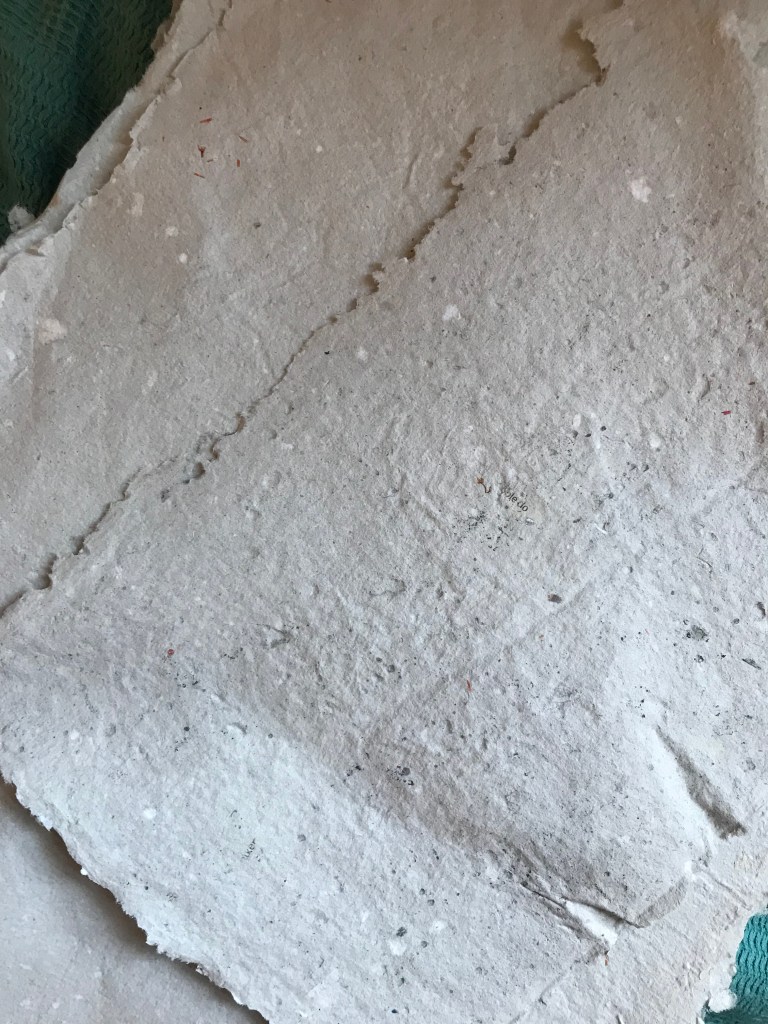
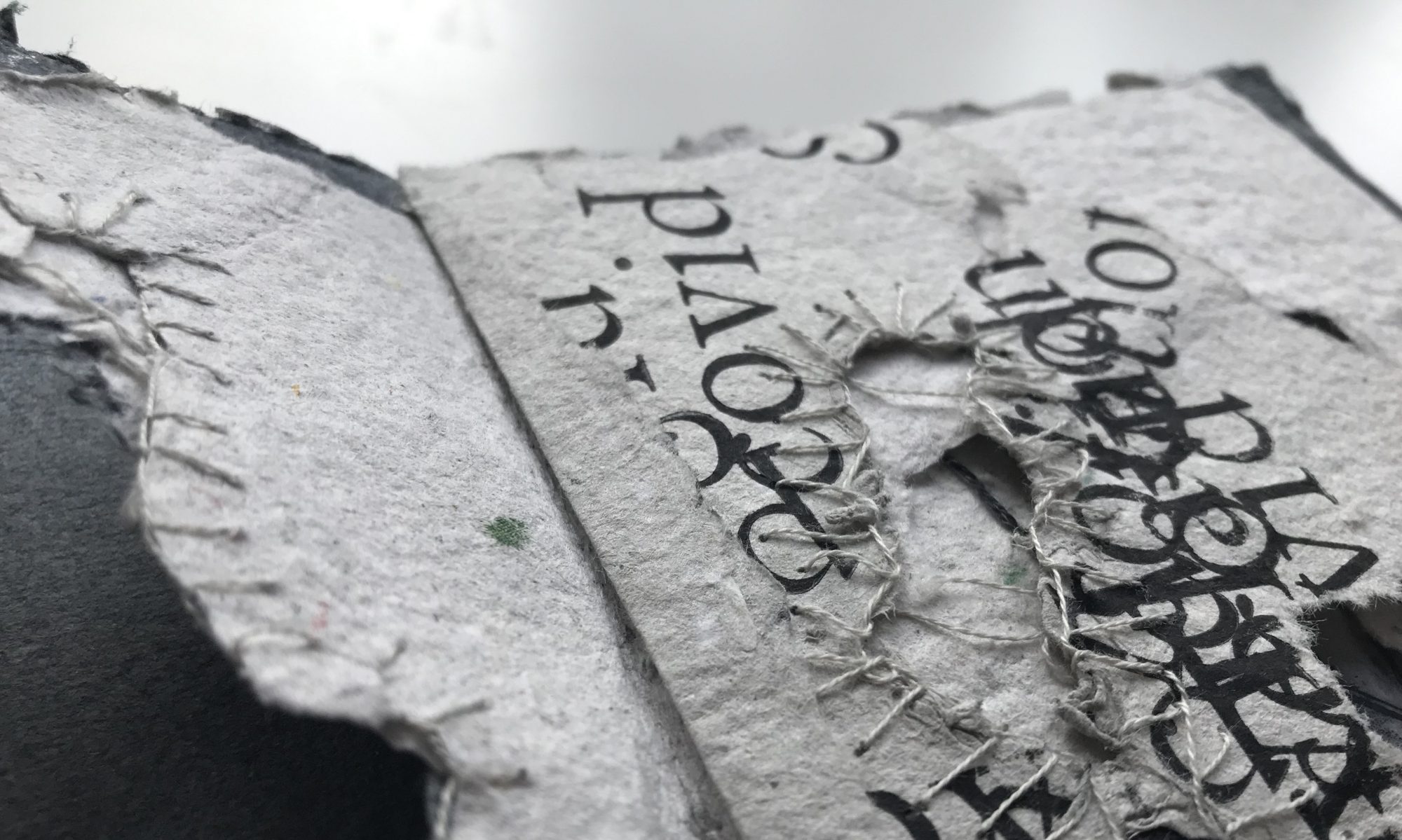
This is after the paper had time to dry. I am pleased with the outcomes, I made a variety of thicknesses so this will be perfect for experimenting with drawing and printing, I also think the link and connecting with covid 19 articles makes this paper more important and relevant to this project so i feel it was important for me to make. I think the most interesting areas are the bits where you can see the text this has made me think of other experiments I can undertake.

Moving Forward I want to use this paper for my dry point printing experiments to see if the paper would hold the print well or if it would disintegrate , alswell as this I want to have a second go at making this paper but including more chunky bits of text and even collaging news paper articles or words into the paper before using the mould and deckle to form the paper sheet.

CHAT: with Nigel Bowels in the print room

After being in communication with Nigel over email we arranged to have a chat in the studio to talk through some of my ideas. this was an extremely valuable thing for me to do, as having an outsiders imput into my project threw up new and exciting ideas for me. these are some of the things that came up for me to experiment and try with…

Explore and refresh using the letterpress on my hand made paper. could this be embossed straight into the bowl or could it be printed?

As a starting point look at drypoint printing and experiment with different processes and manipulation of the paper pre and post printing. exploring other printing methods such as lino and coligraph.

do I need to make some more hand made paper, could this be made from covid related news articles?

exploring how I would bring in text, would it be from overhearing conversations? using peoples topic of conversation? the news? how does this inspire my own “story” on the bowl?

go for a walk and document the noisays, imagery and conversations heard by others. observe and document this through quick sketches to observe body language the use of masks and public behaviour, would this be in response to new announcements?

could it be even more obvious than that? could a mask be a bowl ? could i make a paper mask that represents the times that we are living in now. is a mask even a bowl if it is upside down? it’s a vessel and it could hold something so in my opinion … yes it could be a bowl.

be current and up to date with changing news and explore imagery that underpins public responses ?

HISTORICAL RESEARCH: storytelling through imagery

Looking into the British museums (The British Museum Blog. 2020. A History Of Storytelling Through Pictures. [online] Available at: <https://blog.britishmuseum.org/a-history-of-storytelling-through-pictures/&gt; [Accessed 28 October 2020].) I came across some research sources about storytelling through imagery. i am interested in the origins of storytelling and how I can transfer this traditional practice into ‘modern day’ storytelling with regard to one of the biggest factors we ar experiences currently… Covid 19. I am hoping by researching traditional storytelling I will get to grips with understanding what was of importance of that time. and what kinds of of stories, historys, facts and tales that were recorded through imagery.

African rock art is one of the earliest forms of human made imagery, dating back to 30,000 years. often painted, engraved or drawn onto rock, often conveying narratives on social lives.

This scene has been variously interpreted as showing preparations for a wedding. Note the hairwashing scene top right. © TARA/David Coulson.

Assyrian Palace reliefs, carved from stone situated within the place tell a story read much like a comic strip as each stone carving is the next in the sequence around a room. they usually depicted strong magical figures to protect the king from supernatural forces.

Relief depicting the king hunting wild lions from his battle chariot.

Bayeux Tapestrys are a widely recognised medieval art which also represent an important historical source for the Norman Conquest of England in 1066. this is a form of embroidery onto 8 pieces of linen. likely to have been worked by Anglo-Saxon women to describe historical conquest events of the time.

Part of the Bayeux Tapestry showing the battlefield at Hastings.

Design a site like this with WordPress.com
Get started