EDGE: reflecting

ETHICAL DIGITAL GLOBAL ENTREPRENEURIAL

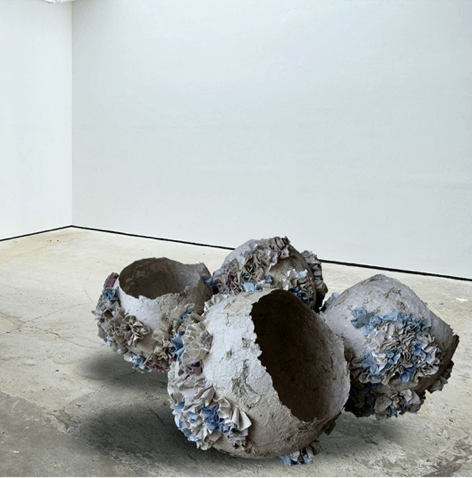
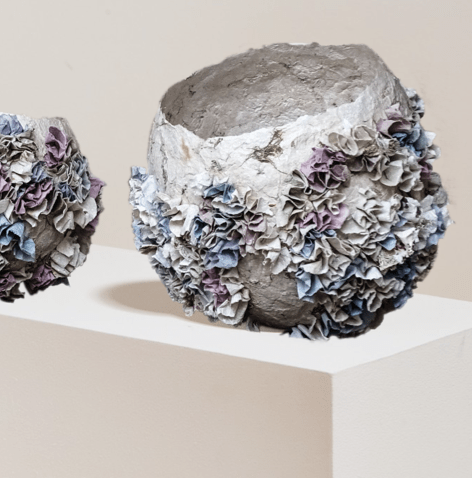
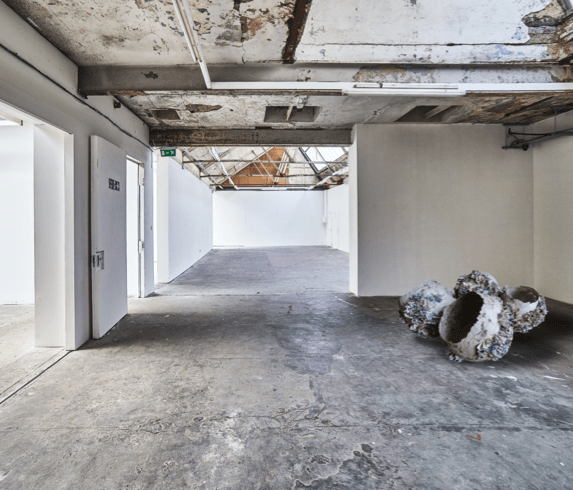
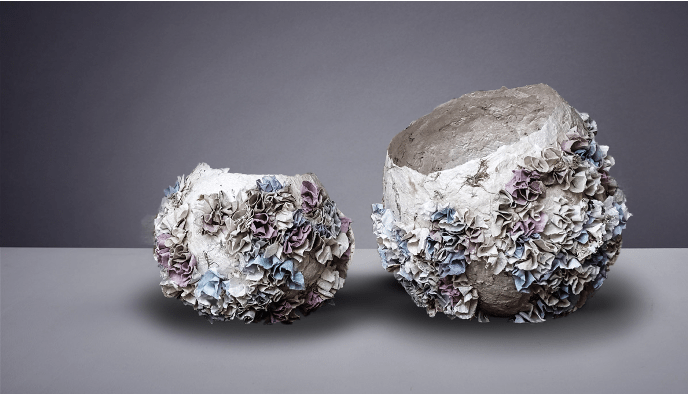
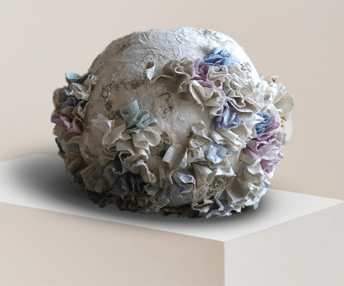
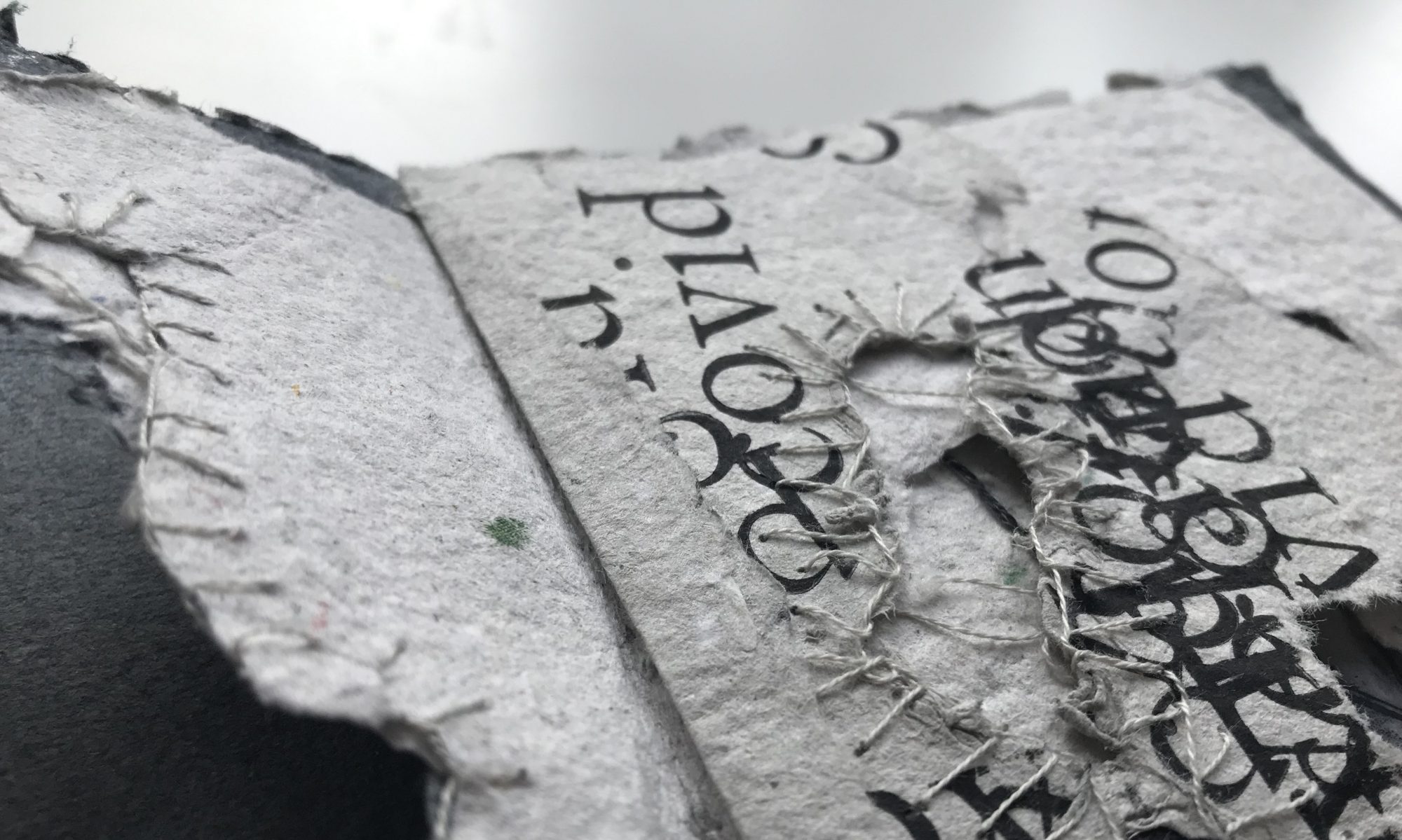
Reflecting on my final collection of forms and the development of this project, my research and focuses. I feel my work focused on some of the EDGE Attributes, creating and highlighting an importance to sustainability and nature. In various ways I can see my work falling within the categories of EDGE.

Ethical

My work focuses on the ethical use of materials with strong focus on use of sustainable and recycled materials. I was consciously deciding to use materials that were either sustainable, recycled or natural, rather than the alternative of plastic and artificial additives when making the paper and forming the sculptures. i tried and explored and used alternative to pva glue opting for a biodegradable alternative that is not harmful to nature. I was very careful not to disturb nature when taking natural materials as I felt it wasn’t ethically right to be picking the materials from the trees so instead I collected only what i could find on the floor. as well as my inspiration taken from the Cradle to Cradle model and the circular model to create sustainability within my work.

Digital

I have developed my digital skills throughout this project, creating a platform for my work online and representing my work through social media. I want to continue to professionalise my work and further develop my digital skill through the development of my career.

Global

I have taken great inspiration from global practitioners, theories and techniques within my work. Focusing on both national and global artists, I have seen great links between the methods of production and the use of materials and fibres combined into the process. showing that not only is paper making a traditional technique it is used universally in similar ways and processes. Furthermore looking into the circular model of pulp factory, India with the companies use of paper and sustainable design was a great inspiration to my work along with their use of a circular model to explain the process of renewal within their work.

Entrepreneurial

Although it doesn’t directly link to entrepreneurial, I wanted to brand myself and my work with my morals focusing on the circular model, by creating my own model that represents my beliefs and aims within my work to be sustainable and use materials inclusive to the process in a circular fashion I am able to build up my own identity, and help me to become unique and make my style of working stand out from others in my field.
SWOT: My own work

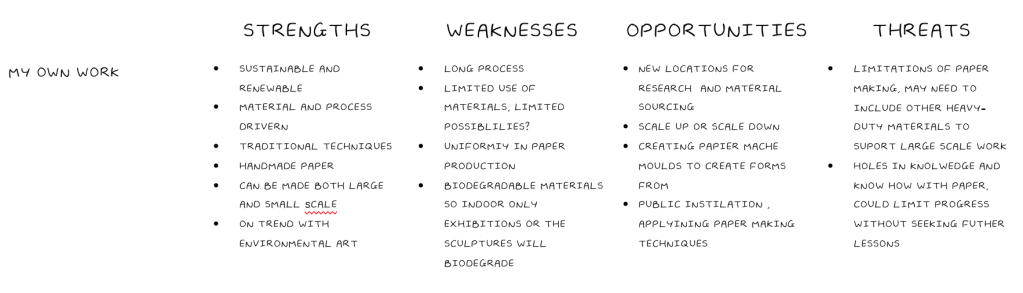
SWOT analysis of my final collection of pieces to help me see where to improve and find opportunities to move forward and continuing what I enjoy.

PRICING: final forms

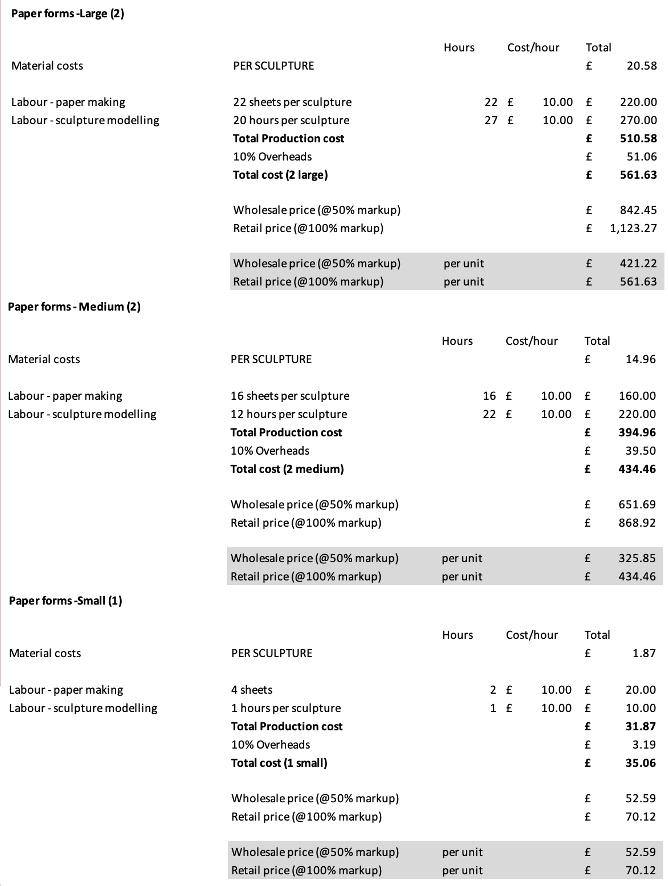
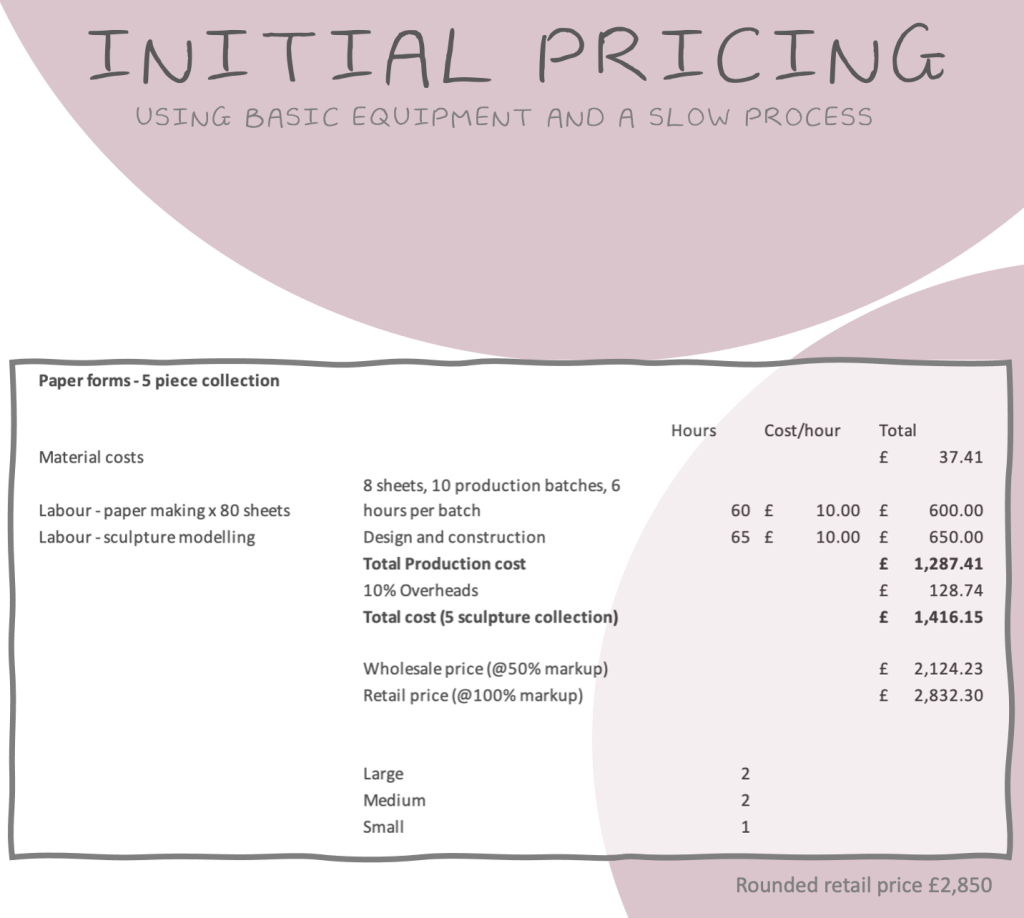
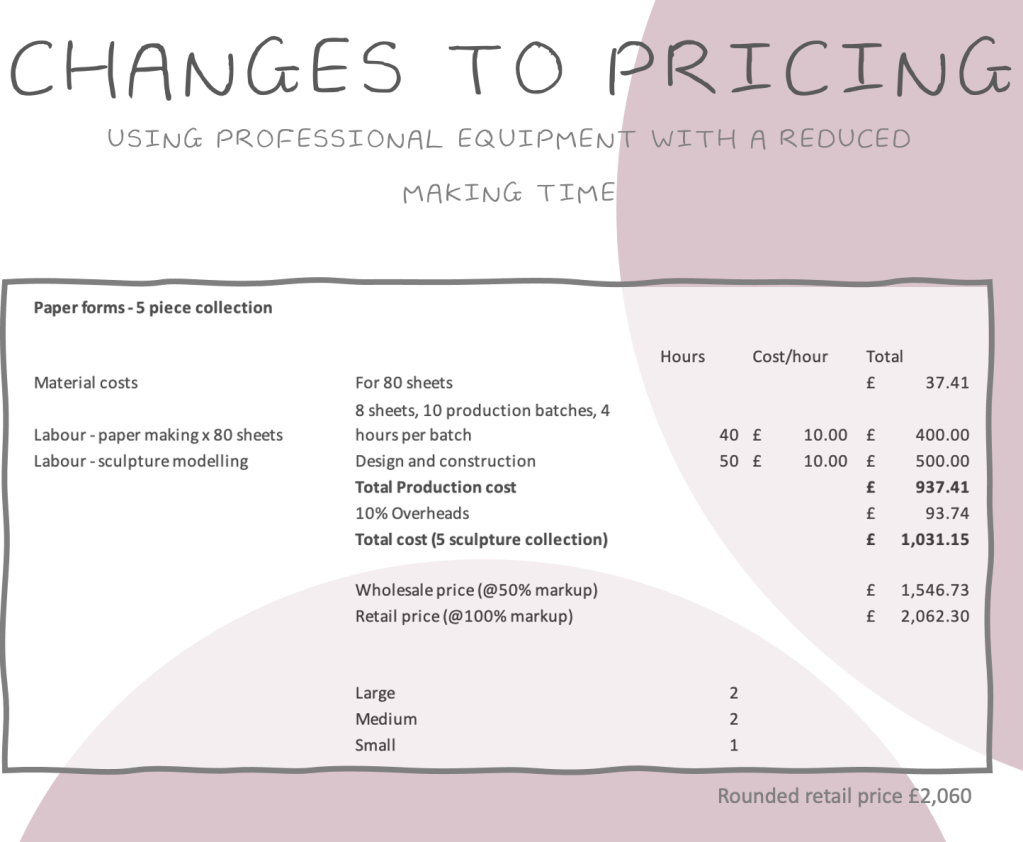
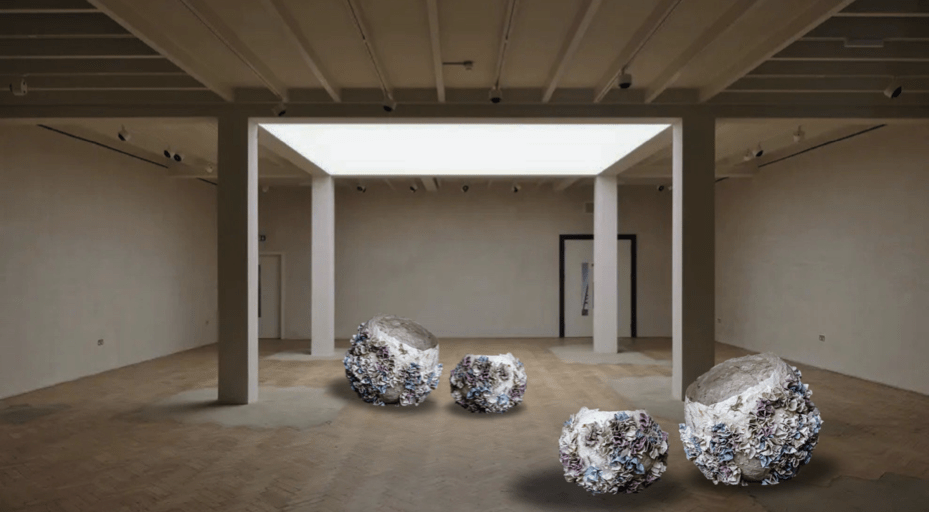
I found working out the pricing a little tricky for my pieces as it was hard to realistically work out the time it took me and the amount of paper used to make each for. All I know is it was a lot. I also wanted to be conscious of my place as a newly established artist/ soon to be graduate and have my prices reflect that. Although the price reflects the length of time they took to make the initial raw materials were fairly cheap. The total cost for the five forms worked out to be Rounded retail price of £2,060

OPPORTUNITIES: research

Moving Forward beyond uni, I wanted to start to think of ways I can progress in my professionalism as well as find opportunities that align with my skills, interests and values as a maker.

I have always been interested in running my own paper making workshops, but lack the experience to be able to do this. The best place for me to start is to attend one to understand what is involved and how it is run. after doing this there is potential for me to contact my previous college or art foundation ( Peter symonds and Barton Peveril in Hampshire) to arrange a paper making class as they do not currently run these is either, and I formed good relationships with my previous tutors. This would not only be a good way to create contacts with the art departments in both. It would be good for me to gain the experience for my CV.

To progress my paper making skills and find opportunities for myself, I want to reach out to a prominent artist inspiration from my project, Jane Ponsford. She seemingly has very close values to mine, working from location and using natural materials and this could be a very valuable opportunity for me to gain knowledge of working alongside an artist and finding out what is involved. she also runs paper making classes at west dean college so could be a good opportunity. I have put together an email explaining myself as a new graduate, my interests and why I am looking for help.

Paper making is currently a red list craft and this could potentially be an interesting route to explore as a project. If I were to do this I would contact HCA Heritage Crafts Association.

MARKET RESEARCH AND PRICING: finding where I sit

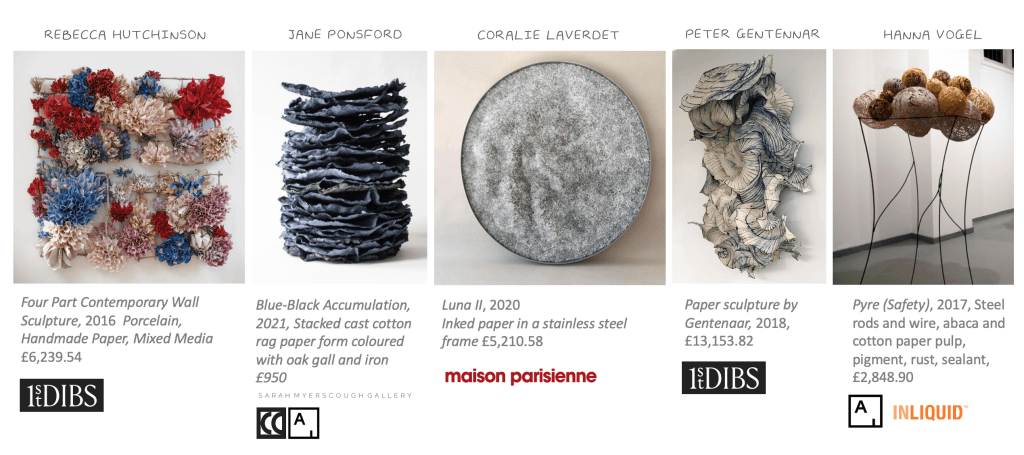
These are some of the artist that took my inspiration from during my project. I wanted to do some research regarding who they were represented by and the pricing of the work, I wanted to keep the research relevant so found artists who primarily use paper and paper making processes.

Although these artists fall within the higher price range, this is the field of work ( and pricing) that I would eventually like to sit within.

Currently my own pricing needs to be relevant and realistic to where I am as an emerging graduate. I don’t expect to be selling my work for the prices shown above, although the price of my work isn’t necessarily in the cost of materials. The cost comes from the labour intensive paper making processes of the work, reflecting on time taken and amounts of paper needed to make the forms. the first set of costings were based on limited Equipment. these frames were not really adequate for this project as they could not keep up with the demand. and I got through 3 cheaper frames as they warped and bucked after repeated use.

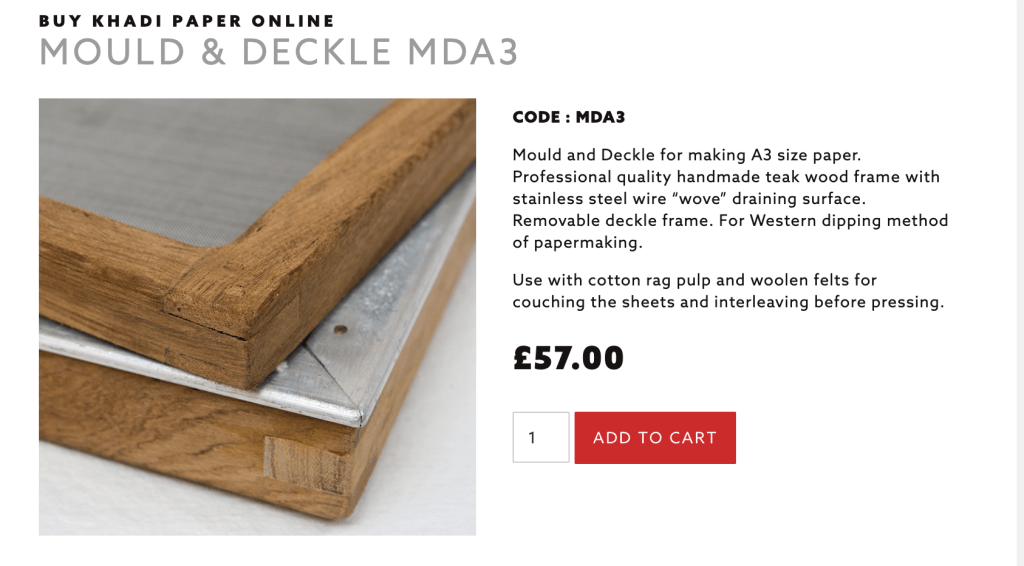
As a result I purchased and invested in more professional Equipment, buying three different sized mould and deckles and papermaking felts. Not only will this be beneficial for me long term, in the short term the actual process of making the paper speed up drastically making the process a lot faster and inevitably cheaper and the price is better reflected on my experience and stage in my career.

khadi papers https://www.khadi.com/shop/mould-deckle-mda3/

PAPER AND RECYCLING: regenerative process and sourcing

The same piece of paper can be reprocessed up to 4 times in its life span until the fibres become to small to bind together. This regenerative process allows for the paper I am creating to become sustainable and an environmentally friendly alternative.

In terms of sourcing the waste paper used within my work. I have been using my own offcuts from my art work. these primarily were heavy weight cartridge and water colour papers. to continue the sourcing of my materials as i progress and inevitable create more i need to find alternative sources of waste paper.

PALM recycled paper making company (https://www.palm.de/en/recycling/raw-materials.html) collect their raw waste materials by contacting offices and removing their photocopy waste as a way of being more sustainable and sensible with materials in order to repurpose a waste material.

This got me thinking about how I could start to source my own waste papers. I have an art printers local to me who mass print and produce art prints, inevitably creating offcuts. This is a potential opportunity for me to contact them and take their offcuts away to be used within my paper making process.

TRADITION: research into western and eastern paper making techniques

Papermaking is a traditional technique seen in both western and eastern cultures. The difference between the two being the fibres being used and the types of papers created. The methods are pretty similar, they both use a vat if fibrous material, a mould and deckle (or sugeta a Japanese version made from bamboo) the same process of pulling and pouring techniques.

Washi paper is a unique Japanese paper made using unique fibres found in the area. The fibres are processed from the gampi tree or mulberry bark and created into sheets using traditional methods.

The only real thing separating the traditions of western and eastern is the fibres used to make the papers. paper making holds its origins in china.

Western cultures use tend to use hemp and cotton within the process, as well as combining gelatin within the paper making process ( I replaced the gellating or binding agents for natural cellulose glue in my process)

Design a site like this with WordPress.com
Get started