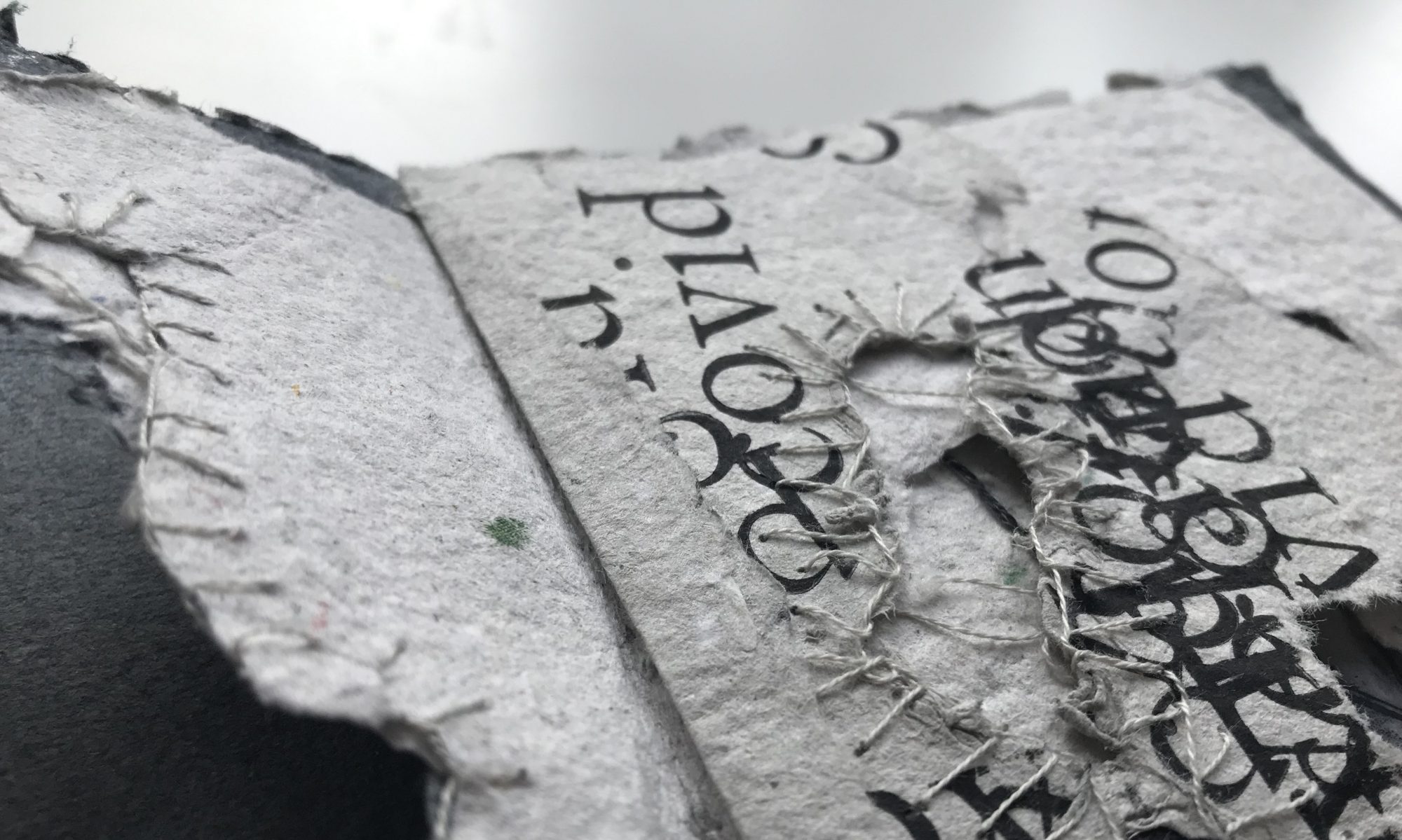
After reflecting on the strength of my paper, I find the paper made with 100% recycled cartridge paper doesn’t quite have the qualities I am looking for… strength fragility and opacity.
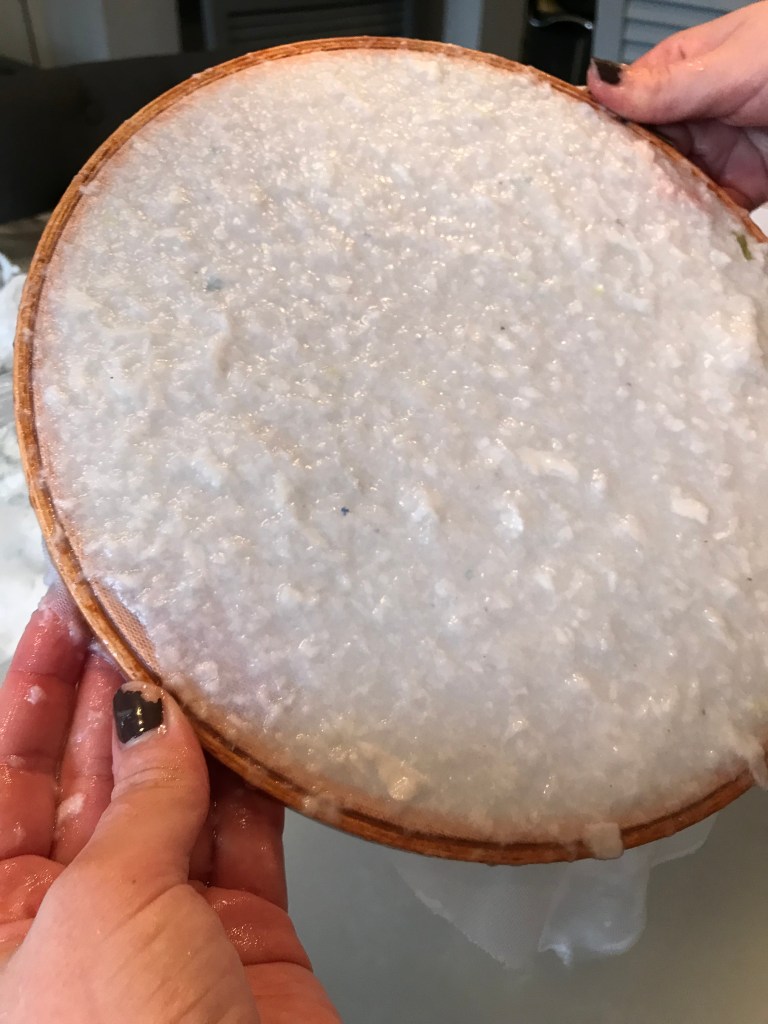
To try to improve this, I have been experimenting with abaca fibre pulp. Abaca is a natural sustainable fibre based material taken from a banana crop grown in the Philippines, It has been identified by the United Nations as a “Future Fiber”. This is a traditional and popular paper making material, as the fibre creates structure and strength in the paper, as well as allowing te paper to be made extremely thin. After finding and researching this I wanted to give it a go.

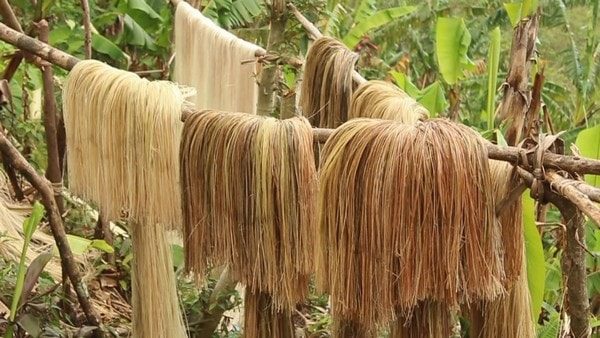
The results were extremely successful, I am definitely closer to finding the best paper for strength, durability and transparency. the abaca pulp created a very soft fibrous sheet that is very easy to manipulate, although this fibre used alone (100%) creates fabric like paper, I can make it extremely thin and it is stronger than pure recycled cartridge paper but i still find it isn’t ridge enough.
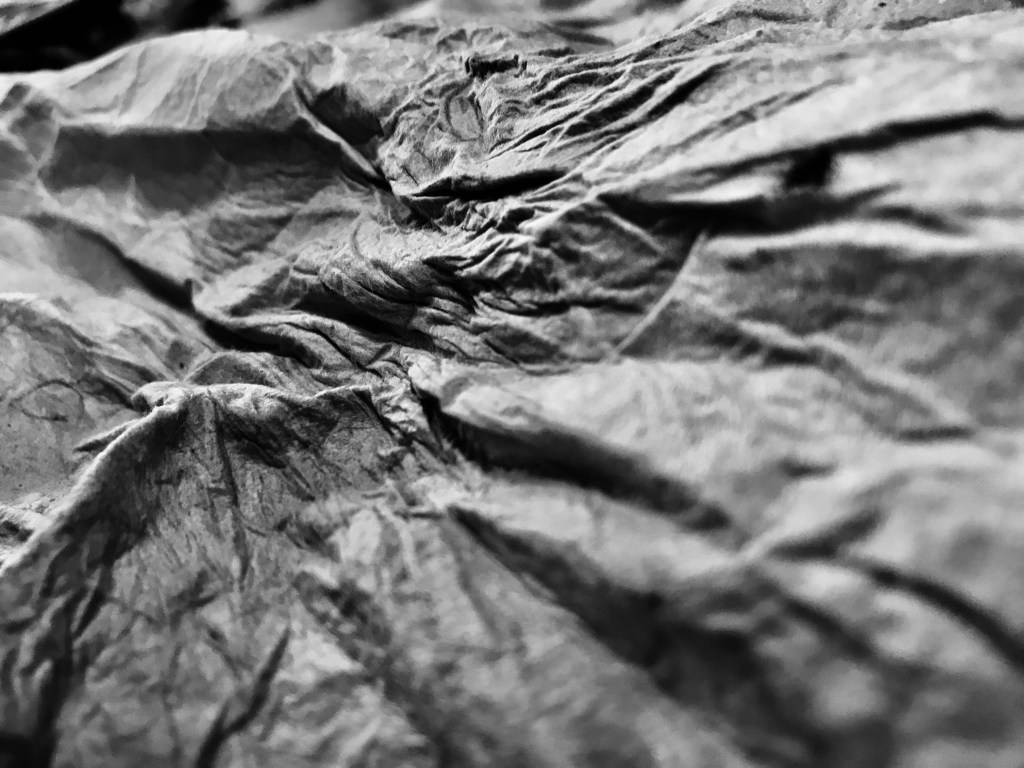
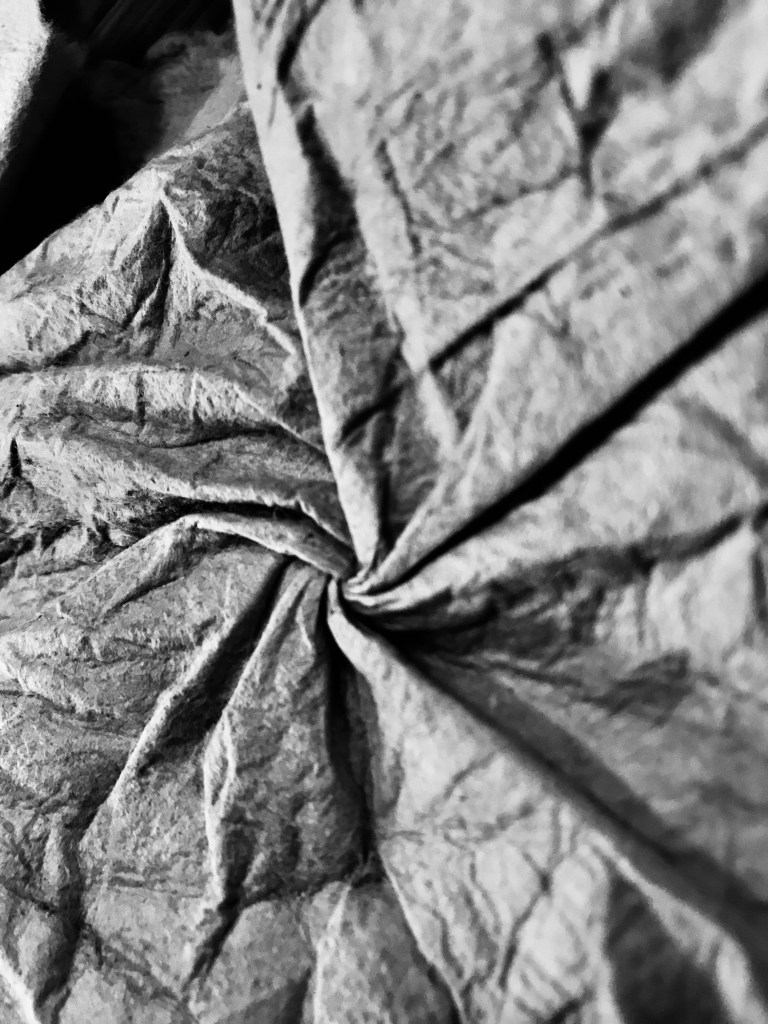
I then blended 50% recycled cartridge and 50% abaca pulp paper and I have found the cartridge gives it the strength and the abaca gives it the fibre and opacity. I was also able to get this to be tissue paper like and extremely strong, which is what I wanted so that I could create and cast forms which potentially could be very opaque.

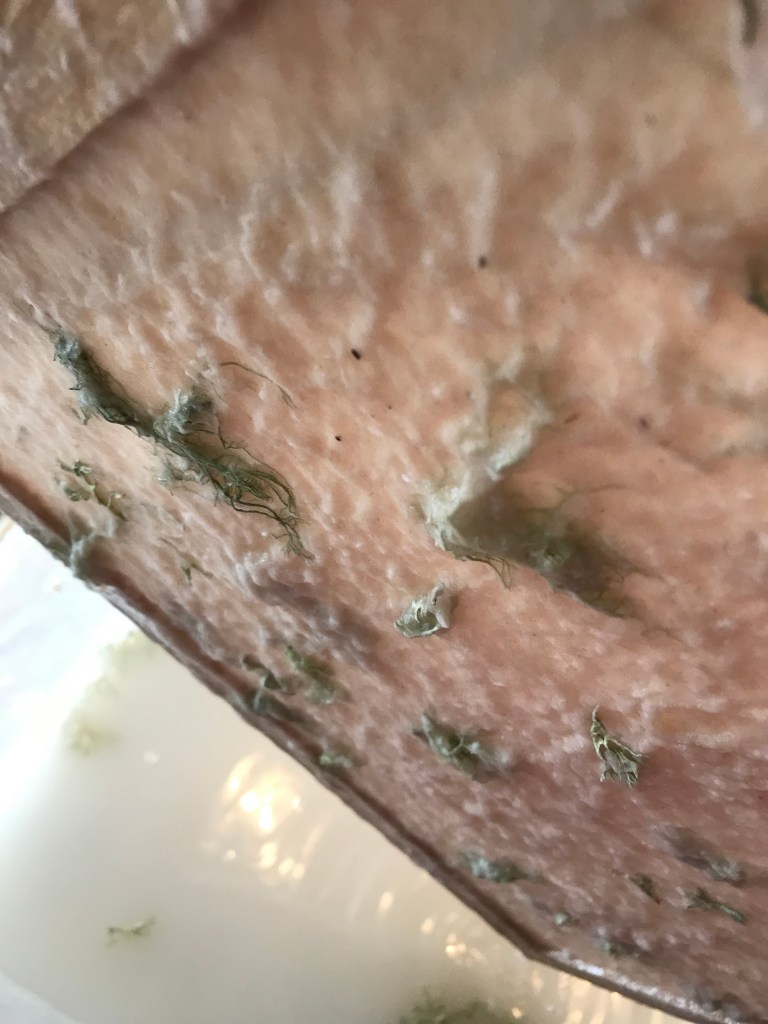
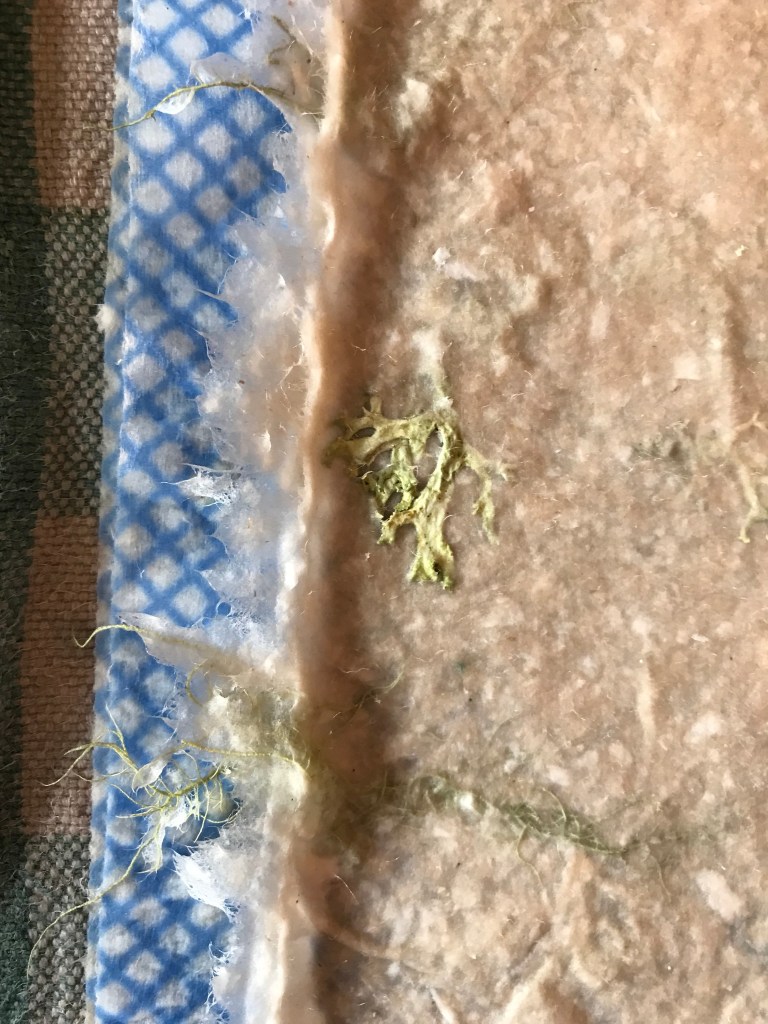
By cutting up the bits of lichen smaller and separating out the strands I was able to couch whole unbroken sheets, whereas before when the lichen was bigger and the paper pulp wasn’t as strong large holes wold form and rip in the paper as a result of removing then of the cloths.
Whereas previously I used pva glue to bond the sculptural forms and sheets of paper together (in the bowl project and previously made paper) I really want to consider my environmental impact and how I can primarily use natural or decomposable materials in my work, rather than more harmful artificial materials. Looking into this I found that cornstarch can be used as a stiffener for fabrics and fibre, this could work for my forms as you can make it into a glue substance. This is definitely something I want to experiment with.
 Lara Hoad Artist Designer: Maker