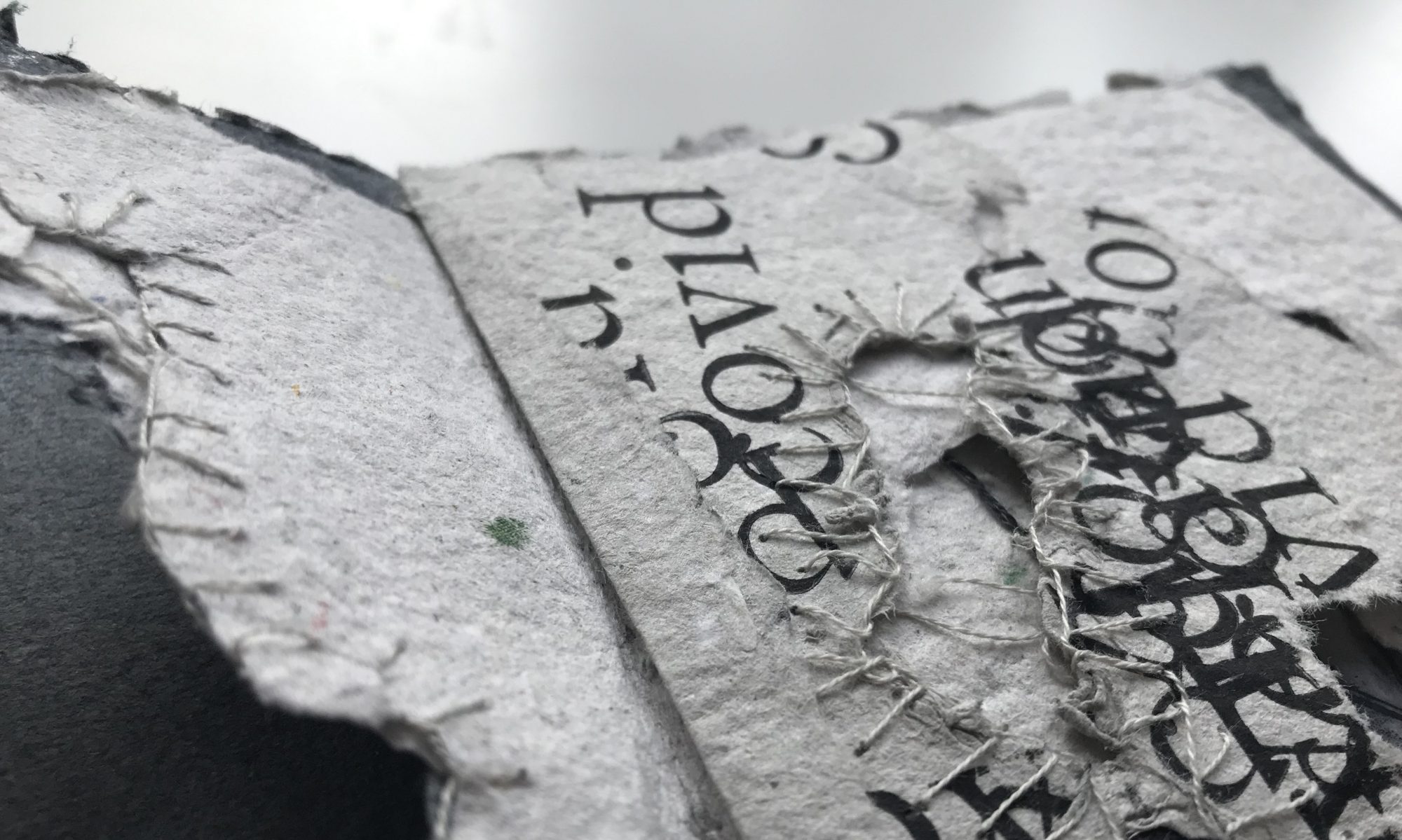
As a result of talking to pip about my work and explaining my situation of not having enough hand made paper and the reliable consistency to make an entire book I would need to find an alternative to make books with. so I contacted Tom from printmaking who recommended a few resources and websites as well as this I recently contacted a bookbinder that I have discovered through researching (Lotus Blu books Art) to ask about materials that Moneeza the artist uses when she binds her books. I have found her instagram very beneficial, I know this isn’t my standard go to research strategy but during thee strange times I have found her instagram page extremely helpful as she demonstrates mini tutorials and how she makes her books with step by step instructions. I have found this useful as a self teaching too, watching an artist at work is also very motivational and inspiring.
This was my conversation with her..
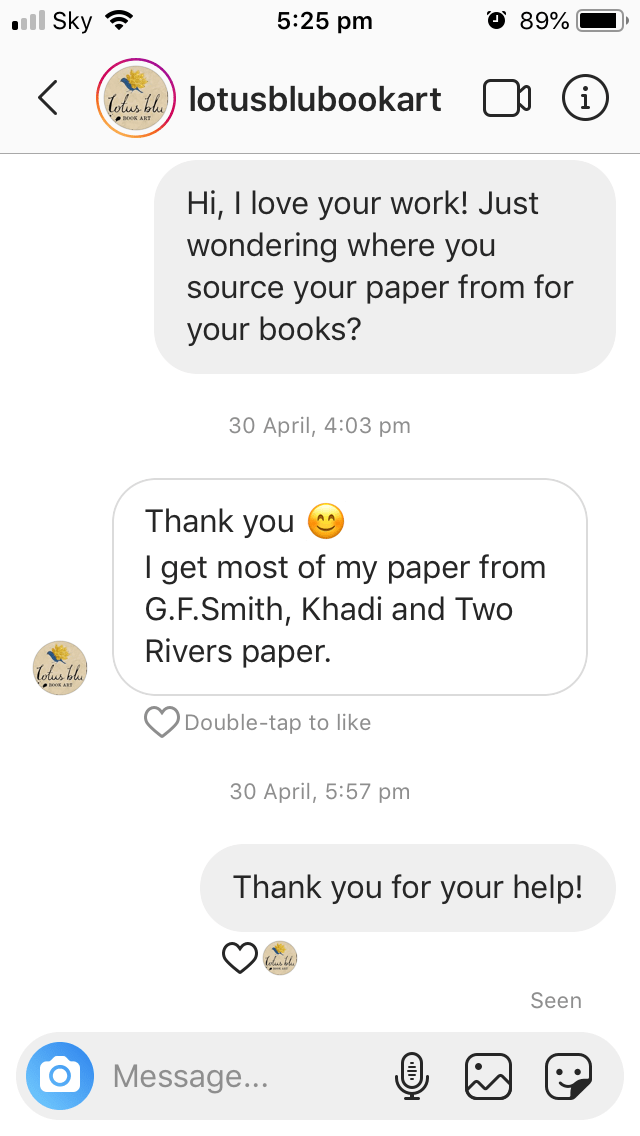
As she recommended Khadi papers I went to look on their website. I wanted an affordable reliable paper that wouldn’t break as I work with it. I wanted paper for sketching and painting to making into sketchbooks with a deckled edge ( made from the edge of frame as the paper is formed. I was also interested in the traditional qualities of the Khadi paper.
This is what I purchased, 150gsm sheets of white A5 paper and A4 paper.
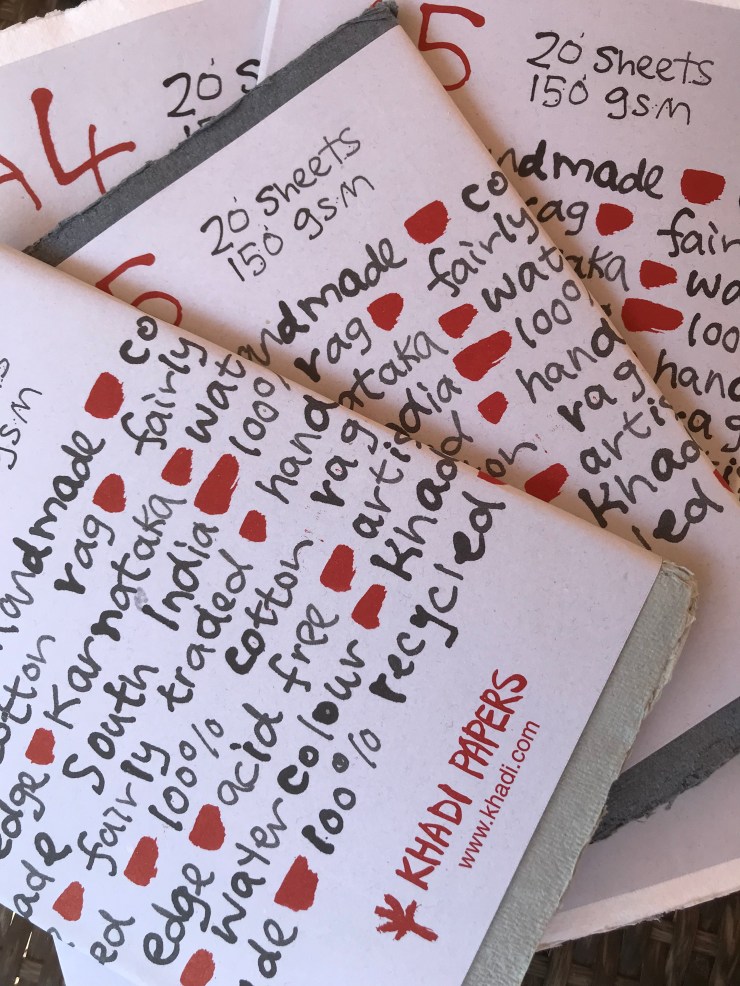 According to Khadipapers.com (Khadi Papers. 2020. About The Paper – Khadi Papers. [online] Available at: <https://khadi.com/about-khadi-papers/about-the-paper/> [Accessed 10 May 2020]) The cotton rag papers I went on to purchase are made in south india using the traditional paper making method in the paper mill in Karnataka. they are made from 100% cotton rag fibres, these are long and make durable strong paper when pulped. They use a reliable supply of cotton that comes from tshirt cuttings. Neutral ph size is added to the Hollander beater making them acid free. the papers are them formed in a mould and deckle and are pressed between zinc sheets to get smooth finishes. They are then loft dried and surface sized using gelatine, This is traditional for watercolour paper. but the papers can also be used for all kinds of mediums.
 Lara Hoad Artist Designer: Maker