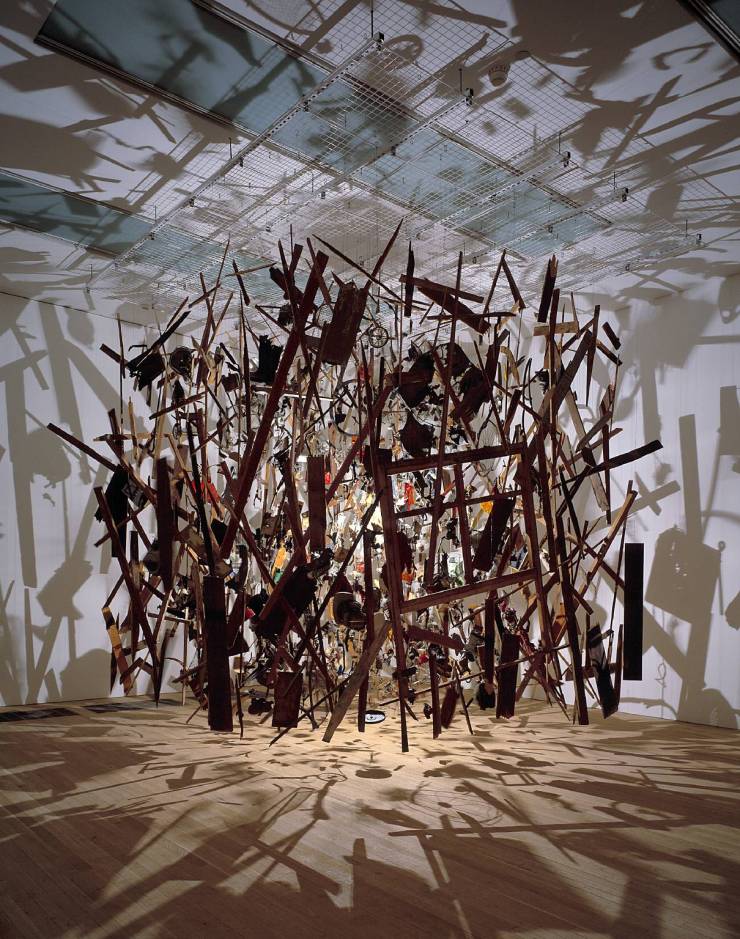
Tate. (2018). Cornelia Parker born 1956 | Tate. [online] Available at: https://www.tate.org.uk/art/artists/cornelia-parker-2358 [Accessed 2 Dec. 2018].
This work by British sculptor Cornelia Parker explores light as a way of projecting and filling a negative space with intricate shapes to portray a inclusivity to the viewer when within a room. This work by Parker interests me because of the way the objects are ever so slightly distorted by the the light that is submerged in the centre of the piece acting like an explosion of overlapping shadow.
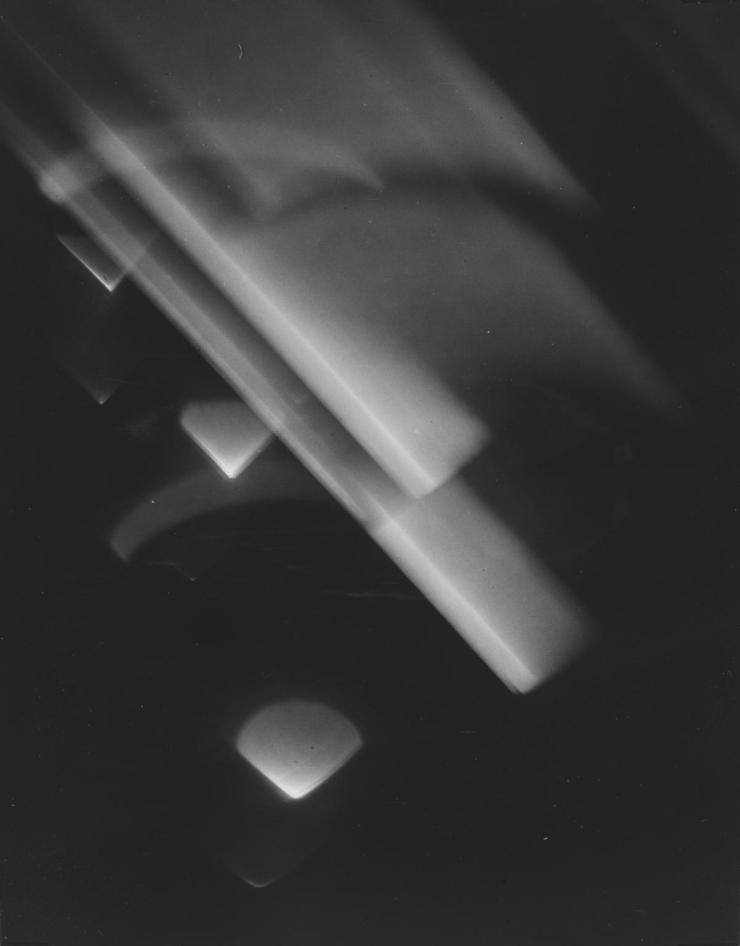
Tate. (2018). ‘Light B’, Hanaya Kanbee, 1930, printed 1970s | Tate. [online] Available at: https://www.tate.org.uk/art/artworks/kanbee-light-b-t14390 [Accessed 2 Dec. 2018].
Haynaya kanbee’s works focuses on the suggestions of light being captured in a distorted movement as a result of the long exposure of light, capturing tone and shapes. i particularly like this piece as it focuses on the impact of light rather than the light itself, making the light the secondary focus, although without this light being used the image would not exist, this makes it interesting as the viewer has to imagine how this piece was created.

Tate. (2018). ‘Shell Light’, Lucy McKenzie, 2015 | Tate. [online] Available at: https://www.tate.org.uk/art/artworks/mckenzie-shell-light-t14672 [Accessed 2 Dec. 2018].
Lucy McKenzie’s work focuses on the less ordinary light design. Using a natural form as an unconventional lamp shade to emit light. this was part of a collection that explores McKenzie’s ideas about painting. I particularity like this piece as its unexpected and rather beautiful artefact to light from inside, by lighting the found object the textures, colours and depth of the form is revealed, things that are not as evident without light.
 Lara Hoad Artist Designer: Maker